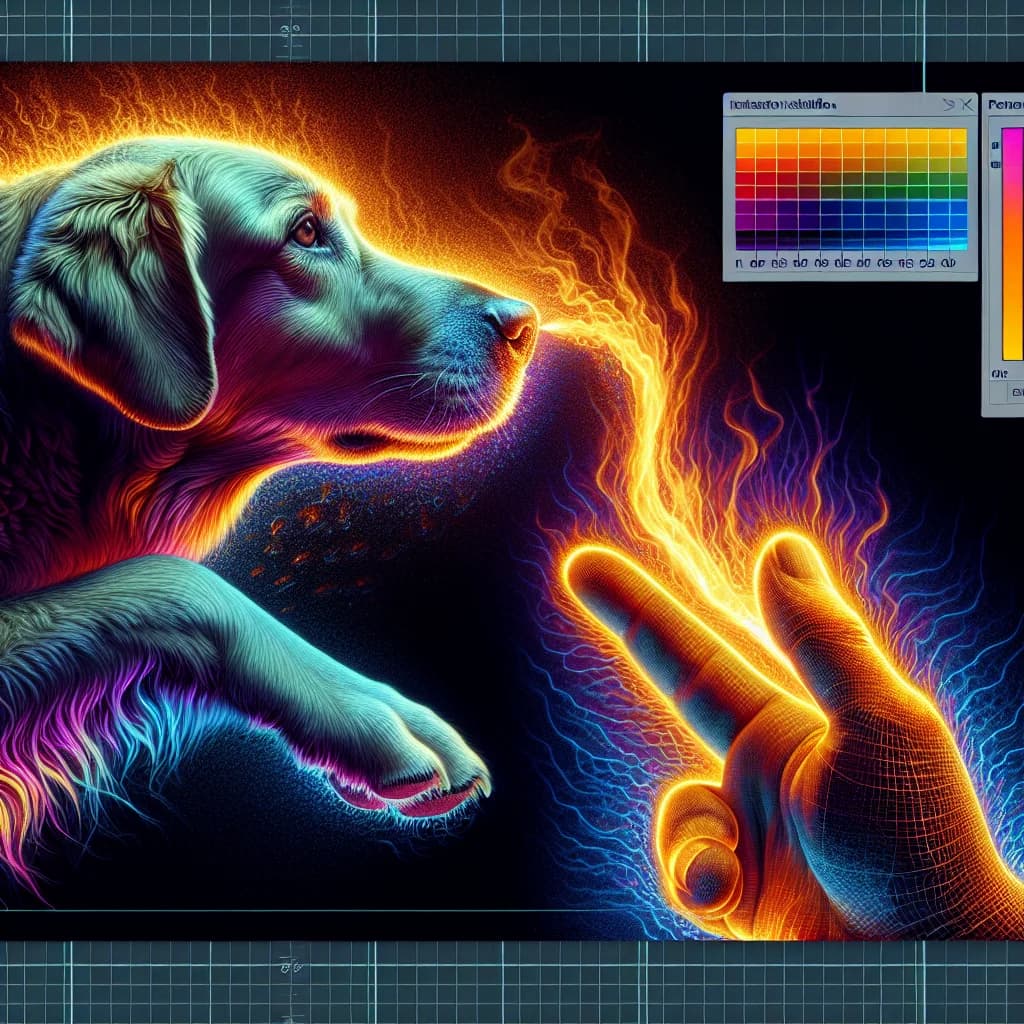
Why do pet dogs see modern televisions as moving images while older TVs appeared as flickering strobes
Ever wonder why your dog is suddenly obsessed with your favorite shows? Discover the fascinating science of how modern refresh rates finally turned your television from a glitchy strobe light into a vivid canine cinema.

Too Long; Didn't Read
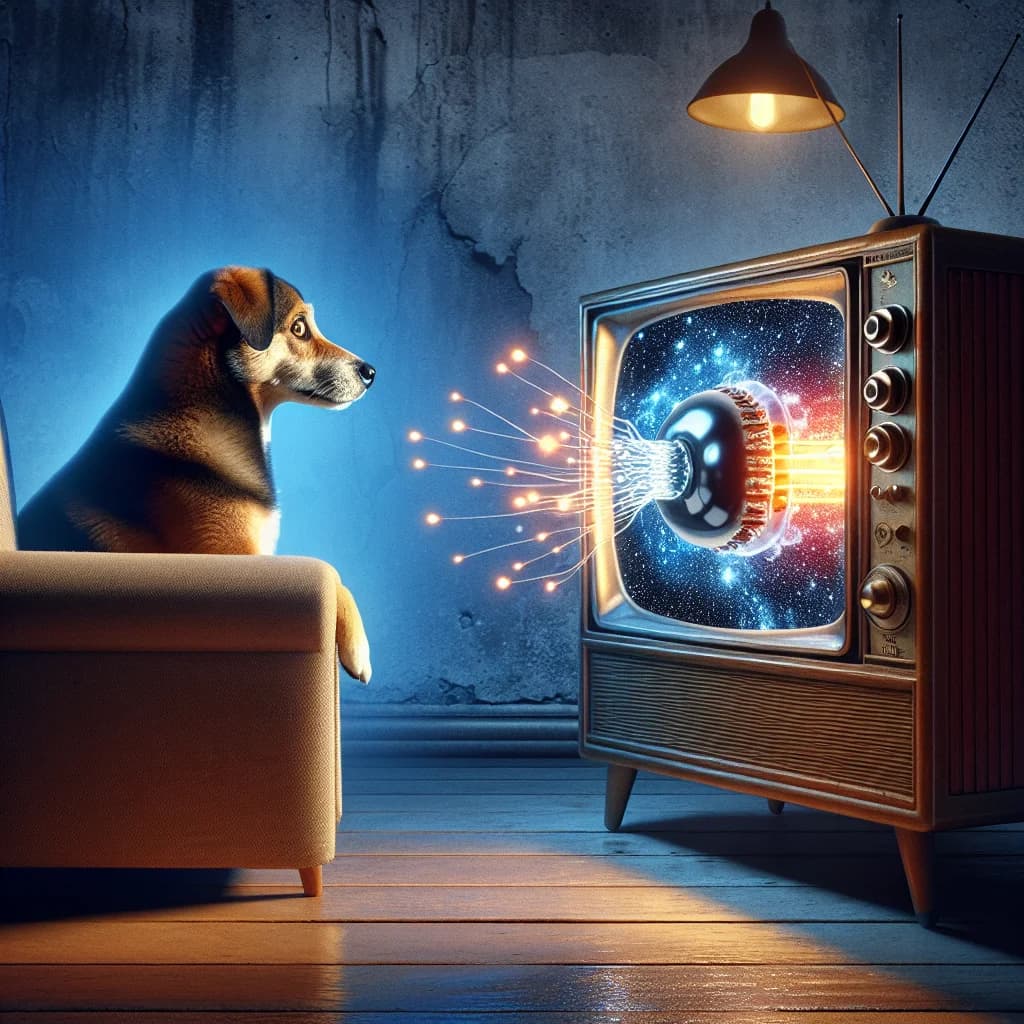
Dogs have a higher flicker fusion frequency than humans, meaning they perceive motion at a faster rate. Older TVs refreshed too slowly for canine eyes, appearing as a series of flashing images, whereas modern screens have much higher refresh rates that finally allow dogs to see smooth, continuous movement.
From Flickering Strobes to Canine Cinema: Why do pet dogs see modern televisions as moving images while older TVs appeared as flickering strobes?
Have you ever wondered why your grandfather’s golden retriever ignored the television, while your modern pup seems captivated by nature documentaries? It isn’t just a change in dog behavior or better acting on screen; it is a fascinating intersection of canine biology and the evolution of display technology. For decades, our pets lived in a world where the "magic box" in the living room was nothing more than a source of annoying, rhythmic flashing. Today, however, advancements in screen refresh rates have opened up a literal new world of visual enrichment for our four-legged friends. Understanding why do pet dogs see modern televisions as moving images while older TVs appeared as flickering strobes is essential for owners looking to enhance their pet’s environment and understand the unique way dogs process the world around them.
The Science of Sight: Flicker Fusion Frequency
To understand the difference in how dogs perceive various screens, we must first define a biological concept known as "flicker fusion frequency" (FFF). This is the threshold at which a series of rapidly flashing individual images appears to the eye as a single, continuous, and moving image.
The human eye typically has a flicker fusion frequency of approximately 50 to 60 hertz (Hz). This means that if a screen updates its image 60 times per second, we perceive fluid motion. However, dogs are evolutionary hunters with eyes optimized for detecting rapid movement. Consequently, their FFF is significantly higher—estimated by veterinary ophthalmologists to be between 70 and 80 Hz, or even higher in some active breeds.
Why Older TVs Looked Like Strobe Lights
During the era of Cathode Ray Tube (CRT) televisions, the technology relied on an electron beam "painting" lines across the screen. These older sets generally had a refresh rate of 50 to 60 Hz.
- For Humans: Because 60 Hz is above our flicker fusion threshold, we saw a steady picture of our favorite sitcom.
- For Dogs: Because 60 Hz is below their flicker fusion threshold, the image did not "fuse." Instead of a moving picture, the dog saw a rapidly pulsating, flickering light, much like a strobe light in a dark club.
This visual experience was likely distracting or even irritating for many dogs, leading them to ignore the television entirely. To a dog in the 1990s, the TV wasn't showing a bird; it was a flickering box of light that didn't resemble reality.
The Modern Advantage: High Refresh Rates
The shift to modern Liquid Crystal Displays (LCD) and Light Emitting Diode (LED) technology changed the visual landscape for pets. Modern televisions frequently boast refresh rates of 120 Hz, 240 Hz, or higher.
Because these rates far exceed the canine flicker fusion threshold of 70-80 Hz, the images finally "fuse" for dogs just as they do for humans. When a modern screen displays a high-definition video of a squirrel, the dog perceives smooth, realistic motion. This technological leap is the primary reason why dogs are now more likely to react to digital content, bark at on-screen animals, or even engage with specialized "Dog TV" programming designed with their visual biology in mind.
More Than Just Motion: Color and Clarity
While frame rate is the primary reason dogs can now see moving images, other factors contribute to their engagement:
- Dichromatic Vision: Dogs see the world primarily in shades of blue and yellow. Modern screens with high color accuracy allow them to distinguish these colors more clearly than older, lower-resolution sets.
- High Definition: The increased pixel density (4K and 8K) provides a sharper image that matches the dog's ability to detect fine details in movement, even if their overall visual acuity is lower than ours (roughly 20/75).
Conclusion
The transformation of the television from a flickering strobe to a window of entertainment for our pets is a testament to how far display technology has come. By understanding why do pet dogs see modern televisions as moving images while older TVs appeared as flickering strobes, we gain a deeper appreciation for the high-speed visual processing that makes dogs such excellent hunters and companions. This knowledge allows us to better utilize visual media as a tool for canine enrichment, especially for dogs that spend time home alone. As we continue to bridge the gap between human technology and animal biology, we can ensure that our homes remain a stimulating and comfortable environment for every member of the family, regardless of their species. If your dog seems overly fixated or stressed by the TV, always consult with a professional animal behaviorist to ensure their screen time remains a positive experience.