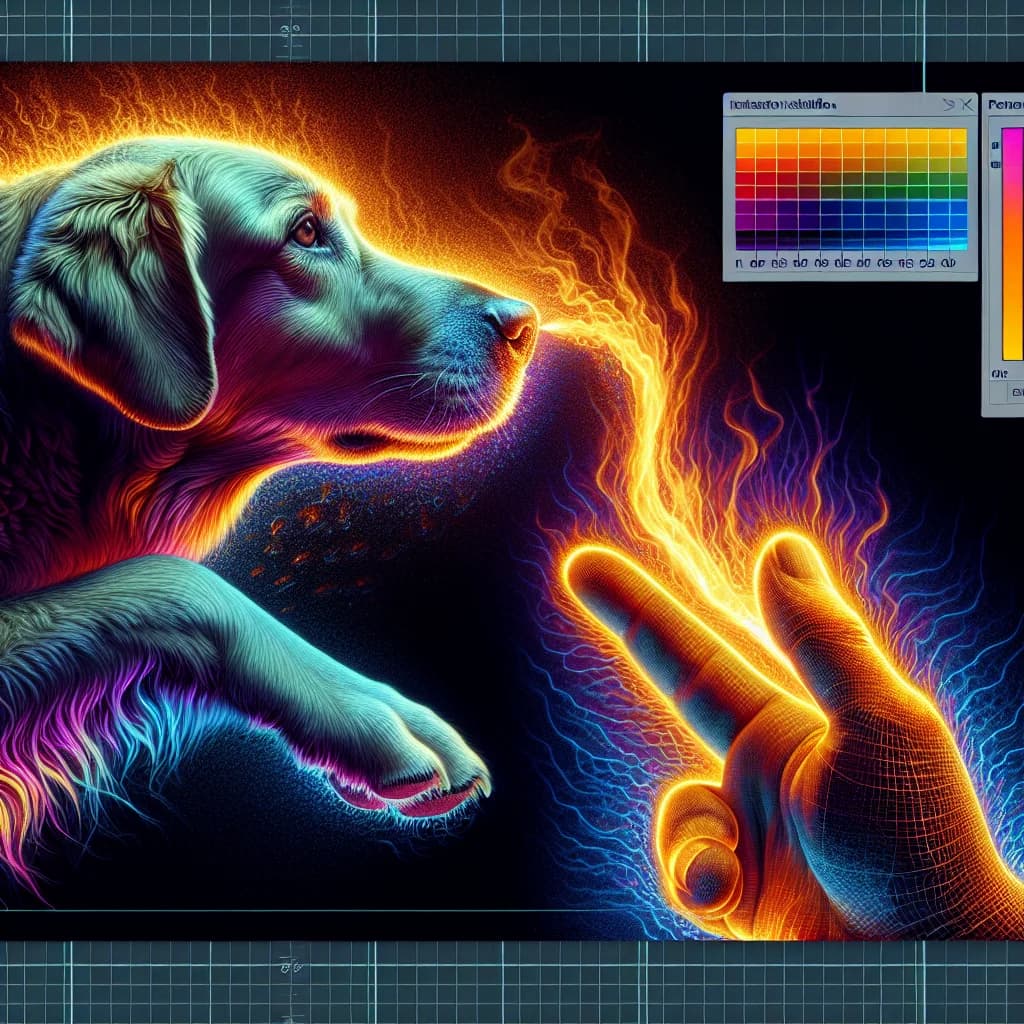
Why do pet dogs tend to align their bodies with the Earth's magnetic poles while pooping
Your dog’s bathroom routine is more than just a search for the perfect patch of grass—it’s a sophisticated display of biological navigation. Discover the fascinating science behind why our canine companions act as living compasses every time they do their business.


Too Long; Didn't Read
Dogs possess a natural sensitivity to the Earth's magnetic field, known as magnetoreception, which leads them to instinctively align their bodies along the North-South axis when relieving themselves during stable magnetic conditions.
The Canine Compass: Why Do Pet Dogs Tend to Align Their Bodies with the Earth’s Magnetic Poles While Pooping?
If you have ever watched your dog circle repeatedly before finally settling into a spot to do their business, you may have assumed they were simply looking for the most comfortable patch of grass. However, animal behaviorists and biologists have discovered that this pre-potty ritual is far more complex than simple comfort. It turns out that our canine companions are tuned into a sensory frequency that humans cannot perceive: the Earth’s magnetic field. This phenomenon, where pet dogs tend to align their bodies with the Earth's magnetic poles while pooping, reveals a fascinating intersection of biology and physics.
Understanding this behavior offers a unique window into the sensory world of dogs, highlighting that their perception of the environment extends far beyond sight, smell, and sound. This post explores the scientific evidence behind "magnetoreception" in dogs and what it means for our understanding of animal behavior.
The Science of the Squat: The 2013 Landmark Study
The primary evidence for this behavior comes from a comprehensive study published in the journal Frontiers in Zoology in late 2013. A team of researchers from the Czech University of Life Sciences and the University of Duisburg-Essen in Germany spent two years observing 70 dogs across 37 different breeds.
The researchers recorded a total of 1,893 defecations and 5,582 urinations. Their findings were remarkable: when the Earth’s magnetic field was stable, dogs showed a significant preference for aligning their bodies along the North-South axis. Interestingly, they actively avoided the East-West orientation.
Key Findings from the Research:
- Magnetoreception: This is the biological ability to perceive a magnetic field to coordinate movement or orientation.
- The North-South Preference: Under "calm" magnetic conditions, dogs consistently chose to face North or South.
- Sensitivity to Magnetic Flux: The behavior changed or disappeared when the magnetic field was unstable, such as during solar flares or geomagnetic storms.
Understanding Magnetoreception
Magnetoreception is not unique to dogs. Biologists have long documented this "sixth sense" in a variety of species, including migratory birds, sea turtles, honeybees, and even some species of cattle and deer. These animals use the Earth’s magnetic field as a natural GPS for navigation or to maintain spatial orientation.
In dogs, the mechanism for this sense is still being explored. Some theories suggest the presence of cryptochromes—light-sensitive proteins found in the retina—which might allow animals to "see" magnetic fields. Others look toward microscopic particles of magnetite within the nervous system. Regardless of the internal hardware, the study proved that dogs are functionally "magnetosensitive."
Why Does It Only Happen Sometimes?
One of the reasons many pet owners may not notice this behavior is that it is highly dependent on the "magnetic weather." The Earth’s magnetic field is not static; it fluctuates based on solar activity. The 2013 study found that dogs only aligned themselves with the poles during periods of magnetic calm.
When the magnetic field was in a state of flux—occurring during roughly 20% of daylight hours—the dogs appeared confused or indifferent to their orientation. This sensitivity to subtle environmental changes explains why a dog might align perfectly one morning but ignore the poles entirely in the afternoon.
Why Do They Do It?
While science has confirmed that dogs align with the poles, the why remains a subject of professional debate. There are two leading perspectives within the animal behavior community:
- Spatial Mapping: Aligning with the magnetic field may help dogs "calibrate" their internal map. By orienting themselves consistently, they may better remember the locations of territory markers or the route back home.
- Sensory Comfort: Some researchers suggest that aligning with the magnetic lines of force may simply feel more "right" or comfortable to the dog’s nervous system, reducing sensory "noise" while they are in a vulnerable state.
Implications for Dog Owners and Caregivers
While you don’t need to bring a compass on your daily walk, understanding this behavior encourages a deeper appreciation for the canine experience.
- Patience is Key: If your dog takes a long time to "find the right spot," they might be waiting for a moment of sensory alignment or navigating a fluctuating magnetic field.
- Respect the Ritual: The circling and sniffing are not just "time-wasters"; they are part of a complex biological process that helps the dog feel secure and oriented.
Conclusion
The discovery that pet dogs tend to align their bodies with the Earth's magnetic poles while pooping is a testament to the hidden complexities of the animal kingdom. It reminds us that even the most mundane behaviors are often rooted in sophisticated evolutionary biology. By recognizing that our dogs are sensitive to the very forces that govern the planet’s geography, we can foster a more empathetic and informed bond with our pets. The next time your dog spins in circles before settling down, remember: they aren't just picking a spot; they are finding their place in the world.