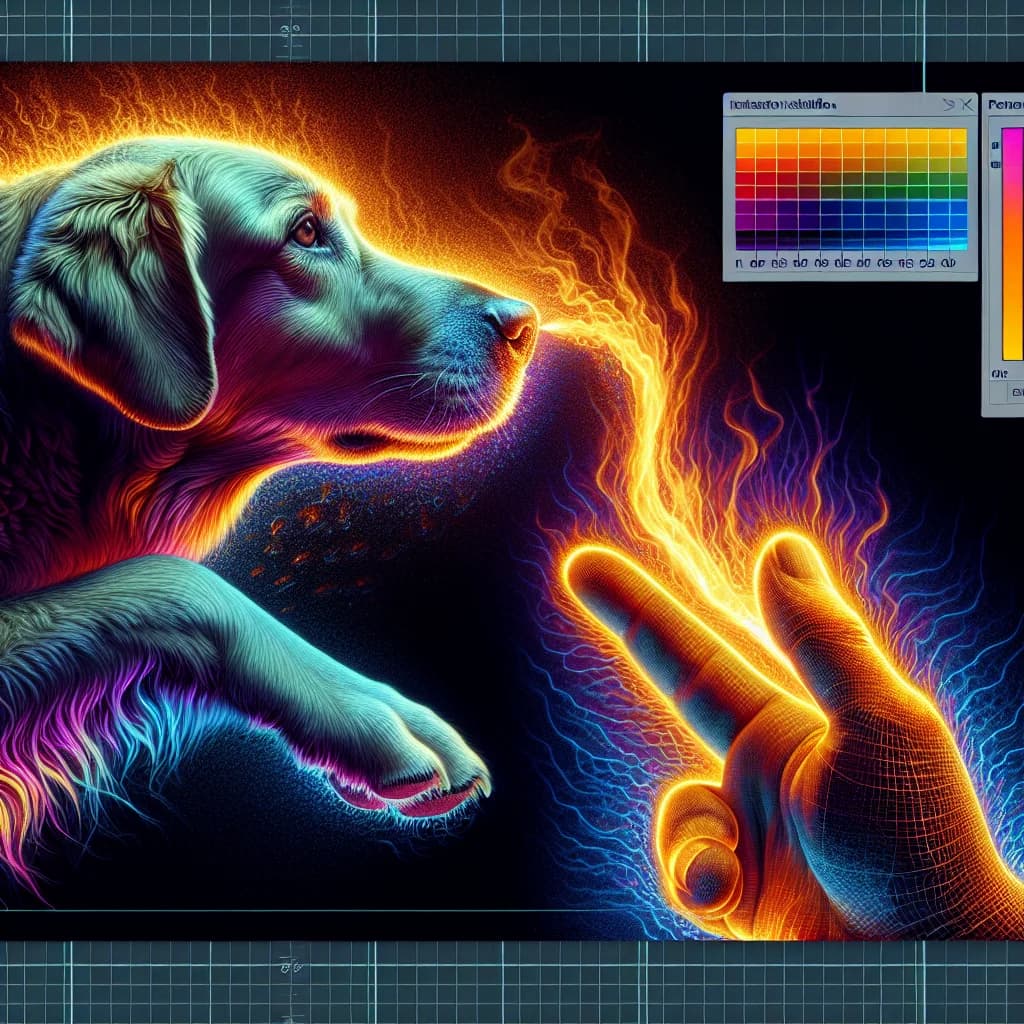
Why do pet dogs tilt their heads to better align their ears and see past their muzzles while listening
Ever wonder if that adorable head tilt is more than just a plea for treats? Discover the fascinating science of how your dog uses this "signature move" to sharpen their hearing and literally see you in a whole new light.


Too Long; Didn't Read
Dogs tilt their heads to better localize sounds by aligning their ears with the source and to shift their muzzles out of their line of sight, allowing them to more clearly see and interpret human facial expressions.
Why Do Pet Dogs Tilt Their Heads? Understanding How They Align Their Ears and See Past Their Muzzles to Listen Better
There is perhaps no canine behavior more universally endearing than the head tilt. When a dog cocks its head to the side while listening to a human voice or a high-pitched whistle, it often elicits an "aww" from owners. However, this charming gesture is far more than a simple display of curiosity or cuteness; it is a sophisticated physiological response rooted in a dog’s evolutionary biology. To a dog, the head tilt is a practical tool used to better navigate a world dominated by human sounds and facial expressions. By understanding why pet dogs tilt their heads to better align their ears and see past their muzzles while listening, owners can gain a deeper appreciation for the complex sensory processing that defines the human-animal bond. This post explores the biological and cognitive drivers behind this common behavior.
The Mechanics of Sound: Auditory Localization
One of the primary reasons dogs tilt their heads is to improve their ability to pinpoint the exact source and distance of a sound, a process known as auditory localization. While dogs can hear frequencies much higher than humans, their ability to determine the vertical origin of a sound is slightly less precise than ours.
Triangulating Sound Waves
A dog’s outer ears, or pinnae, are designed to capture sound waves and funnel them into the ear canal. When a dog tilts its head, it changes the vertical and horizontal orientation of its ears. This adjustment allows the brain to calculate the minute difference in the time it takes for a sound to reach each ear. By shifting the angle, the dog is essentially recalibrating its hearing to "triangulate" the noise, making it easier to identify whether a sound is coming from a human’s mouth or a distant rustle in the grass.
Tuning Into Frequency
Veterinary behaviorists note that dogs often tilt their heads in response to specific tones or inflections. High-pitched "baby talk" or "dog-directed speech" frequently triggers this response. The tilt helps the dog focus on the parts of human speech that carry the most emotional weight or instructional clarity, filtering out background noise to better interpret their owner's intent.
The Visual Factor: Seeing Past the Muzzle
Beyond hearing, the head tilt serves a significant visual purpose. For many breeds, the physical structure of the face—specifically the muzzle—acts as a persistent visual obstruction.
Overcoming the Muzzle Obstacle
Dr. Stanley Coren, a leading expert in canine psychology, has posited that a dog’s muzzle can block the lower half of its field of vision. When a dog looks at a human face, the muzzle may obscure the person's mouth. Since dogs rely heavily on reading human facial expressions to understand communication, this obstruction is a hurdle. By tilting their head, dogs can effectively see "around" their own snouts. This shift in perspective allows them to better observe the mouth and lower face, providing them with the visual cues necessary to supplement what they are hearing.
Breed Variations in Tilting
Research suggests that "dolichocephalic" breeds (those with long muzzles, like Greyhounds or German Shepherds) may exhibit different tilting patterns than "brachycephalic" breeds (those with flatter faces, like Pugs). Because flat-faced dogs have less of a visual obstruction, they may tilt their heads less frequently for visual clarity, though they still do so for auditory alignment.
Cognitive Processing and Social Intelligence
Recent studies from Eötvös Loránd University have linked the head tilt to high-level cognitive processing. In observations of "gifted" dogs—those capable of learning hundreds of toy names—researchers found that these dogs tilted their heads significantly more often than typical dogs when asked to retrieve an object.
- Mental Processing: The tilt appears to be a sign of the dog matching a vocal command to a mental image stored in its memory.
- Active Listening: It indicates a state of high physiological arousal and concentration, showing that the dog is actively trying to process the "meaning" of the sound.
- Empathy and Bond: Because dogs are social scavengers by nature, they are highly tuned to human social cues. The tilt is an evolutionary adaptation that enhances their ability to function as companions.
Conclusion
The canine head tilt is a remarkable example of how anatomy and behavior work in tandem. By tilting their heads to better align their ears and see past their muzzles, dogs are utilizing a specialized sensory maneuver to bridge the communication gap between species. This behavior highlights the dog's role as an active, intelligent listener that uses every tool at its disposal—from auditory triangulation to visual perspective shifting—to understand its human counterparts. While most head tilts are a normal sign of engagement, owners should consult a veterinarian if a tilt becomes persistent or is accompanied by balance issues, as this could indicate a medical concern like a vestibular ear infection. Ultimately, recognizing the science behind the tilt only deepens our respect for the incredible sensory world of our canine companions.