Why do pet ferrets perform a chaotic sideways hop known as the weasel war dance when they are excited
From frantic sideways hops to arched-back bounces, the "weasel war dance" is nature's most hilarious display of pure, unbridled joy. Discover the fascinating science behind why your ferret transforms into a chaotic ball of energy and what this wild ritual actually says about their mood.

Too Long; Didn't Read
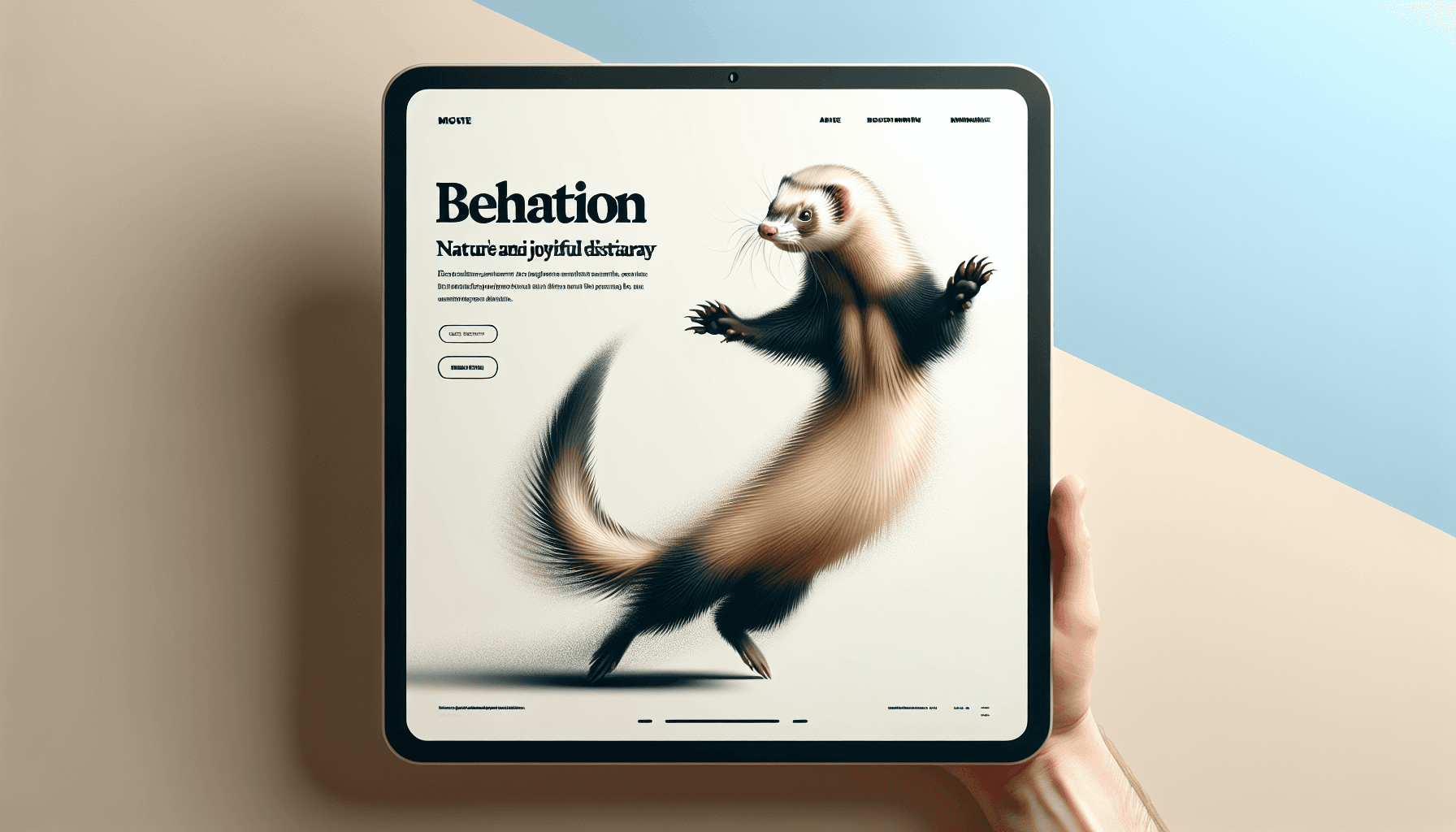
The weasel war dance is a series of frantic hops and sideways leaps that ferrets use to express extreme joy and excitement. This chaotic behavior is a non-aggressive sign of playfulness, signaling that the ferret feels safe, happy, and energized in its environment.
The Science of Joy: Why Do Pet Ferrets Perform a Chaotic Sideways Hop Known as the Weasel War Dance When They Are Excited?
If you have ever spent time with a domestic ferret (Mustela putorius furo), you have likely witnessed one of the most exuberant displays in the animal kingdom. Suddenly, and often without warning, the ferret arches its back, stiffens its limbs, and begins a series of frantic, multidirectional leaps, often colliding with furniture or tripping over its own feet. This behavior, affectionately termed the "weasel war dance," is a cornerstone of ferret biology and social interaction. While it may appear as a loss of motor control or even a neurological episode to the uninitiated, it is actually a vital expression of a ferret’s emotional state. Understanding why do pet ferrets perform a chaotic sideways hop known as the weasel war dance when they are excited? is essential for any owner looking to foster a deep bond with these intelligent mustelids and ensure their behavioral needs are met through proper husbandry.
Defining the Dance: Mechanics and Vocalizations
The weasel war dance is a complex sequence of physical maneuvers characterized by several distinct biological markers. When a ferret enters this state, it typically exhibits an arched spine and a puffed-out tail—a physiological response known as piloerection. The "dance" itself consists of lateral hops, backward scurrying, and "all-four" vertical leaps.
Accompanying these physical movements is often a specific vocalization known as "dooking." Dooking is a soft, rhythmic clucking or chirping sound that signifies high levels of excitement or stimulation. From a behavioral science perspective, these actions are categorized as "locomotor play." Unlike predatory or aggressive movements, which are calculated and linear, the war dance is intentionally non-linear and exaggerated. This lack of efficiency is exactly what defines it as play; the animal is expending energy in a safe environment to express a positive affective state.
Evolutionary Roots: From Predation to Play
To understand the origins of this behavior, one must look at the ferret's wild ancestors, such as the European polecat, and their cousins, the stoats and weasels. In the wild, mustelids have been observed performing similar rhythmic, jerky movements when cornered by a predator or when attempting to confuse prey.
Zoologists have documented stoats using a "dance" to mesmerize rabbits. The erratic movements distract the prey, causing it to freeze in confusion, which allows the mustelid to close the distance for a strike. In the domestic ferret, which has been bred for companionship and hunting assistance for over 2,000 years, this predatory tactic has been "exapted"—a biological term for a trait that shifts in function during evolution. What was once a tool for survival is now a primary method of social play and communication. In the safety of a home, the "war dance" is no longer about the hunt; it is a signal of safety and pure exuberance.
Social Signaling and Environmental Stimuli
In a multi-ferret household, the war dance serves as a crucial social lubricant. It acts as an invitation to "mock combat," a form of play-fighting that allows ferrets to practice natural behaviors without the intent to harm. Veterinary behaviorists note that when one ferret initiates the dance, it is communicating a non-threatening, playful intent to its companions.
Common triggers for this behavior include:
- Novelty: Introducing a new toy, a cardboard box, or a crinkly tunnel.
- Interaction: The return of a human owner or the start of a play session.
- Spatial Transitions: Releasing a ferret from its enclosure into a larger "play zone."
Because ferrets are highly tactile and social creatures, this display helps maintain the hierarchy and bond within a "business" (a group of ferrets). It is an indicator of a high-welfare environment where the animal feels secure enough to let down its guard.
Safety and Enrichment Guidelines
While the weasel war dance is a sign of a happy pet, it does require owners to practice "ferret-proofing." During the dance, ferrets often experience a temporary loss of spatial awareness, making them prone to falling off ledges or colliding with sharp corners.
To encourage healthy expression of this behavior, consider the following evidence-based enrichment:
- Safe Surfaces: Provide rugs or matted areas to give the ferret traction during high-speed hops.
- Tactile Variety: Use "dig boxes" filled with dried beans or starch packing peanuts to stimulate the sensory triggers that often lead to a dance.
- Observation: Learn to distinguish the war dance from the "bottle brush tail" of fear. While both involve piloerection, a fearful ferret will hiss and retreat, whereas an excited ferret will approach and hop.
Conclusion
Understanding why do pet ferrets perform a chaotic sideways hop known as the weasel war dance when they are excited? allows owners to appreciate the rich evolutionary history and emotional depth of these unique pets. The dance is far more than a quirky habit; it is a biological bridge between the ferret’s wild ancestry and its life as a domestic companion. By recognizing this behavior as a sign of joy and social invitation, owners can better interpret their pets' needs and ensure their environment is conducive to such displays of happiness. Responsible ownership involves not just feeding and housing, but also fostering the psychological well-being that allows a ferret to dance freely. Always observe your pet's movements closely, and if you ever notice a lack of coordination outside of these playful bursts, consult a veterinarian to ensure your ferret remains in peak physical health.