Why do pet goats develop unique vocal accents based on the specific social groups they live with
Much like humans, goats don’t just "baaa"—they actually pick up local accents to better fit in with their favorite social circles. Discover the fascinating science behind why your goat’s voice is a direct reflection of the friends it keeps.

Too Long; Didn't Read
Goats develop unique vocal accents through a phenomenon called vocal plasticity, which allows their bleats to mimic the sounds of their specific social group. This social learning strengthens herd bonds and helps individuals fit in, demonstrating a level of vocal flexibility rarely seen in most mammals.
The Science of Sound: Why Do Pet Goats Develop Unique Vocal Accents Based on the Specific Social Groups They Live With?
Goats have long been celebrated for their inquisitive personalities and remarkable agility, but recent scientific discoveries have revealed a surprisingly sophisticated side to their communication. While many people view goat vocalizations as simple, repetitive bleats, researchers have discovered that these animals possess a rare biological trait known as vocal plasticity. This means that a goat’s "voice" is not entirely determined by genetics; rather, it shifts and adapts based on the social environment. Understanding why do pet goats develop unique vocal accents based on the specific social groups they live with provides fascinating insight into their social intelligence and has significant implications for how we manage their welfare and group dynamics.
Understanding Vocal Plasticity in Mammals
In the animal kingdom, most vocalizations are considered "innate," meaning they are hard-wired from birth. For a long time, scientists believed that non-human mammals—with the exception of whales, dolphins, bats, and elephants—lacked the ability to modify their sounds based on their surroundings. However, studies in caprine behavior have challenged this consensus.
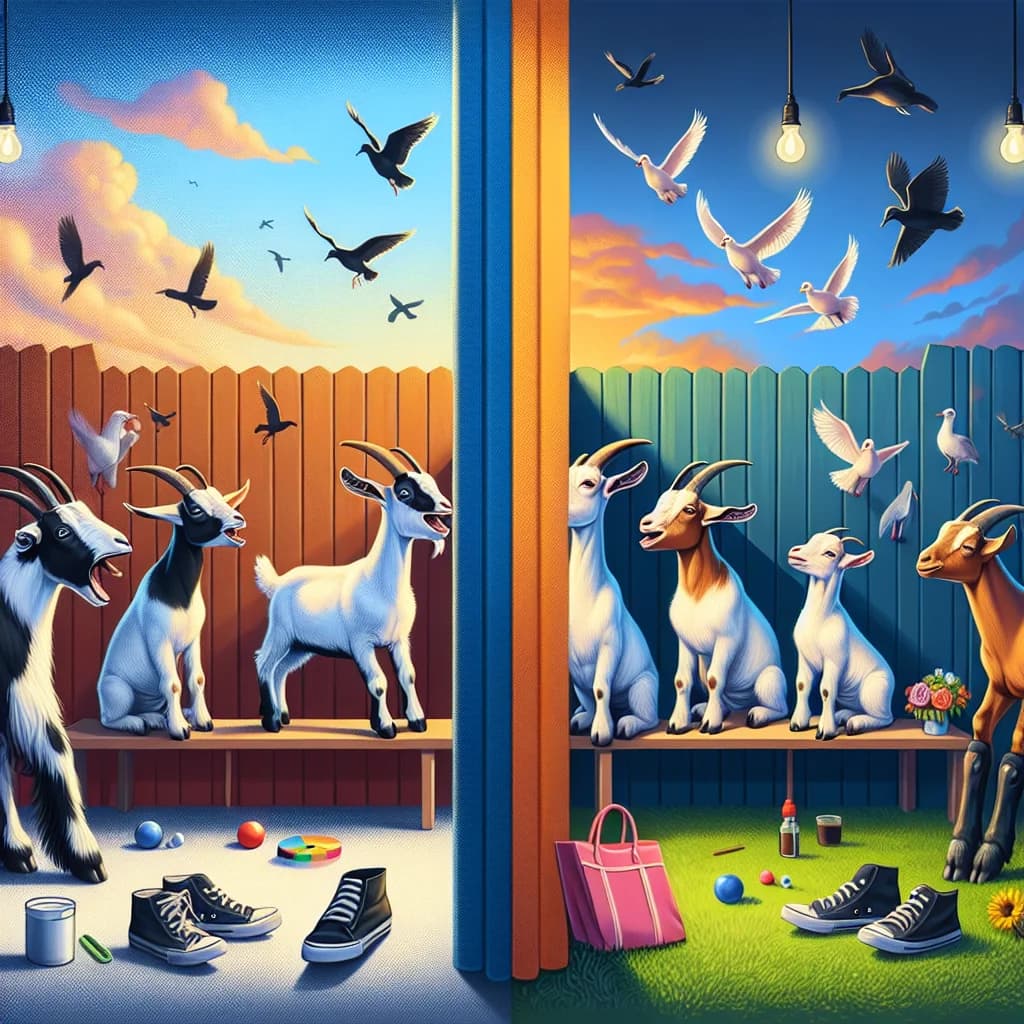
Vocal plasticity is the ability of an individual to change the acoustic features of its calls in response to social or environmental cues. In pet goats, this manifests as a "vocal accent." When goats spend significant time together, their calls begin to sound more similar to one another than to the calls of goats in different groups. This phenomenon, known as "vocal convergence," suggests that goats are far more socially aware than previously thought.
The Evidence: The "Goat Accent" Study
The primary evidence for this behavior comes from a landmark study conducted by researchers at Queen Mary University of London. By tracking the vocalizations of goat kids at different stages of their development, researchers identified several key findings:
- Sibling Similarity: Initially, kids from the same parents sounded similar due to shared genetics.
- Social Shaping: As the kids grew and were placed into specific social groups (crèches), their calls began to shift.
- Group Convergence: By the time the goats matured, the calls of individuals within the same social group became remarkably similar, regardless of their genetic relation.
This research proved that the "accent" of a goat is a product of its peer group, suggesting that social environment is just as influential as biological heritage in shaping communication.
Why Do Accents Form? The Evolutionary Purpose
From an ethological perspective, the development of a group accent serves several vital functions that improve the survival and cohesion of the herd:
1. Strengthening Group Cohesion
In the wild, goats are social prey animals that rely on the herd for protection. A shared vocal accent acts as a "social glue," helping individuals identify members of their own group. This reinforces social bonds and ensures that the group stays together during movement or grazing.
2. Individual and Group Recognition
Goats use vocalizations to express emotions and maintain contact. By developing a unique group accent, a goat can more easily distinguish a call from a "friend" or herd mate from the call of an outsider. This helps the herd react more effectively to potential threats or territorial intrusions.
3. Environmental Adaptation
Different social groups may inhabit different terrains. While not yet fully proven, some animal behaviorists suggest that subtle changes in frequency or duration of calls (the "accent") might be adaptations to the specific acoustics of their immediate environment, such as a wooded area versus an open pasture.
Implications for Pet Goat Care and Husbandry
Recognizing that goats are "vocal learners" changes how owners should approach their care. Because goats are so heavily influenced by their social peers, their psychological well-being is intrinsically tied to their group structure.
- Stable Social Groups: Since goats develop specific vocal bonds and "accents" with their peers, frequently moving individuals in and out of different groups can be stressful. Maintaining stable social units supports their natural communication patterns.
- Enrichment and Interaction: Understanding their need for social mimicry highlights the importance of providing a rich social environment. Isolated goats may experience distress not just from loneliness, but from the inability to engage in these complex social-vocal behaviors.
Conclusion
The discovery that pet goats develop unique vocal accents based on the specific social groups they live with highlights the incredible complexity of caprine intelligence. It moves goats from the category of "simple farm animals" into a select group of mammals capable of vocal learning and social adaptation. By understanding that a goat’s bleat is a dynamic tool shaped by its friends and family, owners can better appreciate the depth of their pets' social lives. Prioritizing stable, healthy social groups is essential for any goat owner looking to foster a thrive-worthy environment where these vocal animals can truly communicate and belong. For those looking to deepen their bond with their herd, observing these subtle vocal shifts offers a window into the hidden, social world of goats.