Why do pet goats have horizontal, rectangular pupils that provide them with a wide-angle view of their surroundings
Ever wondered why your goat is staring back with those strange, rectangular pupils? Discover the fascinating evolutionary secret behind their horizontal eyes and how this unique shape grants them a panoramic superpower for survival.

Too Long; Didn't Read
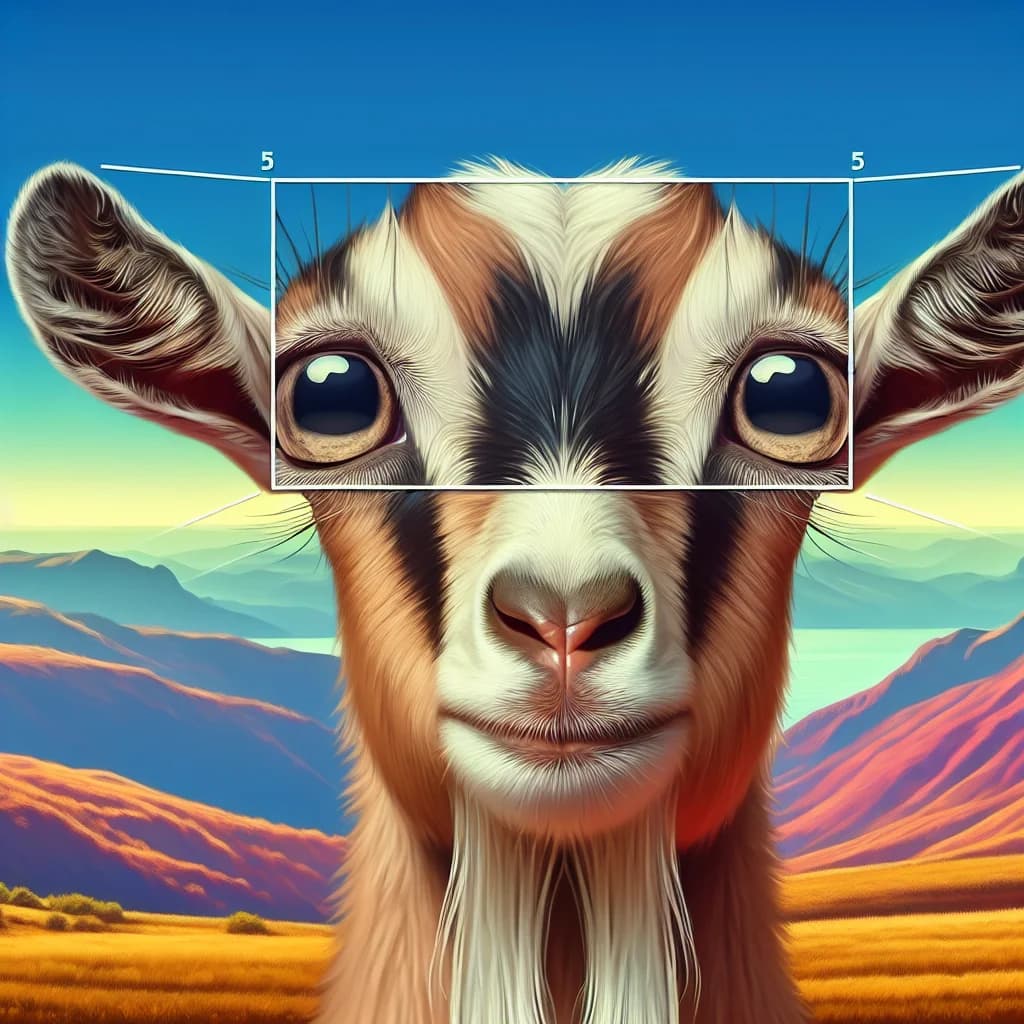
Goats have horizontal, rectangular pupils to provide a panoramic field of vision, allowing them to detect predators from almost any direction while grazing. This unique shape maximizes peripheral awareness and maintains a clear view of the horizon, even when their heads are lowered to the ground.
Panoramic Vision: Why Do Pet Goats Have Horizontal, Rectangular Pupils That Provide Them With a Wide-Angle View?
If you have ever spent time looking into the eyes of a pet goat, you likely noticed something striking and perhaps a bit otherworldly: their pupils are not round like a human’s, nor are they vertical slits like a cat’s. Instead, goats possess horizontal, rectangular pupils. This unique biological feature is far from a cosmetic quirk; it is a sophisticated evolutionary tool that has allowed caprines to survive for millennia in some of the world's most unforgiving environments. Understanding the mechanics of goat vision is essential for any owner or enthusiast, as it explains much of their behavior, from their incredible agility to their tendency to startle. This post will explore the biological necessity and functional advantages of the horizontal pupil in pet goats.
The Evolutionary Advantage: Predator Detection
The primary reason pet goats have horizontal, rectangular pupils is their historical status as a "prey species." In the wild, the ancestors of our domestic goats were constantly hunted by carnivores such as wolves, leopards, and eagles. To survive, they needed a visual system that prioritized a wide field of view over high-definition depth perception.
According to a landmark 2015 study by researchers at the University of California, Berkeley, and Durham University, the shape of an animal’s pupil is closely linked to its place in the food chain. Species with horizontal pupils are almost exclusively plant-eating prey. This shape allows the goat to take in more light from the ground and the horizon while simultaneously blocking out some of the blinding glare from the sun above. This provides a clear, panoramic view of the landscape, making it much easier to spot a predator approaching from a distance.
A Wide-Angle View of the World
While humans have a visual field of approximately 180 to 210 degrees, a goat’s horizontal pupils grant them a staggering 320 to 340-degree field of vision. This means a goat can see almost everything around its body without ever moving its head.
Key Benefits of Panoramic Vision:
- Peripheral Awareness: Goats can detect movement on either side of their body with extreme sensitivity.
- Blind Spot Minimization: The only true blind spot a goat has is directly behind its head, making it very difficult for a predator (or a playful owner) to sneak up on them unnoticed.
- Low-Light Navigation: The rectangular shape allows for a larger aperture than a round pupil, letting in more light in dim conditions, which is why goats are often active during dawn and dusk (crepuscular behavior).
The Magic of Cyclovergence
One of the most fascinating aspects of goat biology is how they maintain this horizontal view while they are grazing. When a human tilts their head, their eyes move with the head. However, if a goat’s pupils were to tilt when it lowered its head to eat, it would lose its panoramic advantage and become vulnerable.
To solve this, goats utilize a process called cyclovergence. Their eyeballs can rotate within the sockets by more than 50 degrees per eye. As the goat lowers its head to the grass, the eyes automatically rotate to stay parallel with the horizon. This ensures that even while preoccupied with eating, the goat’s "security cameras" remain level and fully functional, scanning for threats across the terrain.
Contrasting Pupils: Prey vs. Predator
To understand the goat's eye, it helps to compare it to other animals.
- Vertical Slits (e.g., Cats, Foxes): These are common in "ambush predators" that stay low to the ground. Vertical slits help them gauge distance accurately without moving their heads, which might alert prey.
- Round Pupils (e.g., Humans, Lions): These are typically found in "active foragers" or high-order predators that chase their prey and require sharp focus and depth perception over a smaller field of view.
Goats sacrifice this sharp, central focus for the ability to see a wider area. While they may not see fine details as clearly as we do, their ability to detect motion across a 330-degree arc is far superior.
Conclusion: Appreciating the Caprine Perspective
Understanding why pet goats have horizontal, rectangular pupils provides a deeper appreciation for their unique nature. These eyes are a testament to millions of years of evolutionary refinement, turning the goat into a master of environmental awareness. For owners, this knowledge is practical; it explains why goats might spook at a sudden movement in their periphery or why they seem to watch you even when their heads are down in a feeder.
Recognizing the biological drivers behind your pet’s behavior is a cornerstone of responsible animal husbandry and strengthens the human-animal bond. By respecting their wide-angle view, we can better design their environments and handle them in ways that make them feel secure. If you have concerns about your goat’s eye health or visual behavior, always consult with a veterinarian specializing in livestock or caprine care.