Why do pet hermit crabs form an orderly line to exchange their shells based on size
Discover the fascinating "vacancy chain" logic that turns a shell upgrade into a perfectly organized, high-stakes real estate swap. It’s not just a line—it’s a sophisticated social strategy that reveals the surprising intelligence behind your hermit crab’s most famous behavior.

Too Long; Didn't Read
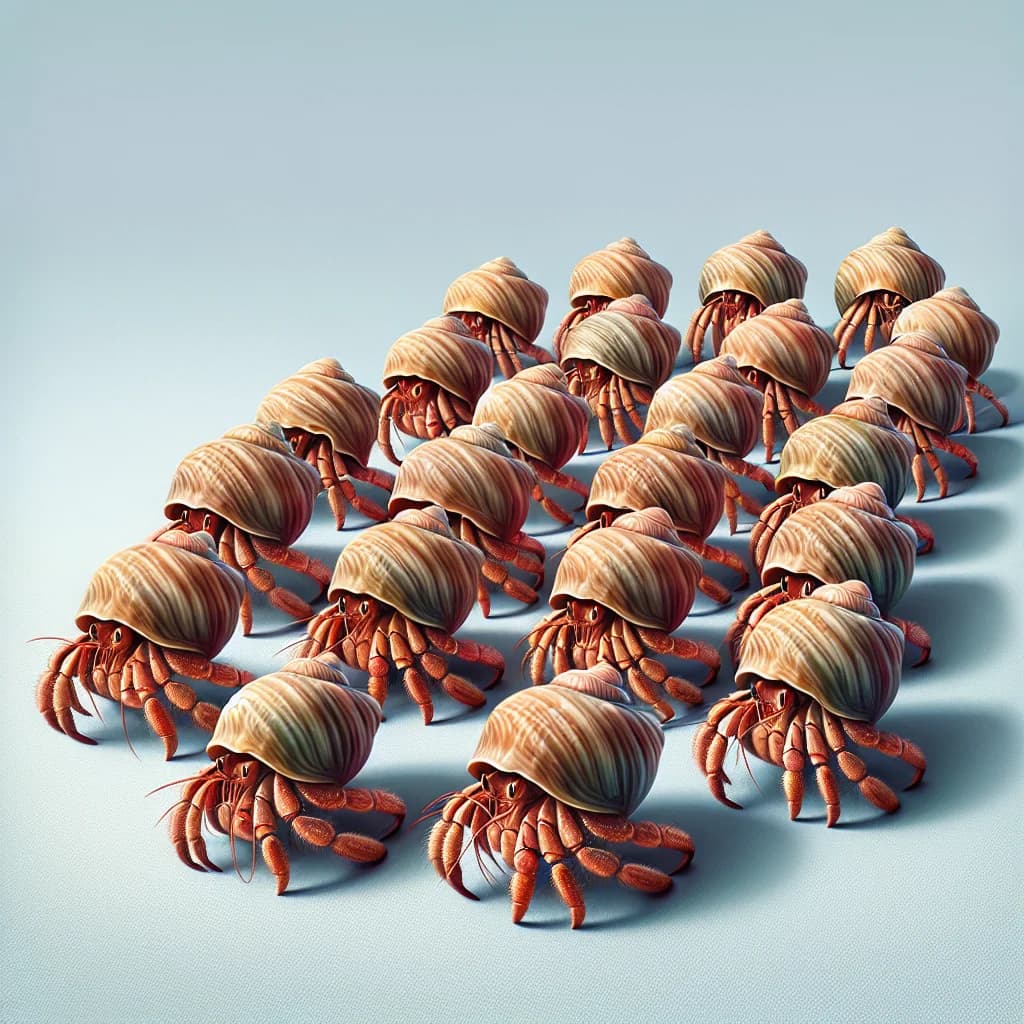
Hermit crabs engage in vacancy chains where they queue up from largest to smallest to swap shells. When a new shell becomes available, the crabs move into the next larger one in a synchronized sequence, ensuring everyone gets a better-fitting home efficiently and safely.
The Architecture of Survival: Why Do Pet Hermit Crabs Form an Orderly Line to Exchange Their Shells Based on Size?
Imagine a housing market so efficient that instead of competing and bidding, every resident simply stands in a neat line and waits for the perfect moment to move into a bigger home. In the world of decapod crustaceans, this is not a fantasy but a survival strategy. Pet hermit crabs, particularly those in the Coenobita genus, often exhibit a fascinating social behavior known as a "vacancy chain." This phenomenon involves crabs organizing themselves into a literal queue to facilitate a massive, sequential exchange of homes. Understanding why do pet hermit crabs form an orderly line to exchange their shells based on size is essential for any keeper who wishes to provide an environment that respects their complex biological needs and minimizes the stress of growth.
The Biological Necessity of the Mobile Home
To understand the orderly line, one must first understand the hermit crab's anatomy. Unlike other crabs, the hermit crab possesses a soft, spirally curved abdomen. This vulnerability makes them an easy target for predators and susceptible to desiccation (drying out). To survive, they must scavenge the discarded shells of gastropods (snails).
Because a hermit crab’s exoskeleton does not grow with them in a continuous fashion—they molt to increase in size—they eventually outgrow their current shell. A shell that is too small restricts growth and prevents the crab from retracting fully to protect itself. Conversely, a shell that is too large is heavy and difficult to maneuver. Consequently, finding the "perfect fit" is a matter of life and death.
The Vacancy Chain: A Masterclass in Efficiency
The "orderly line" behavior is scientifically classified as a synchronous vacancy chain. In the wild, and often in well-maintained pet enclosures, this process follows a specific, logical sequence:
- Discovery: A single crab finds a vacant shell that is too large for its current needs.
- The Waiting Game: Instead of abandoning the shell, the crab waits nearby. It may stay for hours, effectively "holding" the resource.
- The Gathering: Other crabs, attracted by the activity or the scent of the shell, begin to congregate.
- The Queue: The crabs begin to measure one another and the new shell. They physically organize themselves into a line, largest to smallest, often grabbing onto the shell of the crab in front of them.
- The Sequential Swap: Once a crab arrives that is large enough to fit the new "anchor" shell, it moves in. This leaves its old shell vacant for the next crab in line. Like a row of falling dominoes, each crab moves into the shell of the predecessor before it.
Why Not Just Fight?
From an evolutionary perspective, the vacancy chain is significantly more efficient than combat. In a "shell fight," crabs risk serious injury or even death. By forming a line, the crabs ensure that the maximum number of individuals receive a housing upgrade with the minimum amount of physical risk. This social cooperation reduces the amount of time any single crab spends "naked" and vulnerable during the transition.
Implications for Pet Husbandry and Care
For the pet owner, observing this behavior is a sign of a healthy, low-stress environment. However, it also highlights the critical responsibilities of the keeper. To support these natural behaviors, owners should adhere to the following evidence-based guidelines:
- Shell Variety: Provide at least 3 to 5 appropriate gastropod shells per crab. These should vary slightly in size to accommodate the "steps" in the vacancy chain.
- Correct Shell Types: Most pet hermit crabs prefer shells with round or D-shaped openings (such as Turbo or Magpie shells). Providing the wrong species of shell can stall a vacancy chain.
- Reducing Resource Scarcity: Aggression (shell rapping or "shucking") occurs when there are not enough suitable homes. Ensuring a surplus of shells prevents the orderly line from turning into a chaotic brawl.
Conclusion
The orderly line formed by hermit crabs is a remarkable example of behavioral ecology. It demonstrates that even "simple" invertebrates are capable of complex social organization driven by the absolute necessity of protection. By understanding why do pet hermit crabs form an orderly line to exchange their shells based on size, keepers can better appreciate the sophisticated nature of their pets. Providing a diverse "closet" of shells is not just a matter of décor; it is a vital contribution to the animal’s welfare, allowing them to perform the vacancy chains that have ensured their survival for millions of years. For the responsible owner, facilitating these natural transitions is the key to a thriving, peaceful crabitat.