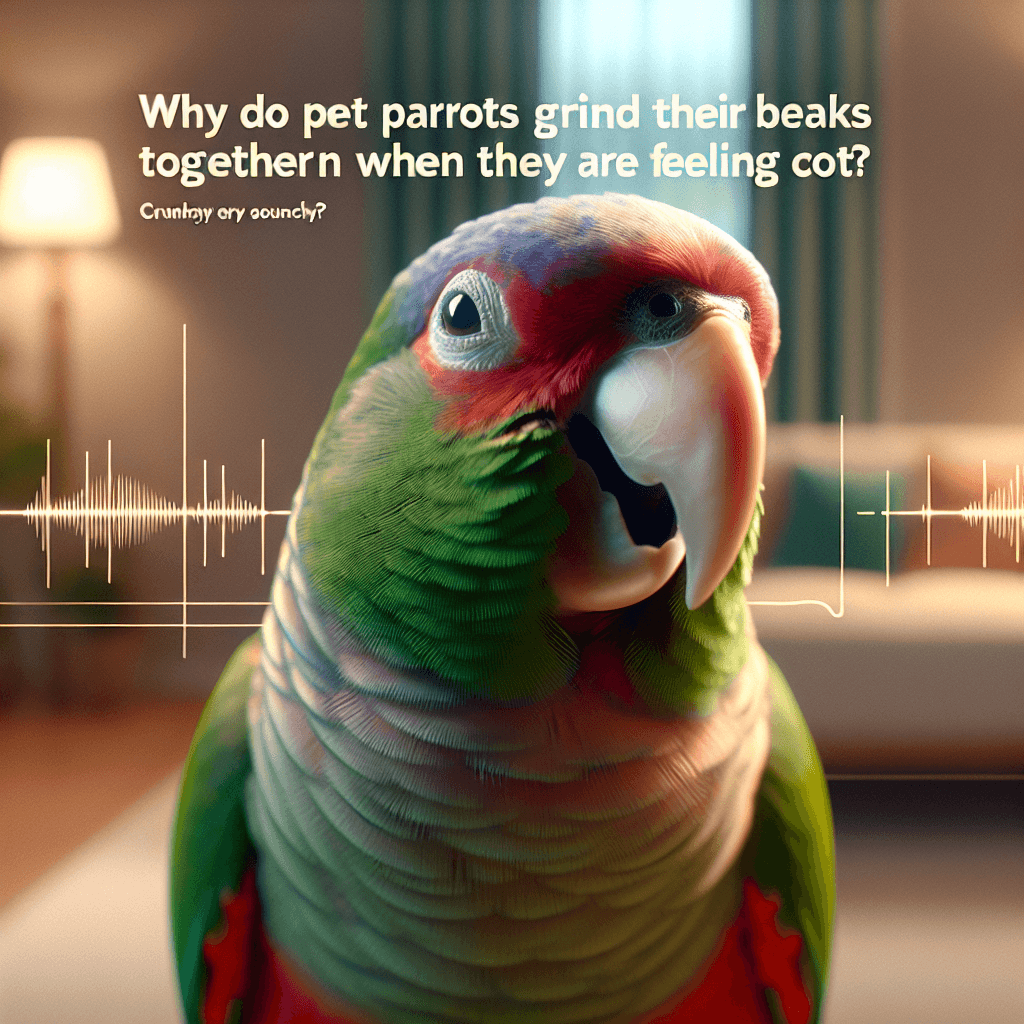
Why do pet parrots grind their beaks together to create a crunchy sound when they are feeling content
That rhythmic, gravelly crunch isn’t just a quirky habit—it’s actually a parrot’s way of singing themselves a lullaby of pure contentment. Discover the heartwarming secret behind beak grinding and why it’s the ultimate sign that your feathered friend feels completely safe and loved.

Too Long; Didn't Read
Parrots grind their beaks to signal deep relaxation, safety, and contentment, typically occurring right before sleep. This behavior, known as bruxing, is a positive sign that a bird feels comfortable in its environment while also helping to keep the beak healthy and trim.
The Science of Serenity: Why Do Pet Parrots Grind Their Beaks Together to Create a Crunchy Sound When They Are Feeling Content?
As the sun sets and the household begins to quiet, many bird owners notice a peculiar rhythmic sound emanating from their feathered companions—a distinctive, sandpaper-like "crunching." This behavior, known as beak grinding, is one of the most common yet misunderstood vocalizations in the avian world. While it may sound alarming to a first-time owner, it is actually a profound indicator of a bird’s internal state. Understanding why do pet parrots grind their beaks together to create a crunchy sound when they are feeling content? is essential for any keeper looking to deepen their bond with their pet and ensure optimal husbandry. This behavior is a fascinating intersection of biological maintenance and emotional signaling, serving as a primary indicator of a parrot’s psychological well-being and physical comfort.
The Anatomy and Mechanics of the Beak Grind
To understand why this sound occurs, one must first look at the unique anatomy of the psittacine (parrot) beak. Unlike human teeth, a parrot's beak is composed of a bony core covered by a continuously growing sheath of keratin called the rhamphotheca. The upper portion is known as the rhinotheca, while the lower portion is the gnathotheca.
The "crunchy" sound is produced when the bird slides the lower mandible back and forth against the underside of the upper mandible. This anatomical area is often ridged, and the friction between the two keratin surfaces creates the audible vibration. In veterinary terms, this is often associated with the bird’s "occlusion," or how the upper and lower parts of the beak meet.
Biological Maintenance and Beak Health
While the behavior is strongly linked to emotion, it also serves a functional biological purpose. Because the keratin sheath of a parrot’s beak grows throughout its entire life, constant maintenance is required to keep the edges sharp and the length manageable.
- Self-Sharpening: Known as "thegning," the act of grinding helps keep the beak in top condition.
- Removing Debris: After a meal, grinding can help dislodge small food particles trapped in the ridges of the upper mandible.
- Stress Relief: Much like "stimming" behaviors in other animals, the physical sensation of the grind may provide a soothing tactile feedback that helps the bird transition from an active state to a resting state.
The Psychological Indicator: A Sign of Safety
The primary answer to why do pet parrots grind their beaks together to create a crunchy sound when they are feeling content? lies in the bird’s sense of security. In the wild, parrots are prey species. They are biologically programmed to remain hyper-vigilant. A bird that is stressed, frightened, or scanning for predators will not engage in beak grinding.
When a parrot begins to grind its beak, it is a signal that the parasympathetic nervous system has taken over. This is the "rest and digest" system. Avian behaviorists note that this sound usually occurs when a bird is:
- Preparing for Sleep: It is a standard part of the pre-roosting ritual.
- Feeling Secure: The bird perceives its environment as being free of immediate threats.
- Socially Bonded: Parrots often grind their beaks when sitting near their favorite human or avian companion, signaling a high level of trust.
Distinguishing Grinding from Other Behaviors
It is important for owners to distinguish contentment-based grinding from other beak-related sounds. While beak grinding is a slow, rhythmic, and relaxed behavior, "beak clicking" (a sharp, rapid snapping of the mandibles) can sometimes be a defensive warning. Similarly, "beak wiping" is a functional grooming move used to clean the beak against a perch.
By contrast, the crunchy sound of contentment is almost always accompanied by relaxed body language. You will typically see:
- Fluffed Feathers: Specifically the feathers around the base of the beak (the malar region).
- One-Footed Standing: Many parrots tuck one leg into their abdominal feathers while grinding.
- Slow Blinking: Eyes may be partially closed in a state of drowsiness.
Conclusion
Understanding the nuances of avian body language is the cornerstone of responsible bird ownership. Recognizing why do pet parrots grind their beaks together to create a crunchy sound when they are feeling content? allows owners to validate that they have created a safe, enriching, and low-stress environment for their pets. This rhythmic crunch is more than just a biological byproduct of beak maintenance; it is a vocal testimonial of a bird’s peace of mind. By observing this behavior, keepers can gain confidence in their husbandry practices and enjoy the quiet harmony that comes with a truly satisfied parrot. If you notice a sudden cessation of this behavior or if your bird exhibits other signs of distress, always consult with an avian veterinarian to ensure their continued health and happiness.