Why do pet parrots possess the rare ability to synchronize their movements to the rhythmic beat of music
While most animals hear music as mere noise, parrots are biologically hardwired to feel the groove. Discover the secret evolutionary link between their vocal mimicry and their uncanny ability to dance in perfect time with your favorite tracks.

Too Long; Didn't Read
Parrots can dance to music because their brains possess unique neural links between auditory and motor centers, originally evolved for vocal imitation. This specialized wiring allows them to process rhythmic beats and synchronize their physical movements to the tempo, a rare cognitive ability shared primarily with humans.
The Science of Rhythm: Why Do Pet Parrots Possess the Rare Ability to Synchronize Their Movements to the Rhythmic Beat of Music?
From viral videos of head-bobbing cockatoos to parrots stepping in perfect time to a pop song, the image of a "dancing" bird is a source of immense joy for pet owners. While many animals move to sound, parrots are among the extremely few species—aside from humans—capable of true entrainment. Entrainment is the ability to perceive a musical pulse and align motor movements to it in real-time. This phenomenon is more than just a quirky trick; it is a profound window into the complex neurobiology of the avian brain. Understanding why do pet parrots possess the rare ability to synchronize their movements to the rhythmic beat of music provides essential insights into their cognitive needs, social structures, and the unique bond they share with humans.
Understanding Entrainment: A Rare Biological Gift
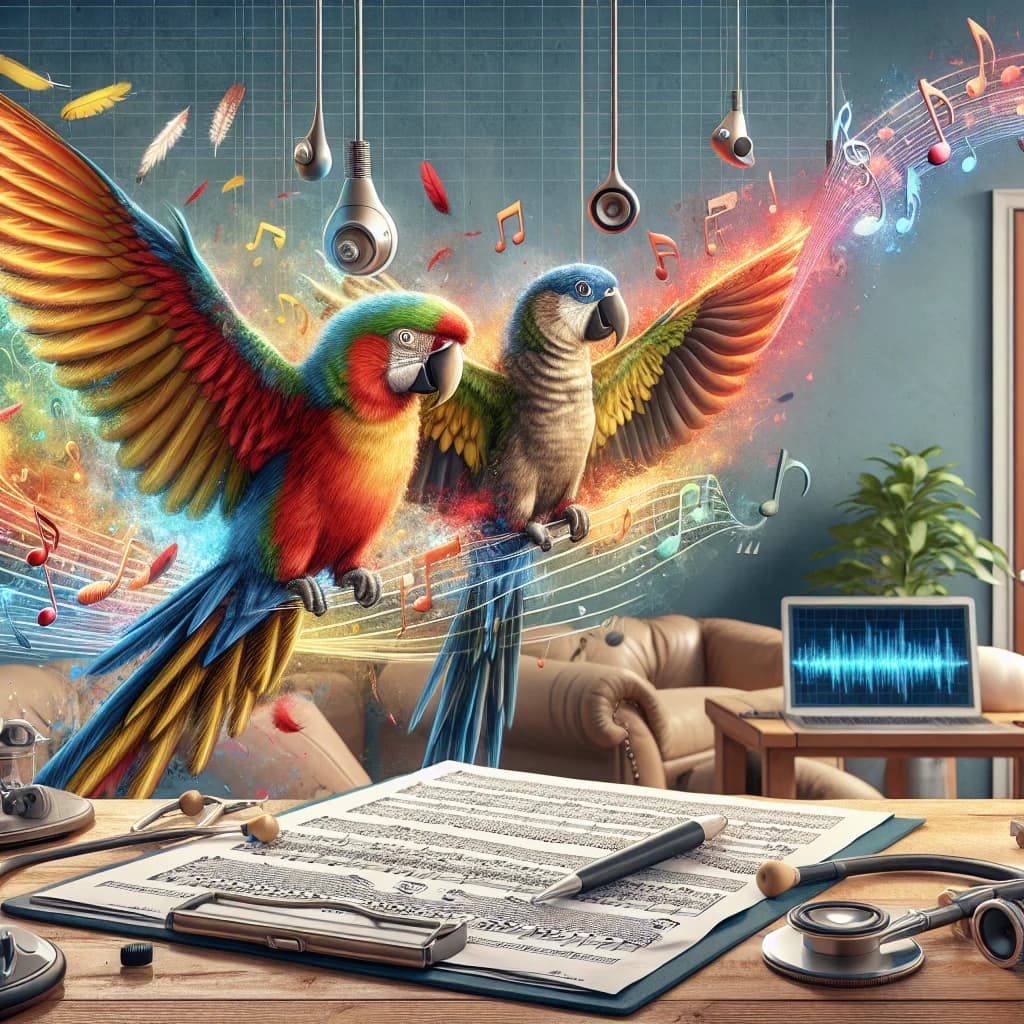
In the animal kingdom, "dancing" is an incredibly rare trait. While many species can be trained to move in response to a cue, parrots demonstrate spontaneous synchronization. This means they can identify a beat, adjust their movements when the tempo changes, and maintain a rhythmic consistency that matches the music.
Scientific research, most notably the studies involving a Sulphur-crested Cockatoo named Snowball, has confirmed that parrots are not merely mimicking human movements. Instead, they possess the cognitive hardware to process auditory information and translate it into a motor response. This ability is notably absent in our closest relatives, the non-human primates, suggesting that rhythm is not necessarily a byproduct of general intelligence, but rather a specialized evolutionary development.
The Vocal Learning Hypothesis: The Brain Science
The leading scientific explanation for this behavior is the "vocal learning hypothesis." This theory suggests that the brain circuitry required for complex vocal learning—the ability to hear, remember, and mimic sounds—is the same circuitry required for rhythmic synchronization.
The Neurobiological Link
- Auditory-Motor Mapping: In vocal learners like parrots, there is a strong, direct connection between the auditory cortex (which processes sound) and the motor cortex (which controls movement).
- Basal Ganglia Involvement: Research indicates that the basal ganglia, a group of subcortical nuclei responsible for motor control and sequencing, are highly active during both vocal mimicry and rhythmic movement.
- Species-Specific Development: Parrots are among the few groups, including songbirds and hummingbirds, that possess these specialized "vocal learning" brain pathways. However, parrots seem uniquely predisposed to full-body rhythmic synchronization compared to other avian species.
Evolution and Social Synchronization
Beyond biology, the reason parrots "dance" is deeply rooted in their social evolution. In the wild, parrots are highly gregarious birds that rely on complex communication to maintain flock cohesion.
Social Bonding and Communication
Parrots use synchronized vocalizations and movements to bond with mates and signal group membership. When a pet parrot synchronizes its movements to a beat, it is often a social behavior aimed at interacting with its human "flock." This synchronization releases feel-good neurochemicals, such as dopamine, reinforcing the bond between the bird and its owner. It is an expression of social engagement and cognitive stimulation rather than a simple reflexive action.
Practical Implications for Enrichment and Care
Understanding that rhythm is a biological and social need allows owners to provide better care. Providing musical enrichment is a scientifically-backed method for improving the welfare of captive parrots.
- Cognitive Stimulation: Exposure to music with a clear, steady beat provides mental exercise, helping to prevent boredom and associated behavioral issues like feather plucking.
- Emotional Regulation: Observations by avian behaviorists suggest that parrots may use rhythmic movement to modulate their energy levels or express excitement.
- Interactive Play: Dancing with a parrot can be a powerful bonding tool, utilizing their natural inclination for social synchronization to build trust.
Conclusion
The question of why do pet parrots possess the rare ability to synchronize their movements to the rhythmic beat of music leads us to a fascinating intersection of neurobiology and social evolution. Their ability to dance is a byproduct of the sophisticated brain structures that also allow them to speak and mimic sounds. This rare talent highlights the extraordinary cognitive complexity of parrots and underscores their need for social interaction and mental stimulation. By recognizing and encouraging these rhythmic displays, owners can enhance the human-animal bond and support the psychological well-being of their feathered companions. For those looking to deepen their understanding of avian behavior, observing these rhythmic interactions serves as a constant reminder of the profound intelligence residing within these remarkable birds.