Why do pet parrots possess the specialized brain circuitry required to synchronize their movements to a musical beat
Discover the rare evolutionary "superpower" that allows parrots to feel the rhythm in a way almost no other animal can. Dive into the secret brain circuitry that transforms these feathered mimics into the animal kingdom’s most natural-born dancers.

Too Long; Didn't Read
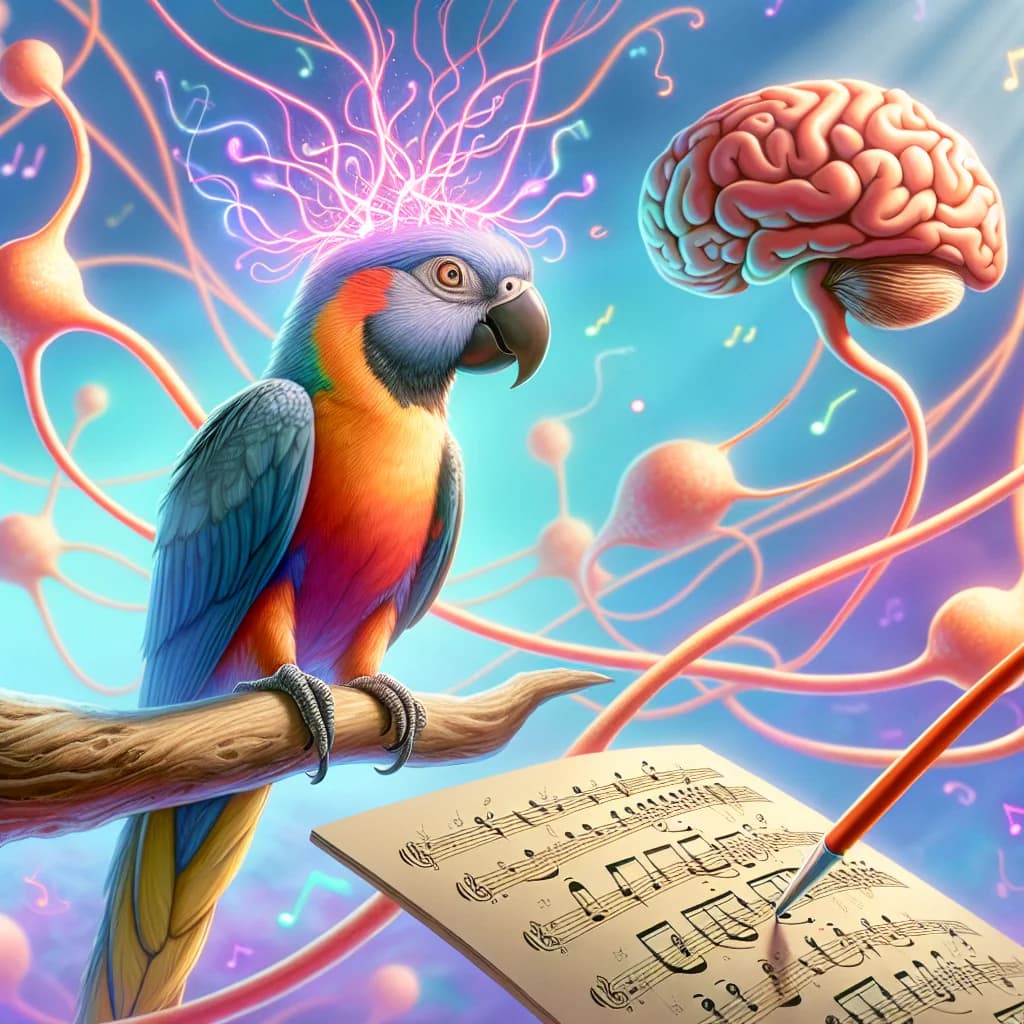
Parrots can dance to music because the brain circuitry evolved for complex vocal learning is closely linked to motor control systems, enabling them to process rhythm and synchronize their movements to a beat.
The Science of Rhythm: Why Do Pet Parrots Possess the Specialized Brain Circuitry Required to Synchronize Their Movements to a Musical Beat?
If you have ever watched a cockatoo bob its head to a pop song or a parakeet shimmy to a rhythmic whistle, you have witnessed one of the most remarkable phenomena in the animal kingdom. While many animals react to sound, pet parrots are among the few non-human species capable of "entrainment"—the ability to synchronize their body movements to an external musical beat. This behavior, often seen as a charming parlor trick, is actually a window into a highly complex neurological framework. Understanding why do pet parrots possess the specialized brain circuitry required to synchronize their movements to a musical beat? offers fascinating insights into avian intelligence and the evolutionary history of communication. This post explores the biological link between vocal mimicry and rhythmic movement, revealing the sophisticated neural pathways that make your pet a natural-born dancer.
The Vocal Learning Hypothesis
The primary scientific explanation for a parrot’s rhythmic ability is known as the "vocal learning hypothesis." First proposed by neuroscientist Aniruddh Patel, this theory suggests that the capacity for rhythmic entrainment is a byproduct of the brain circuitry required for complex vocal learning.
Vocal learning is the ability to hear a sound and modify vocal output to mimic it. Unlike most mammals, parrots possess a specialized network of "nuclei" in their brains that facilitate this mimicry. For a parrot to imitate a human word, its brain must create a tight loop between the auditory system (which processes sound) and the motor system (which controls the muscles used for vocalization). Researchers believe that this "bridge" between hearing and moving is what allows parrots to perceive a musical beat and immediately translate it into physical motion.
Neural Architecture: The Role of the Basal Ganglia
To understand why parrots can dance while our closest primate relatives, such as chimpanzees, generally cannot, we must look at the basal ganglia. In the avian brain, the basal ganglia are responsible for motor control and sequencing. In vocal learners like parrots, there is a specialized "shell" around the motor centers of the brain that is not found in non-vocal learners.
Auditory-Motor Integration
In parrots, the auditory cortex—the part of the brain that hears music—is exceptionally well-connected to the basal ganglia. This high-speed "neural highway" allows the bird to extract the pulse of a song and predict when the next beat will occur. This is a predictive process, not a reactive one; the parrot isn't just reacting to a sound it heard a millisecond ago, but is actually anticipating the timing of the next beat and moving in sync with it.
The "Mimicry" Circuitry
Studies using functional MRI and gene expression mapping have shown that the brain regions parrots use for speech imitation overlap significantly with the regions used for rhythmic movement. This suggests that "dancing" is essentially a physical form of the same mimicry parrots use to replicate speech or household noises.
Evolutionary Advantages and Social Bonding
While the circuitry may have evolved for vocal communication, its application in rhythmic movement serves important social functions. In the wild, parrots are highly social creatures that rely on synchronous behaviors to bond with their flock.
- Social Cohesion: Moving together in rhythm can strengthen pair bonds and flock unity.
- Cognitive Flexibility: The ability to synchronize shows a high level of cognitive flexibility, allowing parrots to adapt to the complex social dynamics of their environment.
- Human-Animal Bond: In a domestic setting, dancing often becomes a shared activity between the parrot and its owner. Because parrots are motivated by social interaction, the positive reinforcement they receive when "dancing" with a human further stimulates these neural pathways.
Practical Implications for Pet Care and Enrichment
Knowing that your parrot possesses this specialized circuitry is vital for providing proper husbandry and mental stimulation. Because their brains are wired for auditory-motor integration, music is not just "background noise" to a parrot; it is a profound form of cognitive enrichment.
- Auditory Enrichment: Provide a variety of musical genres to see which rhythms your parrot prefers. Different tempos can stimulate different levels of activity.
- Interactive Play: Engaging in rhythmic play—such as bobbing your head along with your bird—can alleviate boredom and reduce stress-related behaviors like feather picking.
- Training Opportunities: Use rhythmic cues as part of positive reinforcement training. The parrot’s natural inclination toward entrainment makes them highly responsive to sound-based commands.
Conclusion
The question of why do pet parrots possess the specialized brain circuitry required to synchronize their movements to a musical beat? finds its answer in the intersection of vocal mimicry and advanced motor control. This ability is a testament to the extraordinary evolutionary journey of parrots, placing them in an elite group of animals capable of sophisticated cognitive processing. By recognizing that a dancing parrot is exercising a complex neural bridge between sound and motion, owners can better appreciate the depth of their pet's intelligence. Providing musical and social outlets for these behaviors is essential for the psychological well-being of these remarkable birds. For owners looking to deepen their bond, simply turning on the radio and sharing a beat can be one of the most effective ways to support a parrot's vibrant mental life.