Why do pet parrots spontaneously bob their heads and dance in perfect synchronization with a musical beat
While most animals are rhythmically challenged, parrots possess a rare neurological "superpower" that allows them to feel the groove just like humans do. Discover the fascinating scientific secret behind why your feathered friend can’t help but bust a move the moment the music starts.

Too Long; Didn't Read
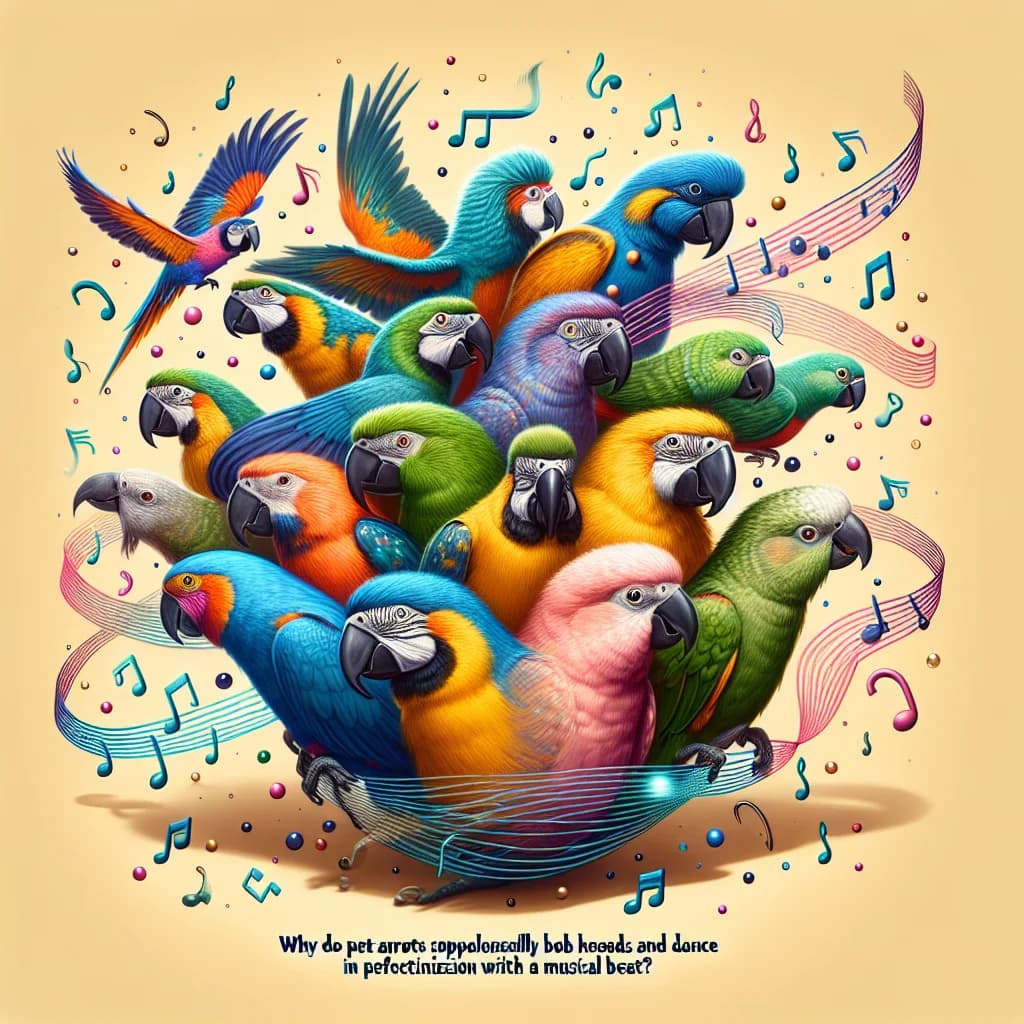
Parrots possess a unique neural link between their auditory and motor systems, a byproduct of their advanced vocal learning abilities. This allows them to perceive rhythm and synchronize their movements to a musical beat, a cognitive trait they share with humans but few other animals.
The Science of Rhythm: Why Do Pet Parrots Spontaneously Bob Their Heads and Dance in Perfect Synchronization with a Musical Beat?
For decades, viral videos of parrots "grooving" to pop songs have delighted the internet, yet for animal behaviorists, this phenomenon represents a profound biological mystery. While many animals move in response to sound, parrots are among the very few species—including humans—that exhibit "entrainment," the ability to align internal biological rhythms with an external musical beat. This behavior is not merely a product of domestication or repetitive training; it is a spontaneous manifestation of complex neurological processes. Understanding why do pet parrots spontaneously bob their heads and dance in perfect synchronization with a musical beat provides a fascinating window into avian intelligence and the evolutionary roots of rhythm. This post explores the neurobiological and social factors that allow parrots to become nature’s most unlikely percussionists.
Understanding Entrainment: The Science of the Beat
In the world of biology, "rhythmic entrainment" is the capacity to perceive a pulse in music and adjust motor movements to match it in real-time. Until recently, many scientists believed this was a uniquely human trait. However, landmark studies, most notably those involving Snowball, a Sulfur-crested Cockatoo, proved that parrots can adjust their tempo when the speed of a song changes.
This ability is distinct from simple mimicry. While a dog might jump when it hears a specific tone, it is reacting to a cue. A parrot, conversely, anticipates the beat. This involves a sophisticated feedback loop where the brain’s auditory system communicates directly with the motor cortex. Research suggests that this behavior is "spontaneous," meaning parrots often begin dancing to music they have never heard before without any prior reward-based training.
The Neural Link: Vocal Mimicry and Beat Perception
The prevailing scientific theory for this behavior is the "Vocal Learning and Rhythmic Entrainment Hypothesis." This theory posits that the brain circuitry required for complex vocal learning—the ability to hear a sound and reproduce it—is the same circuitry required for dancing.
Key Biological Factors:
- Basal Ganglia Integration: In vocal learners like parrots and humans, the auditory centers of the brain are deeply interconnected with the basal ganglia, the area responsible for motor control.
- Auditory-Motor Mapping: Parrots possess "mirror neurons" that allow them to map what they hear onto their own physical movements.
- Species Specificity: This explains why "non-vocal learners," such as non-human primates or dogs, generally fail to synchronize with a beat, despite their high intelligence.
Because parrots evolved to mimic the complex vocalizations of their flock to survive and bond, they inadvertently developed the neurological hardware necessary to process musical rhythm.
Social Dynamics and Enrichment
While the "how" is rooted in neurology, the "why" is often social. Parrots are highly communal animals that use synchronized behavior to reinforce group bonds. In a domestic setting, the human owner becomes the "flock." When a parrot dances, it is often a form of social play and engagement.
Practical Implications for Care:
- Mental Stimulation: Music serves as a powerful form of cognitive enrichment, preventing boredom-related behaviors like feather plucking.
- Bonding: Dancing with a pet parrot can strengthen the human-animal bond through shared rhythmic activity.
- Choice and Preference: Observations show that parrots often have individual musical preferences, responding more vigorously to certain genres or tempos, which reflects their unique personalities.
Conclusion
The reason why do pet parrots spontaneously bob their heads and dance in perfect synchronization with a musical beat lies at the intersection of advanced neurobiology and social evolution. Their ability to entrain to a rhythm is a rare gift, shared by humans but absent in many of our closest primate relatives. This behavior highlights the incredible complexity of the avian brain and underscores the importance of providing these intelligent creatures with a stimulating environment that caters to their social and cognitive needs. By recognizing the science behind the "dance," owners can better appreciate the profound connection they share with their feathered companions. For those looking to support their parrot’s well-being, incorporating music and interactive play is an evidence-based way to foster a happy, healthy home.