Why do pet parrots use their beaks as a functional third limb to help them climb and navigate
Think your parrot only has two legs? Discover the fascinating science behind "tripedal" climbing and how your feathered friend uses its beak as a high-powered third limb to master the vertical world.

Too Long; Didn't Read
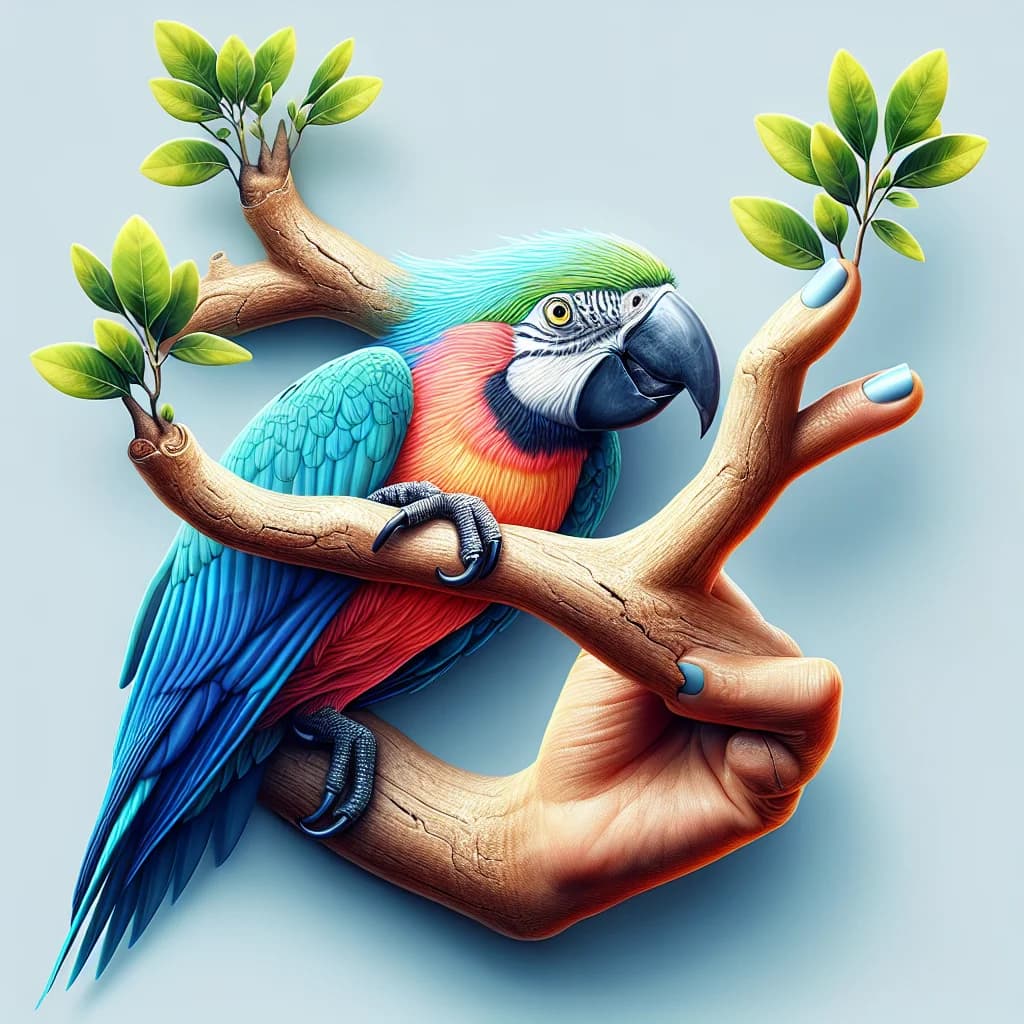
Parrots utilize their beaks as a functional third limb to provide extra stability and power during vertical climbing. This unique tripedal gait allows them to navigate complex environments by exerting forces comparable to their hind limbs, making their movement more efficient and secure.
The Tripedal Advantage: Why Do Pet Parrots Use Their Beaks as a Functional Third Limb to Help Them Climb and Navigate?
If you have ever watched a parrot navigate the bars of its cage or scramble up a play gym, you have likely witnessed a fascinating behavioral quirk: the bird reaches out with its beak, grips a surface, and pulls its body upward. While it may look like a simple balancing act, researchers have discovered that this behavior is a highly specialized form of movement. In the avian world, parrots are unique for their ability to utilize "tripedal" locomotion. Why do pet parrots use their beaks as a functional third limb to help them climb and navigate? This behavior is not merely a habit; it is a complex biological adaptation involving specialized skull anatomy and neural pathways that allow parrots to treat their beak as a powerful, propulsive appendage.
The Biomechanics of the "Third Limb"
To understand why parrots use their beaks for climbing, one must first look at the anatomy of the psittacine skull. Unlike most birds, parrots possess a "kinetic skull." This means the upper mandible is not fused to the cranium; instead, it is attached via a flexible hinge called the craniofacial kinesis. This allows the upper beak to move independently and with significant force.
In a landmark 2022 study published in Proceedings of the Royal Society B, researchers analyzed the climbing mechanics of Rosy-faced Lovebirds. They found that when climbing vertically, parrots do not just use their beaks for balance. Instead, the beak provides propulsive force equal to or greater than the force generated by the hind limbs of similar-sized climbing mammals. This effectively makes the beak a "third limb" capable of supporting the bird’s entire body weight while navigating vertical inclines.
Prokinesis and Muscular Coordination
The specific type of skull movement parrots exhibit is known as prokinesis. Large, specialized muscles (the m. pterygoideus and m. pseudotemporalis) allow the bird to exert a powerful grip. When climbing, the parrot uses a "reach-grasp-pull" cycle. The beak secures a hold, providing a stable pivot point that allows the zygodactyl feet (two toes forward, two back) to find the next secure position.
Evolutionary Context: Life in the Canopy
The evolution of tripedalism is directly linked to the parrot's natural habitat. Most parrot species evolved in dense, complex forest canopies where movement involves navigating thin, unstable branches and vertical trunks.
- Stability in Three Dimensions: While many birds fly between branches, parrots often forage by walking along limbs. Using the beak as a third point of contact provides a "fail-safe" against falls in high-wind environments.
- Energy Efficiency: For a heavy-bodied bird, short-distance climbing is often more energy-efficient than taking flight, especially when moving within the dense foliage of a single tree.
- Zygodactyl Limitations: While zygodactyl feet are excellent for perching and manipulating food, they lack the specific "rear-drive" power found in some other climbing species. The beak compensates by providing the necessary upward pull.
Sensory Feedback and Navigation
The beak is not just a mechanical tool; it is a highly sensitive sensory organ. Parrots possess a high density of Herbst corpuscles—mechanoreceptors located near the tip of the beak. These receptors allow the parrot to "feel" the texture, stability, and temperature of a surface before committing its full weight to it.
When a pet parrot "mouths" a new ladder or perch, it is often performing a safety check. This sensory navigation is crucial for pet parrots, as they must often navigate artificial materials like smooth plastic or metal, which do not offer the same natural traction as tree bark.
Practical Implications for Pet Care and Enrichment
Understanding that the beak functions as a limb has significant implications for responsible avian husbandry. Because the beak is integral to movement, its health directly impacts a parrot’s mobility and confidence.
- Environmental Design: Since parrots are natural climbers, their enclosures should prioritize vertical and horizontal climbing opportunities. Provide varied diameters of natural wood perches, rope ladders, and climbing nets to engage the "tripedal" instinct.
- Beak Maintenance: A parrot with an overgrown or cracked beak cannot climb effectively. Providing "shreddable" toys and mineral blocks helps maintain the beak's shape and strength through natural attrition.
- Safety Considerations: Because parrots use their beaks to pull themselves up, owners must ensure that all cage bars and toy components are made of "parrot-safe" metals (like stainless steel) to prevent heavy metal poisoning during climbing.
Conclusion
Understanding why do pet parrots use their beaks as a functional third limb to help them climb and navigate reveals the incredible complexity of avian biology. This tripedal movement is a masterclass in evolutionary engineering, combining skeletal flexibility with powerful muscular coordination and sensitive tactile feedback. For the pet owner, recognizing the beak as a functional limb underscores the importance of maintaining beak health and providing a physically stimulating environment. By appreciating the beak as more than just a tool for eating, we can better support the natural behaviors and physical well-being of these intelligent, arboreal companions. If you notice changes in your parrot’s climbing ability, it is always best to consult an avian veterinarian to ensure their "third limb" remains in peak condition.