Why do pet rabbits have a blind spot directly in front of their nose despite their nearly panoramic vision
Your rabbit can see almost 360 degrees around them, yet they are completely blind to what is happening directly under their nose. Discover the fascinating evolutionary trade-off behind this "superpower" glitch and why your bunny might miss the very treat you're holding right in front of them.

Too Long; Didn't Read
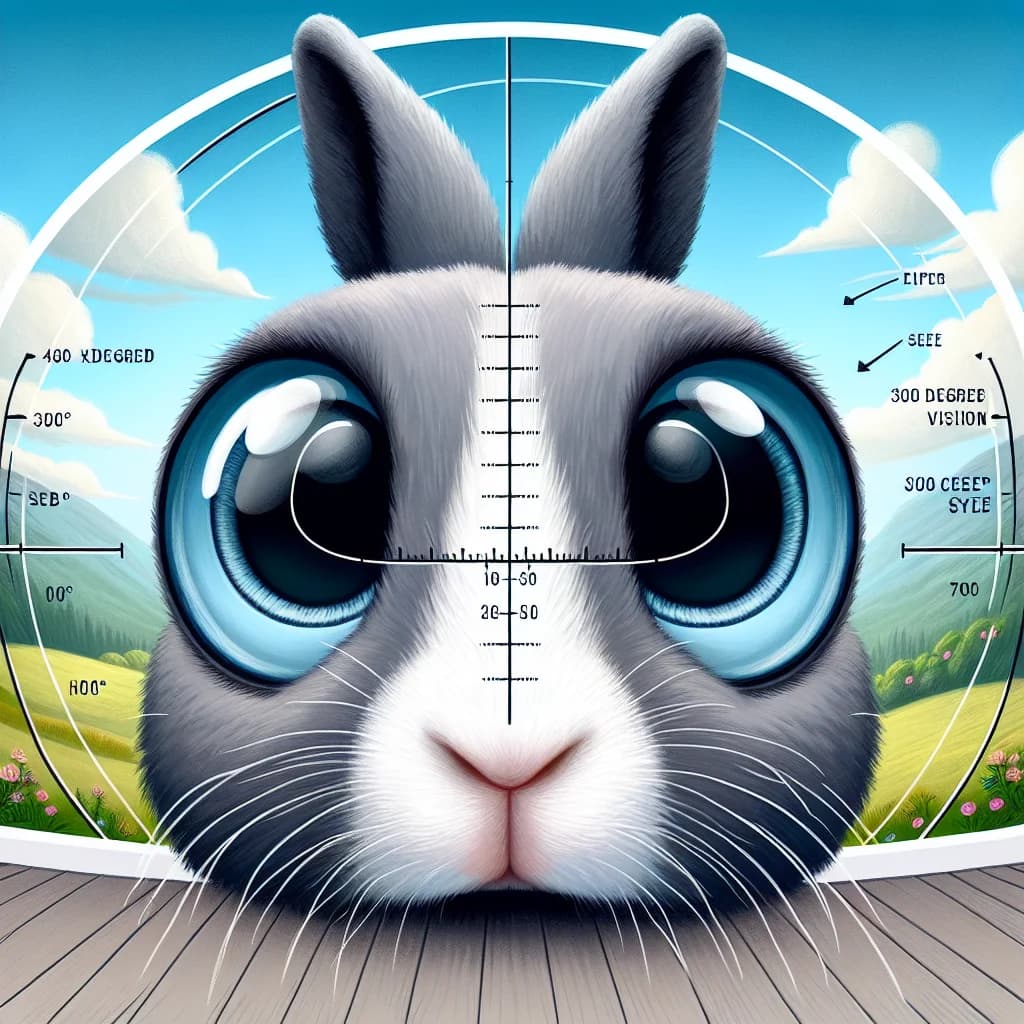
Rabbits have eyes positioned on the sides of their heads to provide a near-360-degree field of view for detecting predators. This lateral placement means their fields of vision do not overlap directly in center, creating a small blind spot in front of their nose that they compensate for using whiskers and a keen sense of smell.
The Bunny Blind Spot: Why Do Pet Rabbits Have a Blind Spot Directly in Front of Their Nose Despite Their Nearly Panoramic Vision?
As any rabbit owner knows, you can place a fragrant piece of banana directly under your pet’s nose, only to watch them sniff frantically as if the treat has vanished into thin air. This quirky behavior is not a lack of intelligence, but rather a fascinating result of evolutionary biology. Rabbits possess one of the most remarkable visual systems in the animal kingdom, allowing them to scan nearly 360 degrees of their environment without moving their heads. However, this high-tech surveillance system comes with a surprising "dead zone." Understanding why pet rabbits have a blind spot directly in front of their nose despite their nearly panoramic vision is essential for providing better care, reducing their stress, and strengthening the bond between you and your long-eared companion.
The Evolutionary Advantage: 360-Degree Awareness
To understand the rabbit's blind spot, we must first look at their status as a "prey species." In the wild, rabbits are hunted by various predators, from hawks in the sky to foxes on the ground. Consequently, their eyes are positioned laterally—high and on the sides of the skull.
This lateral placement grants them a nearly 360-degree field of vision. While a human’s field of vision covers about 180 degrees (with significant overlap for depth perception), a rabbit can see almost everything around them, including what is directly behind them. This panoramic view is a survival mechanism designed to detect movement from any direction, giving the rabbit a split-second head start to bolt toward a burrow.
The Trade-Off: Why the Frontal Blind Spot Exists
Despite their wide-angle view, the rabbit’s visual system has a significant limitation: a lack of binocular overlap. For an animal to see an object clearly in 3D and judge distance accurately, both eyes must be able to view the object simultaneously. This is known as binocular vision.
Because a rabbit’s eyes are on opposite sides of its head, there is only a small area (about 10 to 30 degrees) where the visual fields of the left and right eyes overlap. This overlap occurs above and slightly in front of the forehead, not at the level of the mouth or nose. Because the bridge of the nose and the width of the head physically block the eyes from "seeing" together at close range, a small triangular blind spot is created directly in front of their face. Anything placed within an inch or two of their nose is essentially invisible to their eyes.
How Rabbits "See" What is Right in Front of Them
Nature rarely leaves a creature without a solution to a biological deficit. To compensate for the lack of central vision, rabbits rely on a sophisticated array of secondary senses to navigate their immediate surroundings.
The Role of Vibrissae (Whiskers)
Rabbits are equipped with sensitive whiskers, or vibrissae, located on their muzzle, cheeks, and above their eyes. These whiskers are as long as the rabbit is wide, acting as tactile sensors. When a rabbit approaches an object, these whiskers provide feedback about the object's distance, texture, and shape, effectively "mapping" the area the eyes cannot see.
Olfactory and Auditory Input
A rabbit’s nose is in near-constant motion, a behavior known as "nose twitching." This allows them to pull in scent molecules from the air. When you hold a treat in their blind spot, they are using their keen sense of smell to locate it rather than their sight. Furthermore, their large, independent ears can rotate 270 degrees to pinpoint sounds, helping them orient their head toward potential points of interest that their eyes might have missed.
Practical Implications for Rabbit Care
Understanding this visual limitation is vital for responsible rabbit husbandry. Because they cannot see objects approaching directly from the front, a hand reaching out to pet them can be startling.
To provide a stress-free environment, consider these evidence-based tips:
- Approach from the Side: Always bring your hand or a treat toward the side of the rabbit’s head rather than directly at their nose. This ensures you remain within their visual field and do not trigger a "flight" response.
- Avoid Sudden Frontal Movements: Rapid movements in the frontal blind spot can be perceived as a predator's strike. Speak softly to your rabbit before touching them to let them know you are there.
- Enrichment Placement: When setting up forage mats or puzzles, place the initial "clues" where the rabbit can see them laterally, allowing them to then use their nose to finish the task.
Conclusion
The biological "blind spot" in a rabbit’s vision is a fascinating example of evolutionary trade-offs. While they sacrifice the ability to see what is right in front of their nose, they gain a panoramic defense system that keeps them safe from threats in the wild. By recognizing that your pet rabbit relies on whiskers and scent more than central vision, you can interact with them in a way that respects their natural biology. Being mindful of their unique perspective not only improves animal welfare but also fosters a deeper sense of trust between you and your pet. Always consult with a veterinarian specializing in lagomorphs if you notice sudden changes in your rabbit's ability to navigate their environment, as this may indicate underlying health issues.