Why do pet rabbits perform a sudden midair twist and kick called a binky when they are happy
Ever wondered why your rabbit suddenly transforms into a gravity-defying gymnast? Discover the fascinating science and pure joy behind the "binky," the ultimate high-flying sign that your bunny is truly happy.

Too Long; Didn't Read
Rabbits perform binkies to express pure joy, excitement, and contentment. This high-energy jump and midair twist signifies that a bunny feels safe, healthy, and completely happy in its environment.
The Science of Joy: Why Do Pet Rabbits Perform a Sudden Midair Twist and Kick Called a Binky When They Are Happy?
Domestic rabbits (Oryctolagus cuniculus) are complex, sentient creatures with a sophisticated repertoire of non-verbal communication. While they are often viewed as quiet or stoic, rabbits possess a unique and high-energy way of expressing pure contentment. For many owners, the sight of their pet leaping into the air, twisting their body, and kicking their legs is a highlight of rabbit guardianship. This behavior, known colloquially as a "binky," is more than just a random burst of energy; it is a vital indicator of a rabbit’s psychological health and physical comfort. Understanding why do pet rabbits perform a sudden midair twist and kick called a binky when they are happy? is essential for any owner dedicated to high standards of animal welfare and husbandry. This post will examine the biological, evolutionary, and emotional drivers behind this fascinating lagomorph behavior.
Anatomy of a Binky: What Happens Physically?
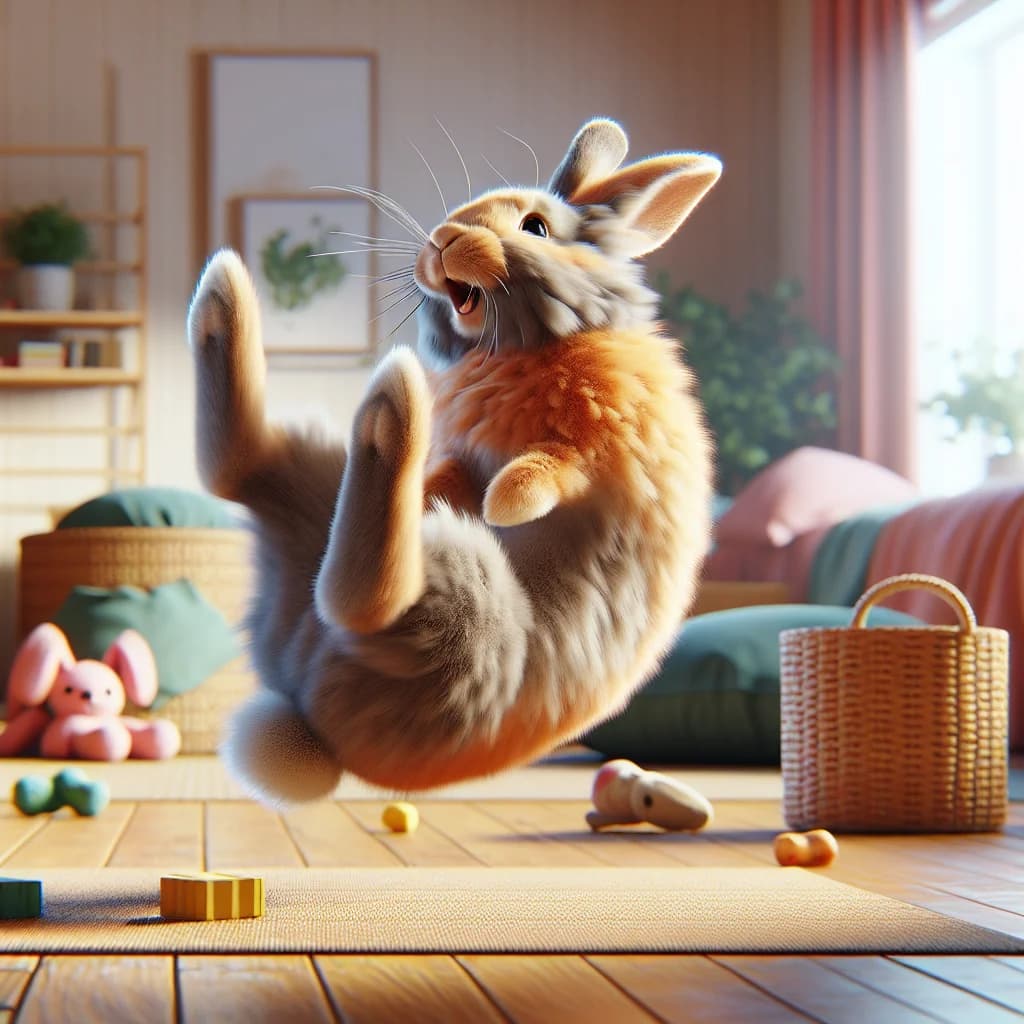
A binky is a complex motor sequence that typically begins with a rabbit running or "zooming" across a space. Suddenly, the rabbit propels itself vertically, often performing a sharp 180-degree or 360-degree twist of the torso while simultaneously flicking its hind legs and head.
In veterinary ethology, this is classified as a "displacement behavior" or "play behavior." Physically, the binky requires a sudden recruitment of the rabbit’s powerful epaxial muscles and the large muscles of the hind limbs (the gluteals and quadriceps). Because rabbits have a light skeleton—comprising only about 7% of their body weight—and incredibly strong muscles, these jumps are explosive and agile.
Evolutionary Roots: From Survival to Celebration
To understand the binky, one must look at the wild ancestors of the domestic rabbit. In the wild, rabbits are "prey species" that rely on speed and unpredictability to evade predators like foxes or hawks.
Predator Evasion Tactics
The "twist and kick" motion of a binky is remarkably similar to the maneuvers a rabbit uses when being chased. By twisting midair, a rabbit can change its trajectory instantly, making it difficult for a predator to predict its landing spot.
Exaptation of Behavior
In a safe, domestic environment where the threat of predation is removed, these survival maneuvers undergo a process called "exaptation." This is when a trait evolved for one purpose (survival) is repurposed for another (play). When a rabbit feels safe and stimulated, it "practices" these maneuvers. The absence of fear allows the rabbit to release pent-up energy in a way that signals to other rabbits—and their human caregivers—that the environment is secure.
The Neuroscience of Lagomorph Happiness
Ethologists believe the binky is driven by a surge in dopamine and endorphins. When a rabbit’s basic needs are met—including proper nutrition, social interaction, and adequate space—the brain’s reward system is activated.
- Environmental Enrichment: A new toy, a fresh serving of leafy greens, or the arrival of a bonded partner can trigger a binky.
- The "Safety Signal": Because rabbits are hyper-vigilant, they only perform a binky when they feel 100% safe. A binky is essentially a biological "all-clear" signal.
Distinguishing Binkies from Other Behaviors
While a binky is a sign of health, it is important for owners to distinguish it from other sudden movements.
- The "Half-Binky": Sometimes a rabbit may simply flick its head or ears sharply while staying on the ground. This is often an abbreviated version of the full jump, indicating mild excitement or "pre-joy."
- Seizures vs. Binkies: While rare, some owners confuse the "flop" (another happy behavior) or a binky with neurological issues. A binky is always intentional, coordinated, and followed by normal behaviors like grooming or eating. A seizure involves involuntary twitching, loss of consciousness, or disorientation.
- Fright Responses: A "startle jump" is usually directed away from a stimulus and is accompanied by thumping (hitting the ground with hind legs) and dilated pupils.
Encouraging Natural Expression
To ensure your rabbit feels comfortable enough to binky, veterinary experts recommend the following care guidelines:
- Ample Space: Rabbits require a minimum of 24 to 30 square feet of exercise space for several hours a day. A cramped cage prevents the physical ability to perform a binky.
- Non-Slip Flooring: Rabbits have fur on the bottoms of their feet rather than pads. They need rugs or mats to get the traction required for a safe midair twist.
- Predictable Routine: Rabbits thrive on schedules. Consistent feeding and interaction times lower stress levels, making binkies more frequent.
Conclusion
Understanding why do pet rabbits perform a sudden midair twist and kick called a binky when they are happy? provides a window into the inner life of these charismatic animals. The binky is a masterful blend of evolutionary survival instincts and modern-day domestic bliss. When a rabbit leaps and twists, it is demonstrating a profound level of trust in its environment and its owner. By prioritizing spacious living quarters, proper flooring, and consistent enrichment, owners can foster an environment where this spectacular display of joy becomes a daily occurrence. Recognizing the binky is not just about enjoying a cute behavior; it is about acknowledging and honoring the complex emotional needs of the rabbits in our care. If you ever have concerns about your rabbit's movement or activity levels, always consult with a rabbit-savvy veterinarian to ensure their continued health and vitality.