Why do pet rats have orange teeth containing iron to help them chew through wood and metal
Ever wondered why your rat sports a bright orange smile? It’s not a stain—it’s a layer of actual iron that transforms their teeth into industrial-strength tools capable of gnawing through wood and metal.

Too Long; Didn't Read
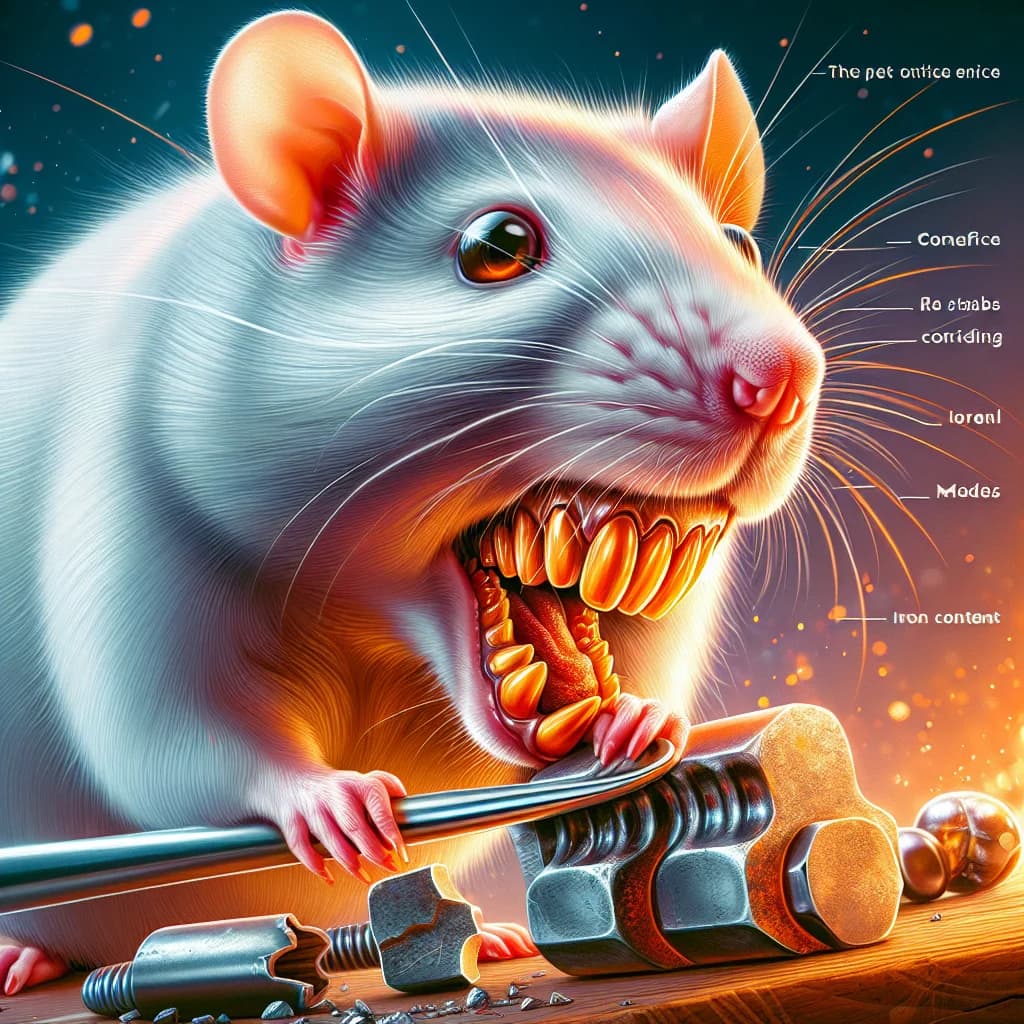
Rats have orange teeth because their enamel contains high concentrations of iron. This mineral reinforcement makes their incisors exceptionally hard and durable, allowing them to chew through tough materials like wood and metal without damaging their teeth.
The Science of the Incisor: Why Do Pet Rats Have Orange Teeth Containing Iron to Help Them Chew Through Wood and Metal?
If you have ever peered into the mouth of a healthy adult pet rat, you may have been startled to see a set of vivid, deep orange incisors. To the uninitiated, this coloration might look like a sign of poor dental hygiene or decay. However, in the world of rodents, these sunset-hued teeth are actually a hallmark of evolutionary perfection. Far from being a flaw, this pigmentation is a vital biological adaptation. The presence of iron-rich enamel provides these small mammals with the structural integrity required to manipulate their environment and process a diverse diet. Understanding why pet rats have orange teeth containing iron to help them chew through wood and metal is essential for any responsible owner, as it offers a direct window into the animal’s nutritional health and physiological well-being.
The Chemistry Behind the Color: Iron-Rich Enamel
The distinct orange color of a rat’s incisors is caused by the presence of iron-rich pigments, specifically ferric salts, embedded within the tooth enamel. While human teeth are covered in a layer of calcium-rich enamel that appears white, rats and many other rodents have evolved to incorporate iron minerals into the outer layer of their front teeth.
This pigmentation process begins as the rat matures. Most rats are born with white teeth, but as they age—typically around 21 to 30 days—the iron begins to deposit in the enamel, turning the teeth yellow and eventually a deep, rusty orange. This is not merely a surface stain; the iron is chemically bonded to the enamel’s crystalline structure. This high concentration of iron significantly increases the hardness and density of the tooth surface, allowing the rat to exert incredible pressure without the teeth fracturing or wearing down prematurely.
The Chisel Effect: Self-Sharpening Mechanics
The distribution of iron in a rat's tooth is not uniform, which is the secret to their legendary "chisel" shape. The iron-fortified enamel is only found on the anterior (front) surface of the incisors. The posterior (back) of the tooth consists of softer dentin, which lacks the iron reinforcement.
As a rat gnaws on hard objects, the softer dentin on the back wears away much faster than the hard, iron-clad enamel on the front. This uneven wear creates a perpetually sharp, beveled edge. This mechanical process is known as "the chisel effect." Because rat incisors are hypselodont—meaning they grow continuously throughout the animal's life—this self-sharpening mechanism ensures they always have the precision tools necessary to chew through tough materials like hardwood, plastic, and even soft metals such as lead, aluminum, and copper.
Clinical Importance: What Color Tells Us About Health
In veterinary medicine, the color of a rat's teeth is a primary diagnostic indicator. A healthy adult rat should always have vibrant orange incisors. If a pet rat’s teeth begin to turn pale or white, it often signals an underlying health issue:
- Nutritional Deficiencies: A lack of iron or other essential minerals in the diet can prevent the body from properly Pigmenting the enamel.
- Malocclusion: If the teeth are misaligned and do not rub against each other correctly, the natural wear-and-tear cycle is disrupted, which can affect the appearance and health of the tooth.
- Systemic Illness: Chronic disease or high levels of stress can interfere with the rat’s metabolic processes, leading to a loss of pigmentation.
Caring for the "Iron" Tooth
Because these teeth are designed for heavy-duty work and grow rapidly—sometimes up to 4 or 5 inches per year—pet owners must provide appropriate environmental enrichment. Providing safe chew toys, such as apple wood sticks or lava blocks, allows rats to utilize their iron-strengthened teeth effectively. This prevents overgrowth, which can lead to life-threatening complications.
Conclusion
The orange teeth of the pet rat are a fascinating example of biological engineering. By incorporating iron into their enamel, rats have developed a "living tool" capable of incredible feats of strength and durability. Recognizing that this orange hue is a sign of health and strength, rather than a cause for concern, allows owners to better appreciate the complex biology of their companions. Monitoring the color and alignment of these iron-fortified incisors is a simple yet effective way to ensure your pet remains healthy. If you ever notice a significant fading of that characteristic orange glow, it is a clear signal to consult a veterinarian specialized in exotic pets to ensure your rat’s unique dental needs are being met.