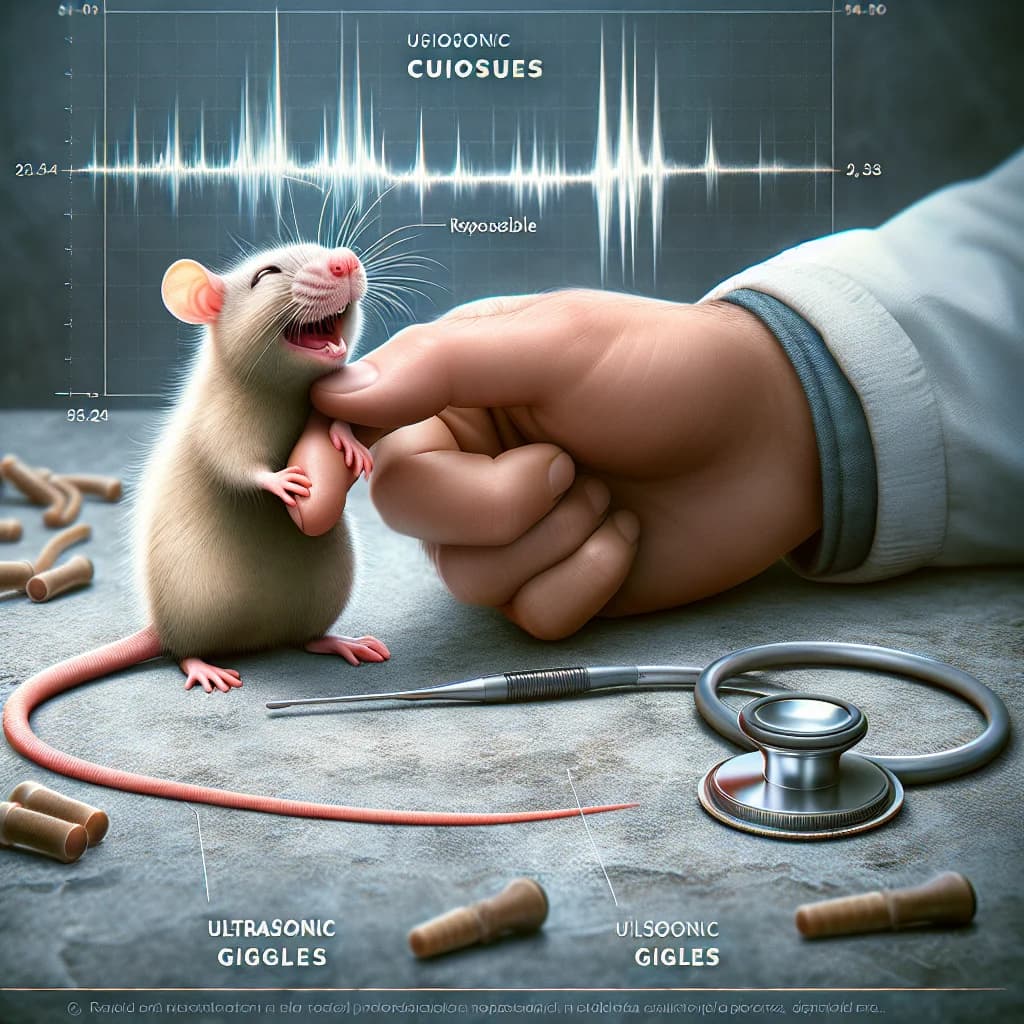
Why do pet rats vibrate their eyeballs in and out of their sockets when they are extremely happy
It looks like a scene from a sci-fi movie, but when your rat’s eyes start vibrating, they aren’t malfunctioning—they’re experiencing pure, unadulterated joy. Discover the bizarre science of "boggling" and why this creepy-cool behavior is the ultimate sign of a happy pet.


Too Long; Didn't Read
Pet rats vibrate their eyes through a behavior called boggling, which occurs during moments of intense happiness. When a rat grinds its teeth in contentment, known as bruxing, the jaw muscles located behind the eye sockets cause the eyeballs to pulse rapidly. It is a sign of extreme relaxation and joy, similar to a cat purring.
The Science of Joy: Why Do Pet Rats Vibrate Their Eyeballs in and out of Their Sockets When They Are Extremely Happy?
For the uninitiated, witnessing a pet rat’s eyes suddenly vibrate, bulge, and retract rapidly into their sockets can be a startling experience. Often referred to by enthusiasts as "boggling," this unique physiological phenomenon is one of the most distinctive behaviors in the rodent world. While it may look like a medical emergency to a first-time owner, it is actually a hallmark of profound contentment and relaxation. Understanding the biological mechanics behind why pet rats vibrate their eyeballs is essential for any owner looking to decode their pet’s body language and ensure their welfare. This post explores the fascinating intersection of rodent anatomy and behavioral psychology to explain the "boggle" and its importance to the human-animal bond.
The Mechanics of the Boggle: Bruxing and Anatomy
To understand why a rat’s eyes vibrate, one must first understand "bruxing." Rats possess hypsodont teeth—incisors that never stop growing throughout their lives. To keep these teeth at a manageable length and maintain their sharpness, rats grind their upper and lower incisors together. This rhythmic grinding is known as bruxing.
While bruxing serves a practical dental purpose, it is also a behavioral expression of emotion. When a rat is exceptionally relaxed or happy, the intensity of this grinding increases. Because of the specific musculoskeletal anatomy of the rat's head, this intense grinding leads directly to the vibration of the eyes.
The Role of the Masseter Muscle
The primary driver of boggling is the masseter muscle, the large muscle responsible for moving the jaw. In rats, the anatomy of the skull is highly specialized. A portion of the masseter muscle actually passes through the eye socket (the orbit) and attaches behind the eyeball.
When a rat bruxes with high frequency and intensity:
- The masseter muscle pulses rapidly behind the globe of the eye.
- Because the rat’s eye sockets are relatively shallow and lack a complete bony partition, the vibrating muscle physically displaces the eyeball.
- The result is the "boggling" effect, where the eyes appear to pulse in and out of the sockets in sync with the jaw movement.
The "Purr" of the Rodent World
In the field of ethology (the study of animal behavior), boggling is often compared to the purring of a domestic cat. It is a secondary signal of a positive emotional state. While bruxing can be heard, boggling is the visual manifestation of that peak internal state. Veterinary behaviorists generally agree that when a rat is being petted, or is snuggling with a cage mate and begins to boggle, it indicates a state of "eustress" or positive stimulation.
Distinguishing Joy from Stress
While boggling is almost exclusively associated with happiness, it is important for owners to observe the context. In rare instances, rats may brux (and occasionally boggle) as a self-soothing mechanism when they are in pain or under extreme stress.
To determine if the behavior is a sign of happiness, owners should look for other indicators of relaxation:
- Relaxed Posture: The rat is pancaked (lying flat) or snuggled comfortably.
- Soft Eyes: The eyes are partially closed or "sleepy" rather than wide and bulging in a panicked manner.
- Ear Position: Relaxed ears that are slightly to the side rather than pinned back or alert.
Evolutionary and Health Context
From an evolutionary standpoint, the ability to grind teeth is a survival necessity for rodents. However, the adaptation of using this mechanical need as a social signal highlights the complex social nature of Rattus norvegicus domestica. Domestic rats have evolved to be highly social creatures that rely on tactile and auditory cues to communicate with their colony and their human caretakers.
Maintaining a rat's ability to engage in these behaviors is a key aspect of animal husbandry. A rat that never bruxes or boggles may be experiencing chronic stress, illness, or dental malocclusion (misalignment of the teeth). Providing an environment rich in enrichment, social interaction, and proper gnawing materials ensures that a rat is healthy enough to express these "happy" behaviors.
Conclusion
Understanding the science behind why pet rats vibrate their eyeballs in and out of their sockets transforms a seemingly bizarre biological quirk into a heartwarming sign of trust and affection. This behavior, rooted in the unique connection between the masseter muscle and the orbital cavity, serves as a powerful indicator of a rat's emotional well-being. By recognizing boggling as the ultimate "compliment" from a pet rat, owners can better appreciate the depth of their pets' emotional lives. Responsible ownership involves not only providing for a pet's physical needs but also learning to speak their language. If you see your rat boggling, take it as a sign that you are providing a high quality of life—and perhaps keep the scratches coming behind the ears.