Why do pet turtles utilize their butts to breathe oxygen while hibernating at the bottom of frozen ponds
Ever wonder how a turtle survives for months trapped under solid ice without ever coming up for air? Discover the bizarre "bottom-up" biological secret that allows these resilient reptiles to breathe through their rear ends to stay alive all winter.

Too Long; Didn't Read
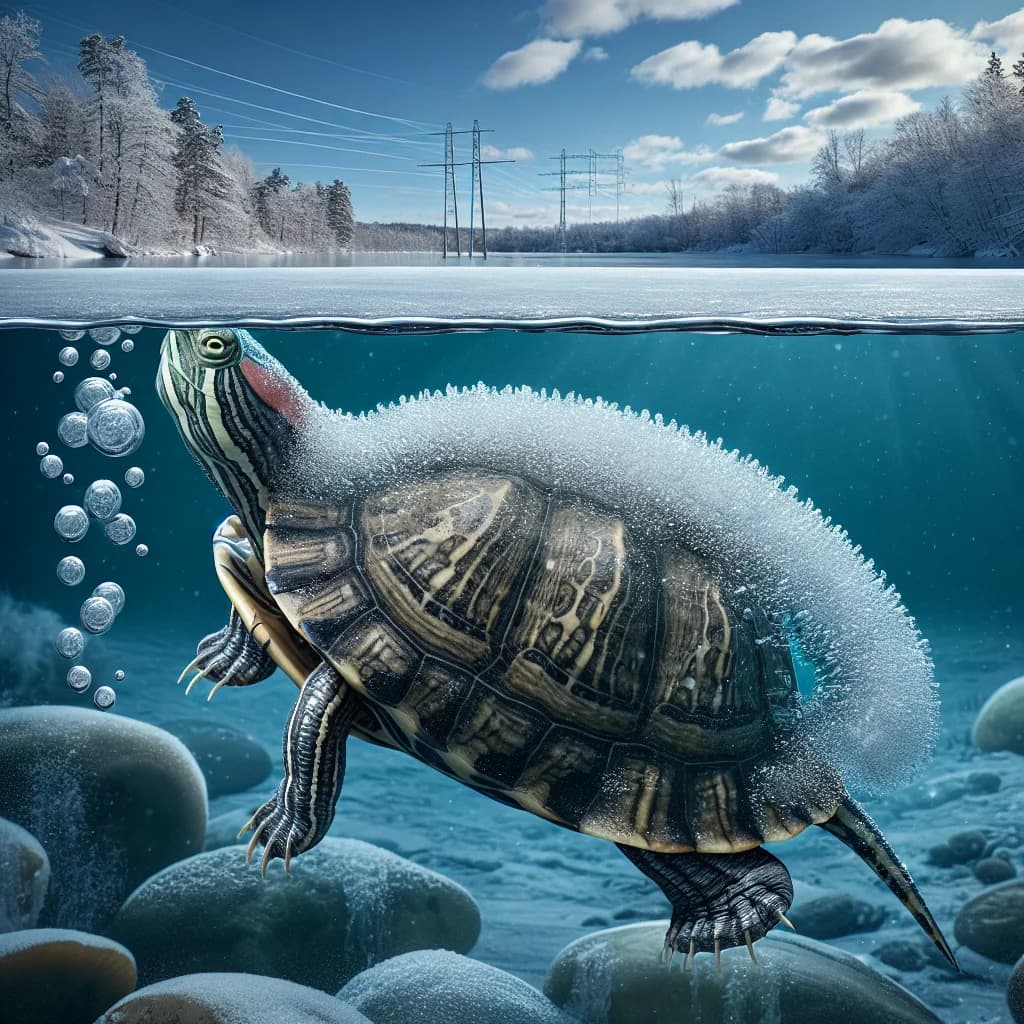
Turtles survive winter underwater by using cloacal respiration, a process where they absorb oxygen directly from the water through specialized blood vessels in their butts. This allows them to stay submerged beneath ice for months while their metabolism is significantly slowed during hibernation.
Beneath the Ice: Understanding Why Pet Turtles Utilize Their Butts to Breathe Oxygen While Hibernating at the Bottom of Frozen Ponds
As winter descends and a thick layer of ice seals the surface of northern ponds, many aquatic creatures enter a state of suspended animation. Among the most resilient of these survivors are turtles. While most air-breathing vertebrates would perish under such conditions, certain turtle species have evolved a fascinating, albeit unusual, biological workaround. This phenomenon leads many curious keepers to ask: Why do pet turtles utilize their butts to breathe oxygen while hibernating at the bottom of frozen ponds? Understanding this unique adaptation—scientifically known as cloacal respiration—is not just a matter of biological curiosity; it is essential for the welfare of pet turtles kept in outdoor enclosures and deepens our appreciation for the complex evolutionary history of these ancient reptiles. This post will explore the physiological mechanisms and survival strategies that allow turtles to thrive in oxygen-deprived, frozen environments.
The Science of Brumation: A Metabolic Deep Freeze
To understand why turtles engage in cloacal respiration, we must first examine "brumation," the reptilian equivalent of hibernation. Because turtles are ectotherms, their body temperature is dictated by their environment. When they submerge themselves in mud or sit at the bottom of a pond as temperatures drop toward freezing, their metabolism slows down dramatically—sometimes by as much as 95%.
In this state, their heart rate may drop to just a few beats per minute, and they no longer require the high levels of energy or oxygen needed for swimming or digestion. However, even at this reduced state, they still need a baseline level of oxygen to maintain cellular life. Since they cannot surface to fill their lungs with air due to the ice barrier, they must find a way to extract oxygen directly from the water.
What is Cloacal Respiration?
The term "butt breathing" refers to the process where oxygen is absorbed through the turtle’s cloaca. The cloaca is an all-purpose opening used for waste elimination and reproduction, but in many aquatic turtles, it serves a respiratory function during winter.
The Mechanism of Diffusion
Within the cloaca are two small, sac-like structures called cloacal bursae. These sacs are lined with a dense network of blood vessels. As the turtle rests at the bottom of the pond, water moves in and out of the cloaca. Oxygen molecules in the water diffuse across the thin membranes of the bursae and directly into the turtle’s bloodstream. This allows the turtle to bypass its lungs entirely while submerged.
Species Specialization
Not all turtles are equally adept at this. Species like the North American Painted Turtle and the Snapping Turtle are particularly famous for their ability to survive months under the ice using this method. In contrast, some pet species from tropical climates lack this adaptation entirely, which is why matching husbandry to a turtle's specific evolutionary history is critical for their survival.
Survival Beyond Oxygen: Managing Lactic Acid
Even with cloacal respiration, oxygen levels in a frozen pond can become critically low (a state known as hypoxia or anoxia). When oxygen is insufficient, the turtle’s body switches to anaerobic respiration—a process that generates energy without oxygen but creates lactic acid as a byproduct.
In most animals, high levels of lactic acid are toxic and lead to muscle failure. Turtles, however, have a remarkable defense mechanism:
- Calcium Buffering: Turtles utilize their own shells and skeletons to survive. Their bones release calcium and magnesium carbonates into the bloodstream, which act as a natural antacid to neutralize the rising lactic acid.
- Recovery: Once the ice melts in the spring, the turtle must bask in the sun to increase its body temperature and metabolic rate, allowing it to process and eliminate the accumulated lactic acid.
Implications for Pet Care and Welfare
For enthusiasts who keep pet turtles in outdoor ponds, understanding these biological traits is vital for responsible husbandry. If a pond is too shallow and freezes solid, or if the water becomes completely stagnant and depleted of dissolved oxygen, even the best "butt-breathers" will not survive.
Key considerations for outdoor turtle ponds include:
- Depth: Ensure the pond is deep enough that it will not freeze to the bottom.
- Aeration: Using a pond aerator or bubbler can help maintain dissolved oxygen levels in the water column under the ice.
- Species Identification: Never attempt to hibernate a turtle outdoors unless you have confirmed it is a temperate species naturally adapted to freezing conditions.
Conclusion
The question of why do pet turtles utilize their butts to breathe oxygen while hibernating at the bottom of frozen ponds reveals one of nature’s most ingenious survival strategies. By significantly lowering their metabolic demands and utilizing cloacal respiration to harvest oxygen from water, these reptiles can survive in environments that would be lethal to most other vertebrates. For the responsible pet owner, acknowledging this biological feat emphasizes the importance of maintaining proper pond conditions and respecting the delicate balance of reptilian physiology. As we continue to study these ancient creatures, their ability to navigate the extremes of the natural world serves as a powerful reminder of the resilience and complexity of animal life. Always consult with a specialized exotics veterinarian to ensure your pet’s wintering environment meets their specific biological needs.