Why do Siamese cats have darker fur only on the coldest parts of their bodies like their paws
Did you know that Siamese cats are essentially living thermometers, with fur that acts as a biological heat map? Discover the fascinating genetic "thermostat" that causes their iconic dark points to emerge only on the coolest parts of their bodies.

Too Long; Didn't Read
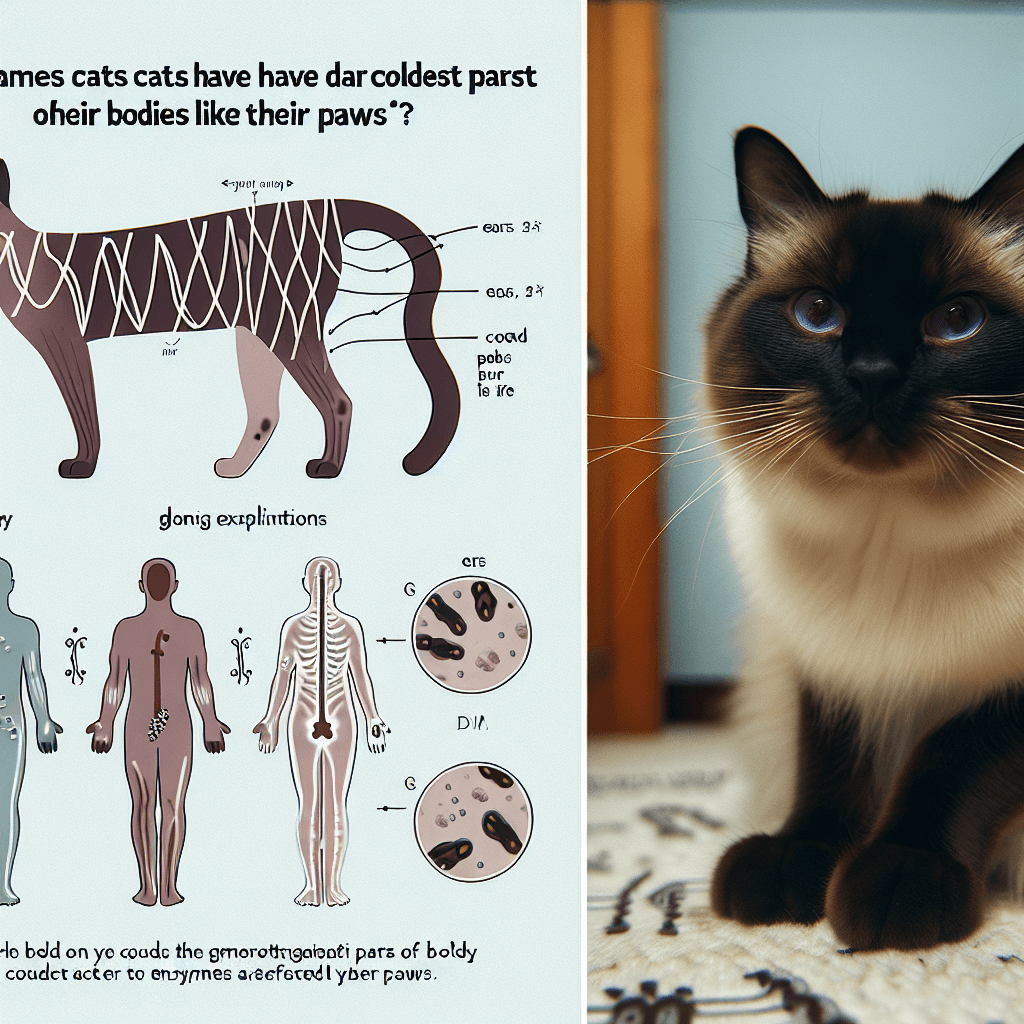
Siamese cats carry a temperature-sensitive genetic mutation that restricts pigment production to the coolest parts of their bodies. Their core warmth suppresses the enzyme responsible for dark fur, while cooler extremities like paws and ears allow it to activate, resulting in their signature pointed coat.
The Science of Color: Why Do Siamese Cats Have Darker Fur Only on the Coldest Parts of Their Bodies Like Their Paws?
With their striking blue eyes and elegant silhouettes, Siamese cats are among the most recognizable felines in the world. However, their most captivating feature is undoubtedly their "pointed" coat pattern—a cream-colored body contrasted by deep pigment on the ears, tail, nose, and paws. For centuries, this unique look was shrouded in mystery, leading to various myths about the breed’s origins in the royal palaces of Siam (modern-day Thailand). Today, modern feline genetics and veterinary science have provided a fascinating explanation for this phenomenon. The reason why Siamese cats have darker fur only on the coldest parts of their bodies like their paws is not just a matter of aesthetics; it is the result of a complex, temperature-sensitive genetic mutation. Understanding this biological "living thermometer" provides owners with deeper insight into their pet’s health and the marvels of feline evolution.
The Himalayan Gene: A Temperature-Sensitive Mutation
At the heart of the Siamese cat’s unique appearance is a specific genetic mutation known as the Himalayan gene. This gene is a form of partial albinism that affects the way a cat’s body produces melanin, the pigment responsible for dark fur, skin, and eye color.
In most cat breeds, melanin is distributed evenly or according to specific coat patterns regardless of body temperature. However, in Siamese cats, the mutation affects an enzyme called tyrosinase. Tyrosinase is essential for the production of melanin. In these cats, the enzyme is heat-sensitive; it is functionally unstable at normal feline body temperatures. Because a cat’s core body temperature typically ranges between 101°F and 102.5°F, the tyrosinase enzyme is "switched off" across the majority of the torso. Without active tyrosinase, the fur grows in white, cream, or pale fawn.
Why the "Points" Stay Dark
While the core of the cat remains warm, the extremities—specifically the paws, tail, ears, and face—are naturally cooler. Because these areas are further from the heart and have a higher surface-area-to-volume ratio, their temperature drops below the threshold where the tyrosinase enzyme can function.
The Biological Mechanism
- Melanin Production: In these cooler zones (usually below 100°F), the tyrosinase enzyme becomes active.
- Pigment Deposition: Once active, the enzyme facilitates the production of eumelanin, which colors the fur hairs as they grow.
- The Result: This creates the "points" of color that characterize the breed. This is why a Siamese cat’s paws, which touch cold floors, and their ears, which radiate heat away, are consistently the darkest parts of their bodies.
From Birth to Adulthood: The Development of Color
One of the most compelling pieces of evidence for this temperature-based coloration is seen during the first few weeks of a Siamese kitten’s life. Inside the mother’s womb, the environment is a constant, warm temperature. Consequently, all Siamese kittens are born pure white or cream.
It is only after birth, as the kittens are exposed to the cooler air of the outside world, that their extremities begin to cool down. Within a few weeks, the "points" start to darken. Veterinary observations show that the full depth of color may not be reached until the cat is one to two years old. Furthermore, as Siamese cats age, their circulation may slow down, causing their core body temperature to drop slightly. This often results in senior Siamese cats developing a darker "wash" of color across their entire bodies.
Environmental and Health Factors
Because the Siamese coat is essentially a living heat map, external factors can influence the darkness of the fur.
- Climate: Siamese cats living in colder climates often develop darker coats than those living in tropical environments.
- Seasonal Changes: Some owners notice a "winter coat" effect where the points become more pronounced and the body shading deepens during the colder months.
- Medical Procedures: A common phenomenon noted by veterinarians occurs when a Siamese cat is shaved for surgery. The patch of skin exposed to the cool air may grow back darker initially, only returning to its original pale color once the fur is long enough to insulate the skin again.
Conclusion
Understanding why Siamese cats have darker fur only on the coldest parts of their bodies like their paws allows us to appreciate the intricate relationship between genetics and the environment. This "point" coloration is a masterclass in biological adaptation, driven by a heat-sensitive enzyme that reacts to the very air the cat breathes. For owners, recognizing that their cat’s coat color is linked to body temperature is more than just a fun fact—it is a reminder of the unique physiological needs of the breed. By maintaining a stable, comfortable environment and monitoring for sudden changes in coat quality, you can ensure your Siamese companion remains healthy and vibrant. If you notice drastic or uneven changes in your cat’s pigmentation, always consult with a veterinary professional to rule out underlying metabolic or skin conditions.