Why do some pet frogs use their eyeballs to help them swallow food by pushing it down their throats
Ever wonder why your frog blinks every time it takes a bite? It’s not just a quirk—it’s a bizarre anatomical secret where they actually use their eyeballs to shove dinner down their throats.

Too Long; Didn't Read
Frogs retract their eyeballs into their sockets to create physical pressure that helps push food down their throats, compensating for their lack of strong swallowing muscles.
The Big Blink: Why Do Some Pet Frogs Use Their Eyeballs to Help Them Swallow?
When you watch a pet frog—whether it’s a popular White’s Tree Frog or a colorful Pacman Frog—consume its prey, you may notice a peculiar behavioral trait: as the frog gulps, its eyes momentarily disappear into its head. This "blink" is not a sign of satisfaction or a reflexive response to light; it is a critical physiological mechanism known as orbital depression. Unlike mammals, most amphibians lack the complex musculature and rigid palate structures required to move food efficiently through the oral cavity toward the stomach. Consequently, they have evolved a fascinating, if slightly jarring, method of using their own eyes as biological pistons to facilitate digestion. Understanding this unique behavior is essential for herpetologists and pet owners alike, as it highlights the specialized evolutionary adaptations of anurans and informs proper feeding practices.
The Biomechanics of Orbital Depression
To understand why frogs use their eyes to swallow, one must first look at the unique anatomy of the amphibian skull. Most frogs possess a soft, flexible roof of the mouth and a large, cavernous oral cavity. Because they lack a hard secondary palate and the sophisticated tongue muscles found in higher vertebrates, they cannot easily manipulate a bolus of food toward the esophagus using tongue movements alone.
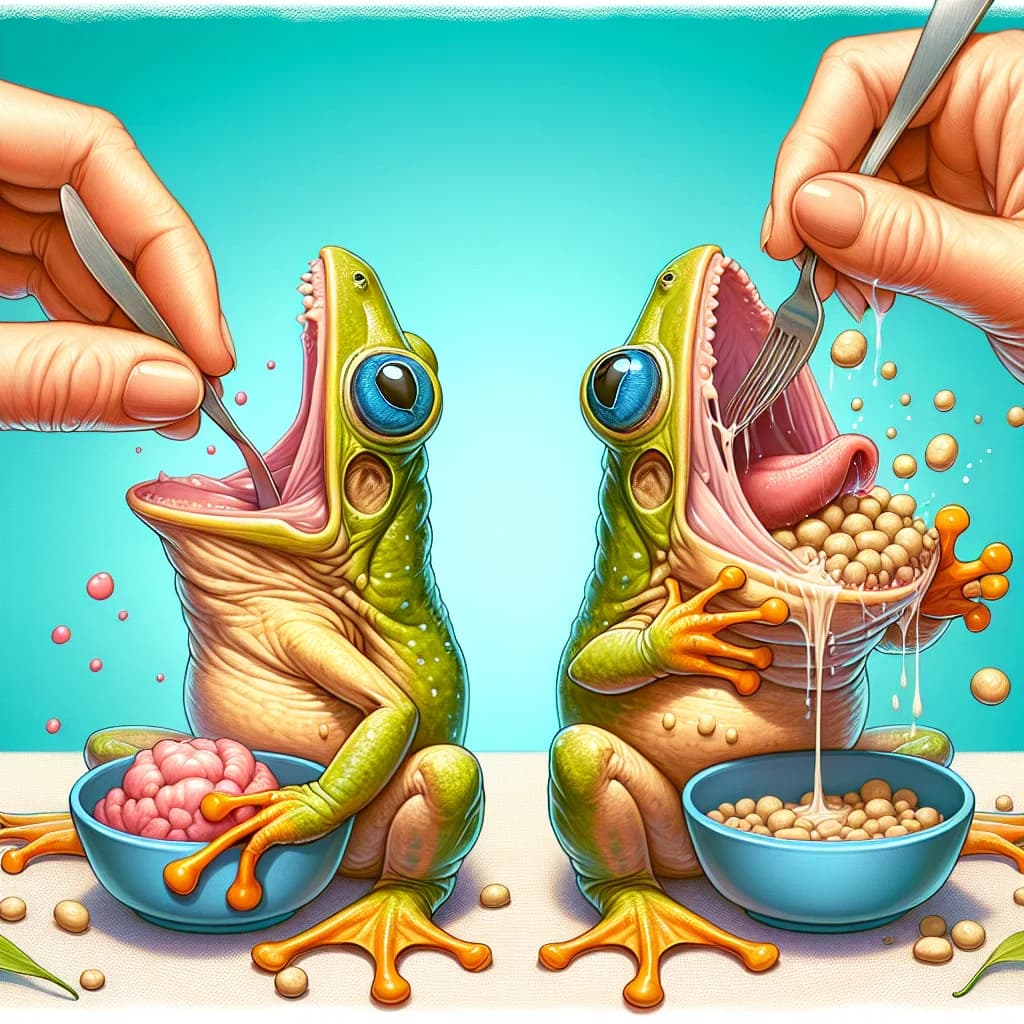
When a frog captures prey, it uses its retractor bulbi muscles to pull the eyeballs downward into the roof of the mouth. As the eyes descend, they physically press against the food item, forcing it backward into the throat. This mechanical "shove" provides the necessary pressure to ensure the prey enters the esophagus. Once the food has cleared the oral cavity, the levator bulbi muscles contract, returning the eyes to their normal protruding position. This process is highly efficient and allows frogs to consume relatively large prey items that their small tongues could not handle independently.
Evolutionary Context: Life Without Chewing
From an evolutionary standpoint, the "eyeball swallow" is an adaptation to a lifestyle that bypasses mastication (chewing). While some frogs have vomerine teeth on the roof of their mouths or small maxillary teeth along their upper jaws, these are used strictly for gripping struggling prey, not for breaking it down.
Because frogs swallow their meals whole, the risk of the prey escaping or becoming lodged in the mouth is high. Research in animal behavior and functional morphology suggests that the force generated by the eyes significantly reduces the time food spends in the oral cavity. This rapid transit is vital for survival in the wild, where a frog is most vulnerable to predators while its mouth is occupied.
Practical Care and Husbandry Implications
For pet owners, witnessing this behavior is a sign of a healthy, functioning frog. However, it also serves as a diagnostic tool for monitoring animal welfare. If a frog is "blinking" excessively or seems to be retracting its eyes multiple times for a single insect, it may indicate that the prey is too large or the frog is struggling with a physical obstruction.
To support this natural biological process, owners should follow these evidence-based guidelines:
- Prey Sizing: Ensure that the length of the feeder insect is no longer than the distance between the frog’s eyes. This prevents the "eyeball piston" from having to work against excessive resistance.
- Hydration: Proper humidity levels are essential. A dry throat makes it harder for the eyes to slide food backward, increasing the risk of impaction or injury to the delicate tissues of the mouth.
- Observation: Monitor the "blink" during every feeding. A lack of eye retraction during swallowing could indicate a neurological or muscular issue that requires veterinary intervention.
Perspectives on Amphibian Physiology
In the zoological community, there is a consensus that this trait is one of the most specialized feeding mechanisms in the vertebrate world. While nearly all anurans (frogs and toads) utilize some degree of orbital depression, the intensity of the movement varies by species. For example, terrestrial species with larger, more bulbous eyes often rely more heavily on this mechanism than aquatic species that may use suction feeding to assist in swallowing.
Conclusion
The sight of a pet frog pulling its eyes into its skull during a meal is a remarkable example of nature’s ingenuity. This behavior is not a mere quirk but a vital biological function that compensates for a lack of complex mouthparts and a hard palate. By utilizing the retractor bulbi muscles to turn their eyes into tools for digestion, frogs demonstrate the incredible efficiency of amphibian evolution. For responsible pet owners, understanding the mechanics of orbital depression is more than just a bit of trivia—it is a key component of providing an environment where these unique animals can thrive. Next time you observe your frog during mealtime, appreciate the "big blink" as the sophisticated biological feat that it truly is.