Why do some pet parrots blush by changing their facial skin color when they are excited or stressed
Ever wondered if your parrot is wearing its heart on its face? Discover the fascinating science behind why these brilliant birds "blush" and what their changing skin tones reveal about their hidden emotions.

Too Long; Didn't Read
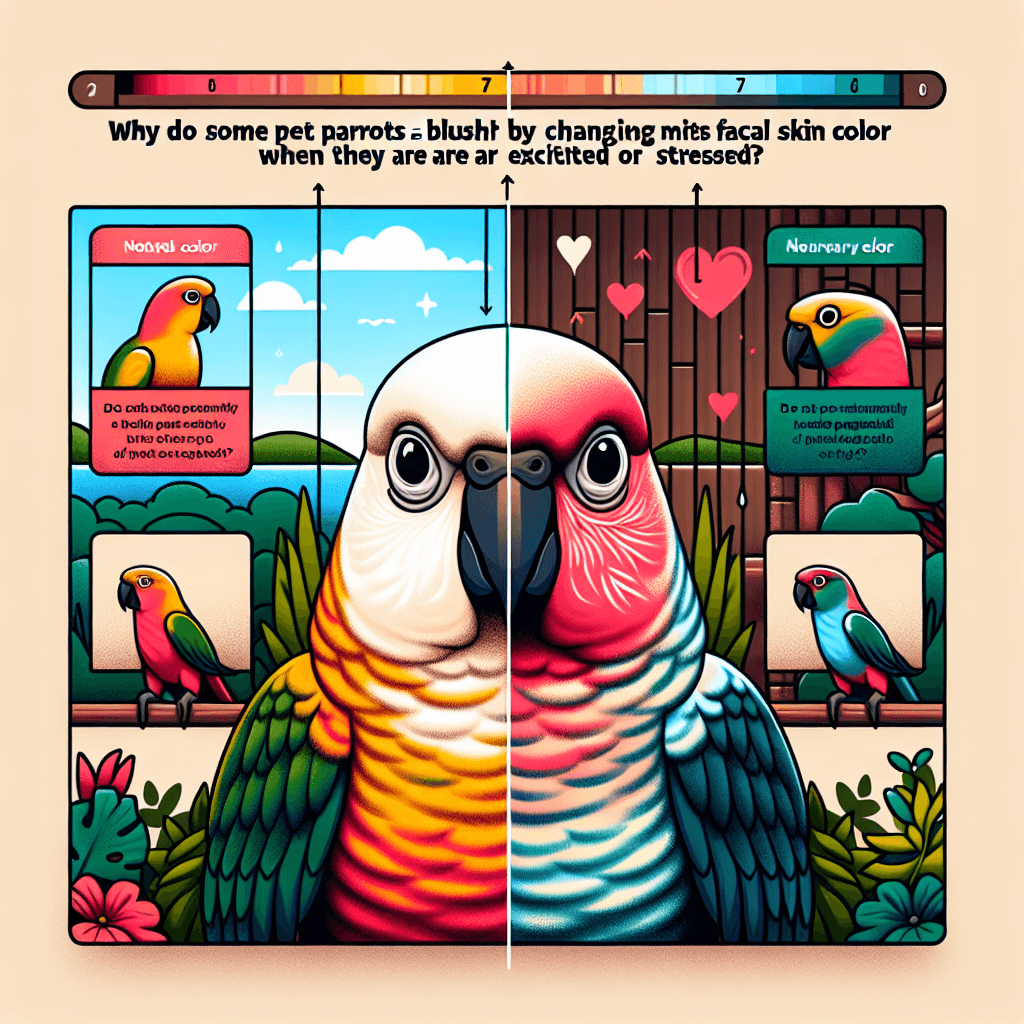
Parrots blush when blood flow increases to the featherless skin on their faces during moments of excitement, stress, or social interaction. This physiological response acts as a form of visual communication, allowing them to express their emotional state to others.
Understanding Avian Emotions: Why Do Some Pet Parrots Blush by Changing Their Facial Skin Color When They Are Excited or Stressed?
While parrots are globally renowned for their brilliant, multi-colored plumage, some of their most fascinating communication happens where feathers are absent. In species such as the Blue-and-yellow Macaw, the bare white skin surrounding the eyes and beak can suddenly flush with a distinct pinkish hue. This phenomenon, long observed by dedicated aviculturists, has recently become a subject of formal scientific inquiry. Far from being a mere biological quirk, this "blush" serves as a dynamic window into a bird's immediate emotional and physiological state. Understanding why do some pet parrots blush by changing their facial skin color when they are excited or stressed is essential for modern bird owners, as it bridges the gap between human observation and avian welfare, fostering a deeper, more empathetic bond with these highly intelligent creatures.
The Biological Mechanism of the Avian Blush
The "blushing" observed in parrots is physiologically similar to the response found in humans. It is driven by the autonomic nervous system, which controls involuntary bodily functions. When a parrot experiences high emotional arousal—whether positive or negative—its heart rate increases and its capillaries (tiny blood vessels) dilate.
In parrots with bare facial patches, such as Macaws, the skin is incredibly thin and heavily vascularized. This means the blood vessels are situated very close to the surface. When vasodilation occurs, a greater volume of oxygenated blood flows through these capillaries, causing the skin to transition from a pale white or cream color to a visible pink or red. Because parrots lack the complex facial muscles humans use to smile or frown, these physiological shifts in skin tone serve as one of their primary methods of expressing internal states.
Scientific Findings: Excitement vs. Stress
In 2018, a landmark study published in the journal PLOS ONE by researchers at INRA in France provided the first scientific evidence of blushing in Blue-and-yellow Macaws. The study monitored birds during various interactions and identified two primary triggers:
Positive Excitement and Social Bonding
Blushing often occurs during "pro-social" moments. This includes being gently talked to by a preferred human or participating in a favorite enrichment activity. In these contexts, the blush indicates a state of high-energy pleasure or focused engagement.
Stress and Agitation
Conversely, blushing can be a sign of acute stress or "fight or flight" activation. If a parrot feels threatened, cornered, or overstimulated, the rush of blood to the face signals significant agitation. This is frequently accompanied by other "agonistic" behaviors, such as feather ruffling or eye pinning (the rapid constriction and dilation of the pupils).
Interpreting the Blush: Context is Key
Because the same physiological response—increased blood flow—can signal both joy and fear, owners must look at the bird’s "whole-body language" to interpret the meaning correctly.
- Positive Contexts: If the bird is blushing while leaning toward you, maintaining relaxed feathers, and making soft vocalizations, it is likely experiencing happy excitement.
- Negative Contexts: If the blush is accompanied by a fanned tail, raised nape feathers (the feathers on the back of the neck), or an open beak, the bird is likely stressed or aggressive.
Understanding these nuances is vital for animal science and husbandry. Ignoring a "stress blush" can lead to a breakdown in trust or even a bite, while acknowledging a "happy blush" reinforces positive social reinforcement.
Comparison with Other Avian Species
While Macaws are the most famous blushers, other species exhibit similar traits. For example, the African Grey Parrot does not have a bare facial patch, but some owners report a subtle pinkening of the skin near the cere (the area around the nostrils) during intense excitement. However, the Macaw remains the primary focus of this research due to the prominent size of their featherless malar (cheek) region, which evolved likely as a specialized social signaling tool within dense rainforest canopies where vocalizations might be muffled.
Conclusion
The ability of certain parrots to change their facial skin color is a sophisticated evolutionary trait that highlights their complex emotional lives. By answering the question of why do some pet parrots blush by changing their facial skin color when they are excited or stressed, we move away from viewing parrots as mere mimics and recognize them as sentient beings with readable physiological responses. For the responsible owner, recognizing a blush is an invitation to adjust the environment—either to lean into a moment of shared joy or to provide the bird with the space it needs to decompress. Continued education and consultation with avian behaviorists remain the best ways to ensure these vibrant birds thrive in a domestic setting.