Why is every dog’s nose print unique enough to be used as a legal form of identification
Forget human fingerprints—your dog carries a one-of-a-kind biological ID right on the tip of their snout. Discover the fascinating science behind "nose-printing" and why these intricate patterns are now recognized as a foolproof legal signature for pets.

Too Long; Didn't Read
Just as humans have unique fingerprints, dogs possess distinct patterns of ridges and creases on their noses that remain unchanged throughout their lives. This biological singularity provides a permanent method for individual identification that is increasingly recognized for legal and recovery purposes.
Beyond the Microchip: Why Is Every Dog’s Nose Print Unique Enough to Be Used as a Legal Form of Identification?
Every dog owner is familiar with the damp, curious nudge of a cold snout, but few realize they are being greeted by a biological masterpiece of identification. Just as humans possess unique friction ridge patterns on their fingertips, dogs carry a distinct "nose print" on their rhinarium—the hairless, leather-like skin surrounding the nostrils. For nearly a century, this biological trait has been recognized by various kennel clubs and legal entities as a permanent, unalterable form of identification. Understanding the science behind these prints is more than just a biological curiosity; it is a vital component of animal welfare and modern pet recovery systems. This blog post will examine the anatomical structures that make canine nose prints unique and explain why they are considered a reliable legal standard for identification.
The Anatomy of the Rhinarium: Nature’s Biometric Sensor
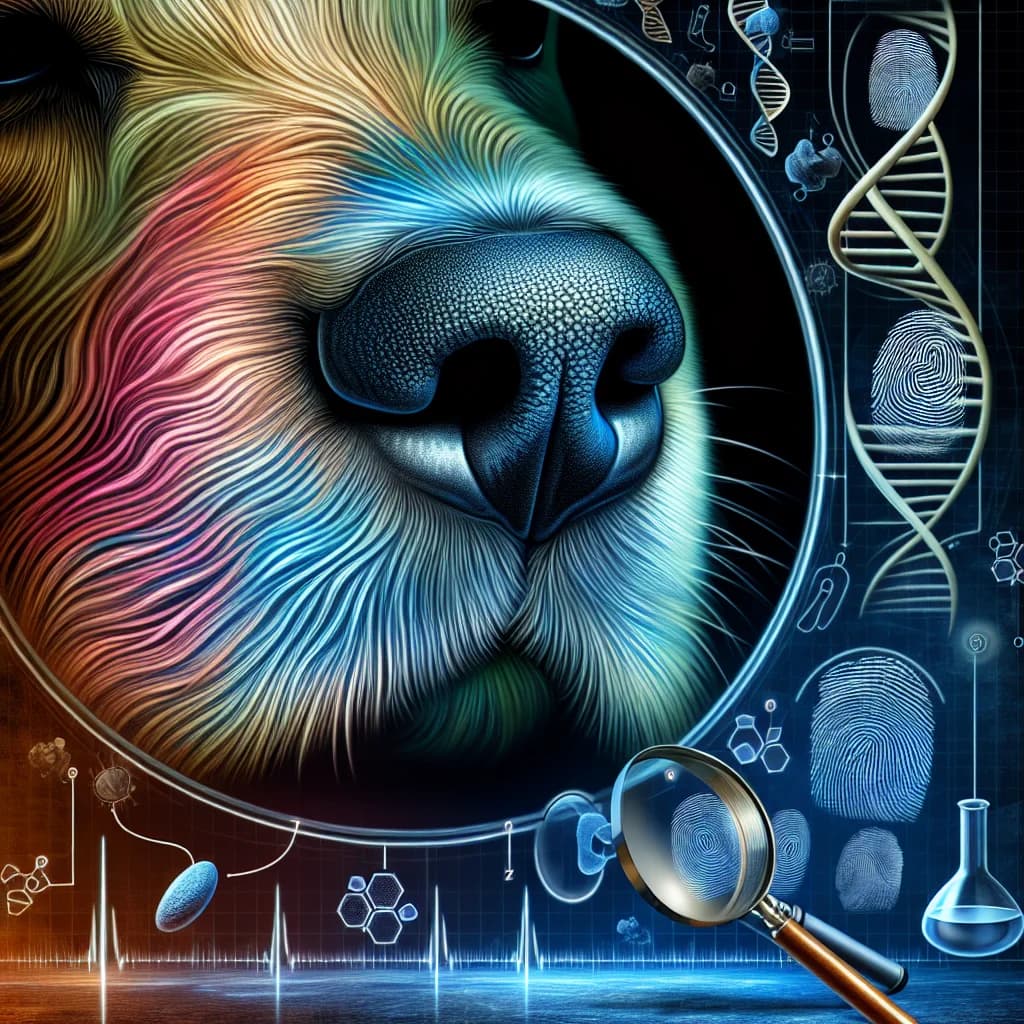
The canine nose is a complex sensory organ, but its surface—the rhinarium—is what interests forensic and biological scientists. The surface of a dog's nose is covered in a series of ridges, valleys, and pits known as dermal papillae. These topographical features form a pattern that is established during embryonic development and remains consistent throughout the dog's life.
Biologically, these patterns serve several purposes:
- Moisture Retention: The grooves help spread mucus and moisture across the nose, which traps scent molecules and enhances the dog's olfactory capabilities.
- Individual Variation: Similar to human dermatoglyphics (fingerprints), the specific arrangement of these ridges is determined by a combination of genetics and random physical forces in the womb. This ensures that even in a litter of genetically similar puppies, no two nose prints are identical.
Historical Context and Legal Precedents
The use of nose prints for legal identification is not a new phenomenon. As early as 1938, the Canadian Kennel Club began accepting nose prints as a legitimate way to verify a dog’s identity, particularly for high-value show dogs and racing greyhounds. This was primarily to prevent fraud and "dog swapping" in competitive circuits.
In the legal and veterinary realms, the nose print is considered a "permanent" identifier. Unlike a coat color, which can be dyed, or a collar, which can be removed, the nose print is an intrinsic part of the animal. While the size of the nose increases as a puppy grows into an adult, the relative arrangement of the ridges and pores remains proportionally identical, allowing for consistent matching across the animal's lifespan.
Why Nose Prints Are Gaining Modern Relevance
While microchipping is the current veterinary gold standard for identification, nose printing offers unique advantages that address specific limitations of electronic ID.
- Non-Invasiveness: Unlike microchips, which require a needle for implantation, or tattoos, which can be painful and fade over time, capturing a nose print is entirely non-invasive.
- No Migration Issues: In rare cases, microchips can migrate from the shoulder area to other parts of the body, making them difficult for scanners to locate. A nose print is always in the same place.
- Visual Verification: While a microchip requires a specific RFID scanner, a nose print can be captured and verified using high-resolution photography and biometric software.
The Intersection of AI and Canine Biometrics
In recent years, the veterinary community has seen a shift from physical ink-and-paper nose prints to digital biometric scanning. Advanced artificial intelligence (AI) algorithms can now map the specific "feature points" of a dog’s nose from a simple smartphone photo.
Several tech companies and animal welfare organizations have developed databases that allow owners to "register" their dog’s nose print. If a lost dog is found, a rescuer can take a photo of the snout, and the software compares the ridge patterns against the database to find a match. These systems boast accuracy rates exceeding 95%, reinforcing the consensus that the rhinarium is a scientifically sound tool for identification.
Conclusion
The unique architecture of a dog's nose print is a remarkable example of biological individuality. From the complex dermal ridges that assist in scent detection to the legal recognition by international kennel clubs, the canine nose serves as a built-in, foolproof ID card. Understanding this trait allows pet owners to appreciate the sophisticated biology of their companions while exploring new, non-invasive ways to ensure their safety. While microchips remain essential, the growing field of canine biometrics proves that the answer to a lost dog’s identity may be sitting right on the tip of their nose. For the best protection, owners should consider a multi-layered approach to identification, combining traditional methods with the modern science of nose-print recognition.