Why must pet chinchillas bathe in fine volcanic ash instead of water to protect their incredibly dense fur
With fur so incredibly dense that trapped water can lead to a fungal nightmare, a standard bath is actually a danger to a chinchilla’s health. Discover the fascinating science behind why these super-soft rodents must trade the tub for a cloud of volcanic ash to keep their legendary coats pristine.

Too Long; Didn't Read
Chinchillas must use volcanic ash because their fur is so dense that water cannot easily evaporate, leading to trapped moisture that causes fungal growth and skin rot. The fine dust effectively absorbs excess oils and dirt while keeping their coat dry and healthy.
The Science of the Dust Bath: Why Must Pet Chinchillas Bathe in Fine Volcanic Ash Instead of Water to Protect Their Incredibly Dense Fur?
In the high-altitude reaches of the Andes Mountains, nature engineered one of the most specialized coats in the animal kingdom. The chinchilla possesses a fur density so extreme that it is virtually unparalleled; while humans typically grow one hair per follicle, a chinchilla can sprout upwards of 50 to 80 hairs from a single pore. This biological marvel allowed their ancestors to thrive in freezing, arid climates, but it also created a unique hygiene challenge. For these rodents, a standard water bath is not merely ineffective—it is a significant health risk. To maintain their health and coat integrity, owners must provide a specialized ritual. But why must pet chinchillas bathe in fine volcanic ash instead of water to protect their incredibly dense fur? Understanding the science behind this behavior is essential for any responsible keeper.
The Biology of Extreme Density
The chinchilla's coat is its primary defense mechanism against the elements, providing incredible insulation. However, this density means that the fur is exceptionally efficient at trapping anything that enters it. Under natural conditions, chinchillas produce oils (similar to lanolin) to keep their skin healthy and their fur supple. Over time, these oils, along with shed skin cells and environmental debris, can build up.
In most mammals, water and soap would be the logical solution to remove such buildup. For the chinchilla, however, the structure of the fur makes this impossible. Because the hairs are so packed together, water cannot easily evaporate once it reaches the skin. A wet chinchilla may remain damp for hours or even days, as the dense undercoat prevents airflow from reaching the skin surface.
The Hazards of Water: Fungi and Hypothermia
Veterinary science emphasizes that getting a chinchilla’s coat saturated with water can lead to several life-threatening conditions. The primary concerns include:
- Dermatophytosis (Ringworm): The warm, damp environment created by wet fur is a perfect breeding ground for fungal spores. If moisture is trapped against the skin, painful fungal infections can take hold rapidly.
- Hypothermia: While the fur is an insulator when dry, it loses its thermal properties when wet. Because the animal cannot dry itself quickly, its core body temperature can drop to dangerous levels.
- Skin Maceration: Prolonged moisture can cause the skin to soften and break down, leading to secondary bacterial infections.
How Volcanic Ash Functions as a Cleanser
To stay clean without moisture, chinchillas evolved to use the naturally occurring volcanic dust found in their native Chilean habitats. This "dust" is actually finely ground pumice or volcanic ash. It works through several mechanical and chemical processes:
Absorption of Lipids
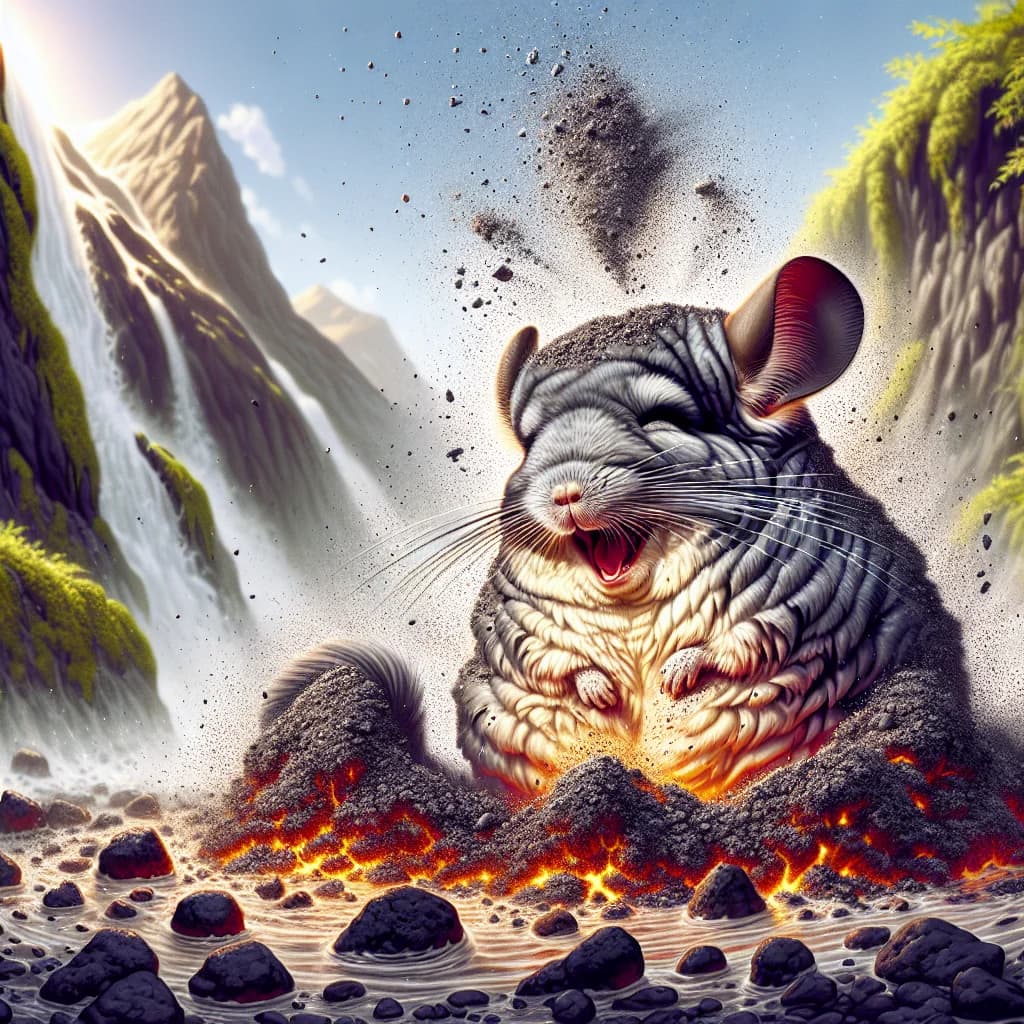
The microscopic particles of volcanic ash are highly porous. When a chinchilla rolls in the dust, the particles distribute through the fur to the skin's surface, where they absorb excess oils and moisture. This prevents the fur from becoming "clumped" or greasy, which would otherwise compromise its insulating properties.
Distribution of Natural Oils
While the ash removes excess oil, the tumbling action of the bath also helps distribute a healthy amount of necessary oils along the hair shafts. This ensures the coat remains soft and sleek rather than brittle.
Mechanical Debridement
The fine grit of the ash acts as a gentle abrasive, loosening dead skin cells and debris. As the chinchilla shakes after the bath, these particles are ejected from the coat, taking the unwanted material with them.
Best Practices for Dust Bathing
Providing a dust bath is a cornerstone of chinchilla husbandry. To replicate their natural environment and maintain coat health, follow these evidence-based guidelines:
- Use Specific Chinchilla Dust: Never use bird sand, playground sand, or construction dust. True chinchilla "dust" is formulated to mimic volcanic ash. "Sand" is too coarse and can cause hair breakage or skin irritation.
- Frequency: Most experts recommend a bath 2 to 3 times per week. In high-humidity environments, more frequent bathing may be necessary to prevent the coat from becoming heavy.
- Duration: Allow the chinchilla 10 to 15 minutes in the bath. Remove the bath house afterward to prevent the animal from using it as a litter box, which would introduce moisture and bacteria back into the fur.
Conclusion
The unique evolutionary path of the chinchilla has resulted in one of the most luxurious and functional coats in the world. However, this gift comes with a specific physiological requirement. Why must pet chinchillas bathe in fine volcanic ash instead of water to protect their incredibly dense fur? The answer lies in the intersection of extreme hair density and the mechanical properties of volcanic minerals. By eschewing water in favor of specialized dust, owners protect their pets from fungal infections and thermal stress while honoring the animal's natural history. Responsible ownership begins with respecting these biological needs, ensuring that these remarkable rodents remain clean, dry, and healthy for years to come. Always consult with an exotic animal veterinarian if you notice changes in your chinchilla’s coat texture or skin health.