Why is it physically impossible for an astronaut to burp in space without accidentally vomiting
In the weightless void of space, a simple burp becomes a high-stakes gamble that almost always ends in a messy "wet" disaster. Discover the fascinating science of why microgravity makes it impossible to vent gas without bringing your entire lunch back up with it.

Too Long; Didn't Read
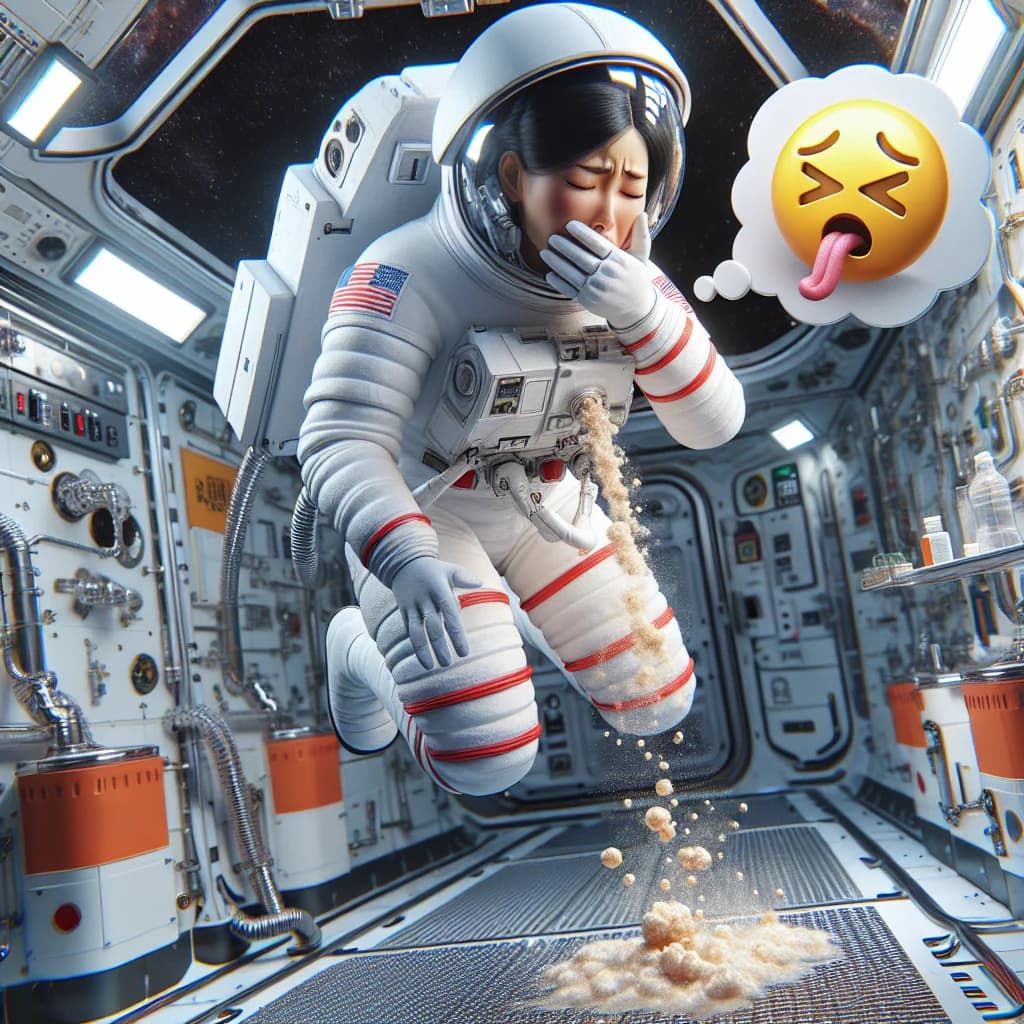
In microgravity, gas cannot rise to the top of the stomach because there is no buoyancy to separate it from liquids and solids. Since everything remains mixed together, attempting to release air causes the entire contents of the stomach to be expelled, resulting in a messy wet burp or vomiting.
The Physics of the "Wet Burp": Why is it Impossible to Burp in Microgravity?
Imagine you are floating 250 miles above the Earth’s surface, peering through the glass of the International Space Station at the shimmering blue marble below. You’ve just finished a hearty meal of rehydrated beef stew. Suddenly, you feel that familiar internal pressure—a bubble of gas trapped in your esophagus. On Earth, this is a minor social inconvenience solved by a simple burp. In the weightless vacuum of space, however, attempting that same release would result in a messy, biological catastrophe.
To understand why astronauts are effectively banned from "letting it rip," we must examine the intersection of fluid dynamics, buoyancy, and human physiology. This thought experiment highlights how the fundamental laws of physics—specifically those governing density and gravity—dictate the most basic functions of our digestive systems.
The Earthly Burp: A Victory for Buoyancy
On Earth, the process of burping is a masterclass in the Archimedes’ Principle. This principle states that a body immersed in a fluid is buoyed up by a force equal to the weight of the fluid displaced. Because gas is significantly less dense than the liquids and solids in your stomach, gravity pulls the heavier contents (the half-digested dinner) to the bottom of the stomach, while the lighter gas bubbles rise to the top.
- Density of Air: ~1.2 kg/m³
- Density of Gastric Fluid: ~1,000 kg/m³
Because the gastric fluid is roughly 800 times denser than the gas, the separation is instantaneous and distinct. When the lower esophageal sphincter opens, only the pressurized gas at the "top" of the stomach escapes.
Microgravity and the "Stomach Slurry"
Once you enter a microgravity environment, the rules of buoyancy vanish. Without the downward pull of gravity to sort the stomach’s contents by density, the gas bubbles do not rise. Instead, they remain randomly distributed throughout the liquid and solid matter in the stomach.
The Formation of a Homogeneous Mixture
In space, your stomach contents become what physicists call a "homogeneous mixture" or a slurry. Imagine a bottle of vinaigrette salad dressing. On Earth, the oil and vinegar separate into layers. In space, if you shake it, the droplets remain suspended indefinitely. Your stomach acts the same way; the carbon dioxide or swallowed air becomes tiny bubbles trapped inside a mass of liquid food.
The Mechanics of the "Wet Burp"
When an astronaut’s body attempts to expel gas, the esophageal valve cannot differentiate between the air and the food. Since they are mixed together in a chaotic suspension, any attempt to "burp" forces the entire mixture out at once. In NASA parlance, this is often referred to as a "wet burp," which is essentially a polite term for accidental, low-velocity vomiting or severe acid reflux.
Calculating the Risk: Why Carbonation is Banned
To prevent these messy internal physics from becoming an external problem, space agencies must tightly control the "gas potential" of an astronaut's diet.
- The Volume Problem: A standard 12-ounce can of soda contains about 2.2 grams of carbon dioxide. On Earth, that gas occupies about 1.2 liters of space once released at atmospheric pressure.
- The Pressure Equation: In the confined space of a human stomach (which has a relaxed volume of about 1 liter), 1.2 liters of gas creates significant internal pressure.
- The Result: On Earth, that 1.2 liters of gas sits at the top and exits cleanly. In space, that gas is integrated into the liquid. To expel that 1.2 liters of gas, the astronaut would have to expel the entire contents of their stomach along with it.
Because of these calculations, carbonated beverages like soda and beer are strictly prohibited in orbit. The physiological "cost" of the gas—the risk of a wet burp damaging sensitive electronic equipment or floating into a colleague’s workspace—is simply too high.
The Conclusion
The physical impossibility of a clean burp in space serves as a humbling reminder of how much our biology relies on the constant tug of Earth's gravity. While we often think of gravity as the force that keeps our feet on the ground, it is also the force that keeps our lunch in our stomachs. In the absence of buoyancy-driven separation, the simple act of releasing air becomes a complex problem of fluid dynamics.
This phenomenon reinforces a fascinating reality: humans are "gravity-dependent" organisms. Every time you enjoy a carbonated drink or a post-meal burp, you are witnessing the laws of physics working in perfect harmony with your anatomy—a luxury that the brave explorers of the final frontier must learn to live without.