
How did a bounty on snakes cause a city's snake problem to get much worse
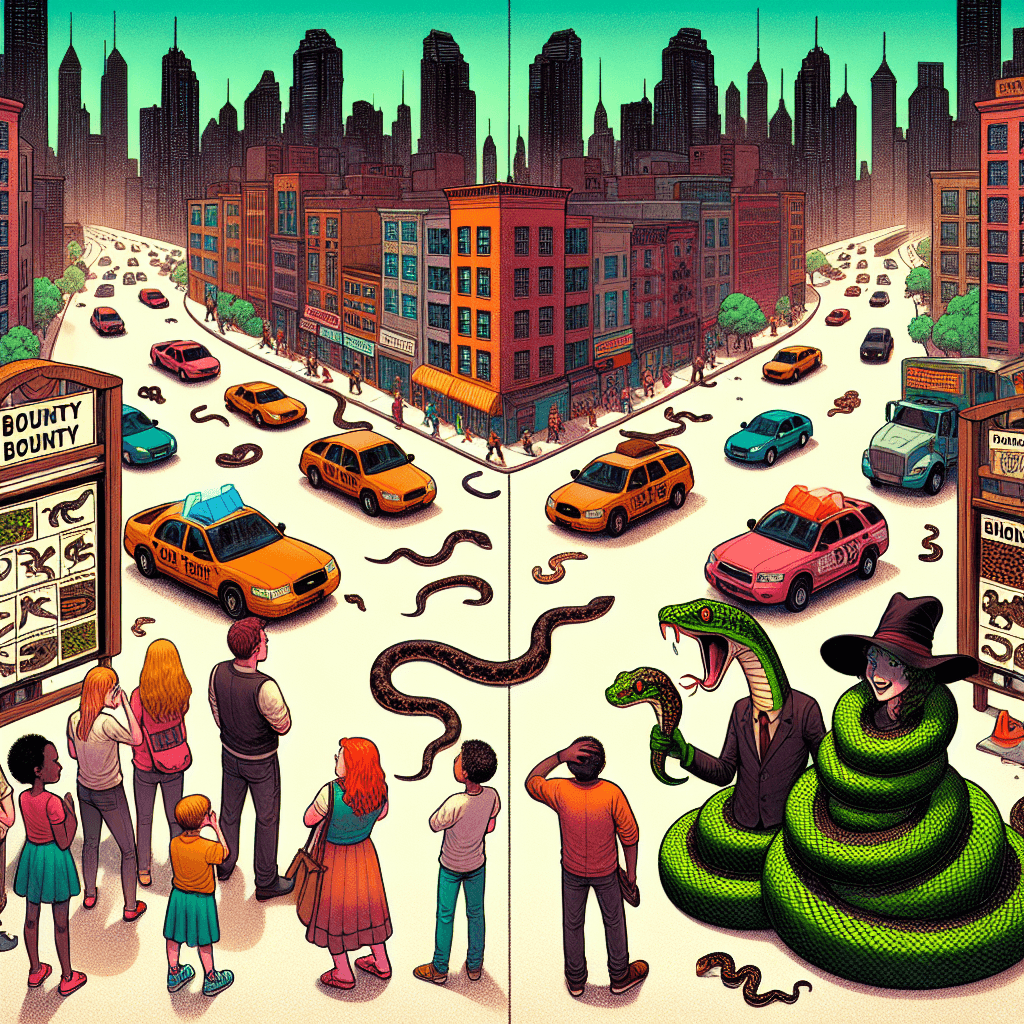
To solve a rampant cobra problem, a city offered a cash bounty for every dead snake—only to discover their citizens had started breeding them for profit.

Too Long; Didn't Read
TLDR: A city offered a bounty for dead snakes, so people started breeding snakes to collect the money. When the government ended the program, the breeders released their now-worthless snakes, making the snake population much larger than it was originally.
When Good Intentions Go Wrong: How a Bounty on Snakes Caused a City's Snake Problem to Get Much Worse
Have you ever seen a simple solution to a complex problem and thought, "That's brilliant!" only to watch it backfire in the most spectacular way? History is filled with examples of well-meaning plans that produce the exact opposite of their intended result. Perhaps no story illustrates this better than the tale of a city plagued by venomous snakes. The government's seemingly logical solution—to pay citizens for every dead snake—didn't just fail; it made the crisis significantly worse. This phenomenon, known as the "Cobra Effect," serves as a powerful cautionary tale about the dangers of unintended consequences. This post explores the classic story of how a bounty on snakes caused a city's snake problem to become a full-blown catastrophe.
The Problem: A City Plagued by Cobras
The story takes place in Delhi during the era of British colonial rule in India. The city was facing a serious public health and safety issue: a large and dangerous population of venomous cobras. The snakes were a constant threat to residents in their homes and on the streets. Faced with growing concern, the British government decided it needed to take decisive action to reduce the number of cobras slithering through the capital. Their solution was straightforward and appeared perfectly logical on the surface.
The "Solution": A Bounty is Born
The government implemented a simple incentive program: a bounty would be paid for every dead cobra. The logic was clear—if you reward people for killing snakes, the snake population will decline. Citizens were encouraged to hunt the dangerous reptiles and turn in the dead snakes (or sometimes just their skins) to a designated authority to collect a monetary reward.
Initially, the program seemed to be a resounding success. A steady stream of dead cobras was turned in, and the government diligently paid out the bounties. From the perspective of an administrator looking at the numbers, the plan was working exactly as intended. However, they failed to account for human ingenuity and the powerful influence of economic incentives.
Unintended Consequences: The Perverse Incentive
The bounty system had created a new, unforeseen market. Enterprising individuals quickly realized that while hunting wild cobras was dangerous and time-consuming, there was a much easier and more profitable way to earn the government's money. They began to breed cobras.
Cobra farms started to appear, dedicated to raising snakes for the sole purpose of killing them and collecting the bounty. This created a perverse incentive, where the "solution" to the snake problem was now directly responsible for increasing the total number of snakes. The flow of dead snakes to the government remained high, but the wild cobra population was no longer being reduced. The bounty was simply sustaining a new, hidden industry of snake farming.
The Aftermath: From Bad to Worse
Eventually, government officials caught on to the scheme. Realizing their policy was being exploited and was funding the creation of more snakes, they abruptly canceled the bounty program. This, however, was the decision that triggered the final disaster.
The cobra breeders, who had invested in raising thousands of snakes, were suddenly left with a worthless, and very dangerous, inventory. With no more financial incentive to kill them, they did the only logical thing from their perspective: they released them.
The result was catastrophic. The city of Delhi was suddenly flooded with thousands of formerly farmed cobras. The snake population didn't just return to its original level; it exploded to numbers far greater than before the bounty program had ever started. The government's attempt to solve the snake problem had made it exponentially worse.
The Birth of the "Cobra Effect"
This famous incident gave rise to the term "Cobra Effect," which is now used in economics and policy-making to describe a situation where an attempted solution to a problem makes the problem worse. It highlights how incentives designed to achieve one outcome can inadvertently encourage behavior that undermines the entire goal. A similar event occurred in Hanoi, Vietnam, under French colonial rule, where a bounty on rats (proven by turning in their tails) led to people cutting off the tails and releasing the rats to breed, thus ensuring a continued source of income.
The Cobra Effect serves as a stark reminder that human behavior is complex. When designing solutions, especially those involving financial incentives, it's crucial to consider how people might exploit the system in unexpected ways. A failure to anticipate these unintended consequences can turn a well-meaning policy into a memorable disaster.


