
How do some birds use fire as a clever hunting tool
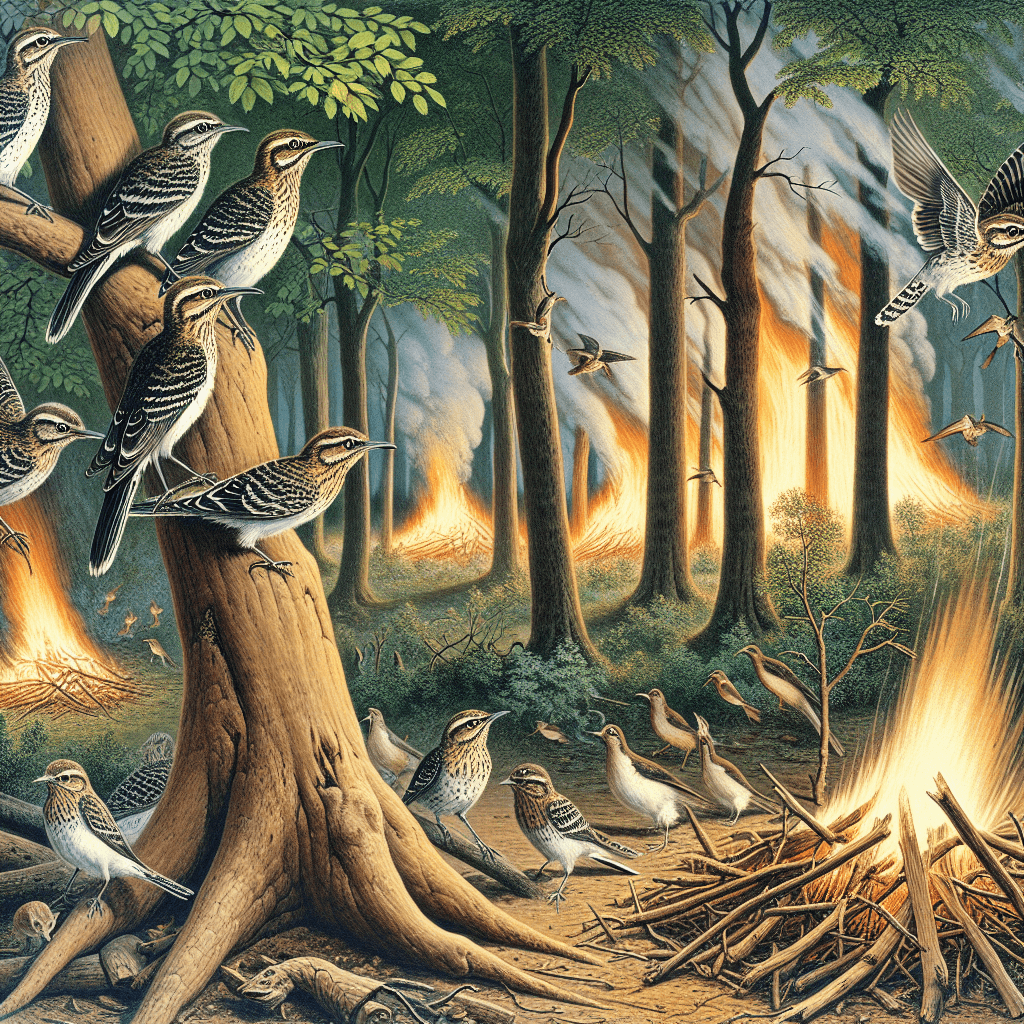
Forget fleeing the flames—some birds fly right towards them, picking up burning sticks to intentionally spread fire and create a terrifyingly effective hunting trap.

Too Long; Didn't Read
TLDR: Some birds, nicknamed firehawks, intentionally spread wildfires by picking up burning sticks and dropping them in new areas. This flushes out insects and small animals, creating an easy hunting ground for the birds.
Firehawks of the Outback: How Do Some Birds Use Fire as a Clever Hunting Tool?
Imagine a wildfire sweeping across the vast, dry savannas of Australia. Most animals flee in terror from the encroaching flames. But what if some creatures didn't just run? What if they understood the fire, saw it not as a threat, but as an opportunity? This isn't a scene from mythology; it's a documented reality for a few remarkable bird species. For centuries, reports persisted of birds intentionally spreading fire to their advantage. This blog post will delve into the incredible world of these avian firestarters, exploring the species involved, their ingenious hunting methods, and how ancient knowledge finally gained scientific validation.
The Avian Arsonists: Meet the "Firehawks"
The phenomenon of deliberately spreading fire, known as fire-foraging, has been primarily documented in northern Australia's tropical savannas. The behavior is attributed to three specific species of raptors, collectively nicknamed "firehawks":
- Black Kite (Milvus migrans)
- Whistling Kite (Haliastur sphenurus)
- Brown Falcon (Falco berigora)
These birds are opportunistic predators, typically feeding on small mammals, reptiles, insects, and other birds. They are known for gathering in large numbers near active wildfires to feast on the fleeing and scorched prey. However, their involvement goes far beyond simple opportunism. They have been observed taking the next, astonishing step: becoming agents of the fire themselves.
The Fiery Hunting Strategy Explained
The birds' method is both simple and profoundly intelligent. It demonstrates a clear understanding of cause and effect, a hallmark of advanced animal cognition. The process typically unfolds in a few calculated steps:
- Observation: The birds identify an active fire, which could be a natural wildfire, a controlled burn by land managers, or even a small cooking fire.
- Tool Acquisition: They swoop down and pick up a smoldering or burning stick, sometimes just a clump of burning grass, in their talons or beaks.
- Transportation and Ignition: The bird then flies, sometimes for hundreds of meters, to an unburnt area of grassland or scrub.
- Deployment: They intentionally drop the burning ember, starting a new fire front.
The purpose behind this seemingly destructive act is purely strategic. The new blaze flushes out a fresh wave of terrified prey—lizards, insects, snakes, and small mammals—that were previously safe from the original fire. This creates a concentrated, easy-to-catch buffet for the raptors, who patrol the edge of the new flames and pick off the escaping victims.
From Ancient Knowledge to Scientific Confirmation
For tens of thousands of years, this behavior has been a well-documented part of the traditional ecological knowledge of Australian Aboriginal peoples. These communities have long spoken of and depicted birds carrying "fire sticks." However, for decades, these accounts were often dismissed by Western science as anecdotal or mythological.
The difficulty in formally documenting the behavior is understandable. The environment of an active wildfire is chaotic, dangerous, and smoky, making clear and safe observation incredibly difficult.
The turning point came with the work of researchers like ornithologist Bob Gosford, who collaborated closely with Indigenous rangers and communities to gather evidence. This culminated in a landmark 2017 paper in the Journal of Ethnobiology. The study compiled over a dozen credible, firsthand accounts from firefighters, Aboriginal rangers, and other observers that corroborated the ancient knowledge. This research provided the scientific community with the robust evidence needed to confirm that these birds intentionally and systematically propagate fire to aid their hunting efforts.
A Blazing Conclusion
The "firehawks" of Australia provide a stunning example of animal intelligence and tool use. Their ability to harness one of nature's most powerful forces fundamentally challenges our perceptions of the cognitive gap between humans and other species. This behavior, once relegated to the realm of folklore, is now a scientifically recognized hunting strategy, thanks to the persistence of researchers who valued and investigated long-standing Indigenous knowledge. It reminds us that the natural world is full of complex behaviors and that we still have so much to learn, especially from the people who have been observing it for millennia.


