
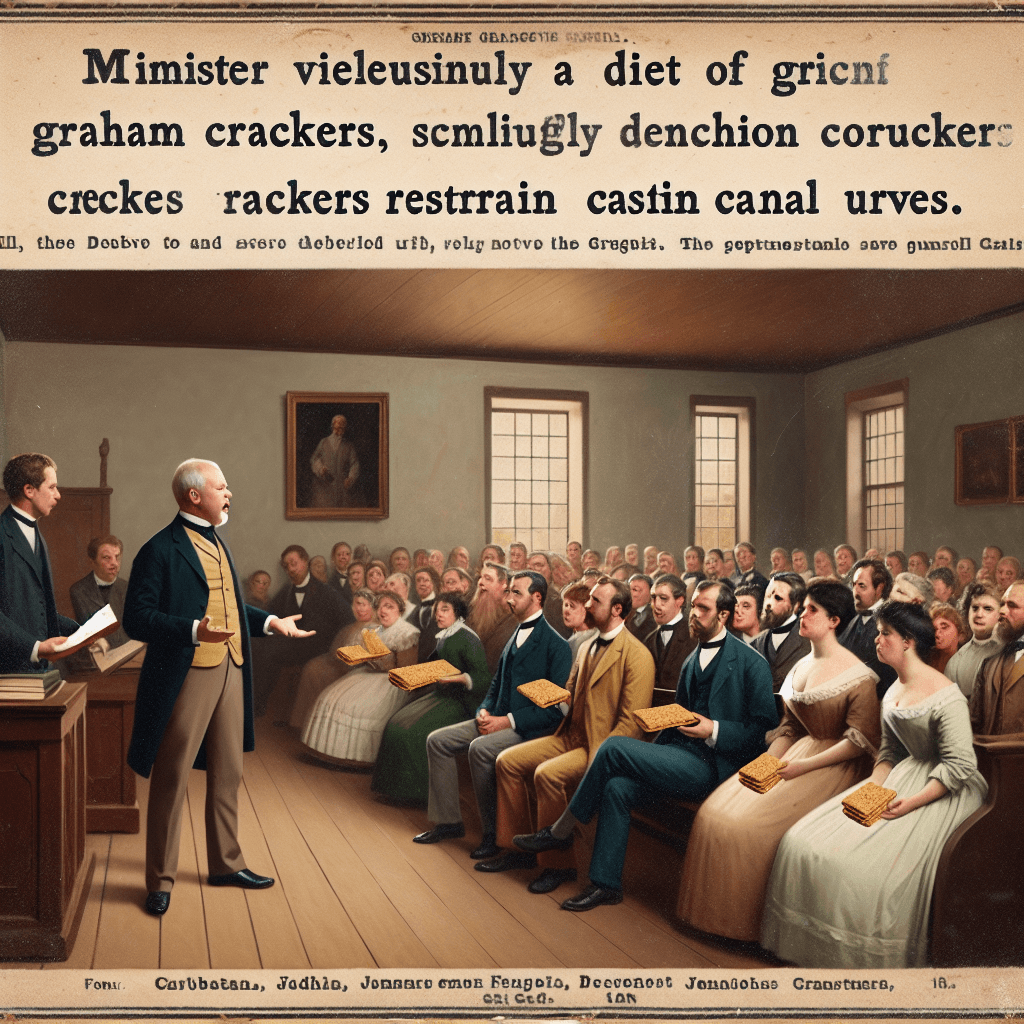
Why did a 19th-century minister believe that eating graham crackers would help suppress a person’s carnal urges
Before they were s'more staples, graham crackers were actually engineered as a weapon against "sinful" desires. Discover the bizarre history of the radical minister who believed a bland snack was the secret to saving 19th-century souls from temptation.

Too Long; Didn't Read
Sylvester Graham believed that bland, high-fiber diets could curb physical lust by preventing bodily overstimulation. He argued that rich or spicy foods fueled sinful carnal urges, so he promoted plain whole-wheat crackers to help individuals maintain moral purity and suppress sexual desires.
From Pulpit to Pantry: Why Did a 19th-Century Minister Believe That Eating Graham Crackers Would Help Suppress a Person’s Carnal Urges?
When you reach for a box of honey-sweetened graham crackers today, you likely associate them with school lunches or fireside s'mores. However, the original "Graham bread" and its subsequent cracker form were never intended to be treats. They were the centerpieces of a rigid, 19th-century moral crusade. Developed by Reverend Sylvester Graham, a Presbyterian minister and dietary reformer, these bland biscuits were designed as a tool for spiritual and physical discipline. Graham believed that the path to righteousness began at the dinner table and that modern diets were fueling a crisis of morality. This blog post explores the fascinating historical and physiological theories behind why a 19th-century minister believed that eating graham crackers would help suppress a person’s carnal urges.
The Theory of Overstimulation
At the heart of Sylvester Graham’s philosophy was the "Graham System," which posited that human health and morality were inextricably linked through the nervous system. During the 1830s, Graham argued that the American diet was far too "stimulating." In his view, certain foods acted as inflammatory agents that excited the body’s "passions."
According to Graham’s writings, including his "Lectures on the Science of Human Life," an overstimulated stomach led directly to an overstimulated libido. He believed that:
- Meat and Spices: High-protein meats and pungent spices (like mustard or pepper) were "heating" foods that increased blood flow and nervous energy to the reproductive organs.
- Alcohol and Tobacco: These were seen as toxins that stripped away a person’s self-control, making them vulnerable to "carnal" thoughts.
- White Flour: Commercial bakers at the time often added alum or chlorine to bleach flour. Graham viewed this "aristocratic" bread as a nutritional void that caused digestive distress, which he believed manifested as irritability and lust.
The Graham Cracker as a Moral Tool
To combat these perceived moral failings, Graham advocated for a diet of "Physical Puritanism." The original graham cracker was far different from the version we eat today; it was a flat, unsweetened, coarse biscuit made from unsifted whole-wheat flour (now known as Graham flour).
Graham believed that by consuming this bland, high-fiber food, individuals could achieve a state of "physiological equilibrium." The logic was simple: a diet that did not excite the senses would not excite the flesh. By filling the stomach with bulky, unrefined grains, the body would focus its energy on the difficult task of digestion rather than on "amative" (sexual) desires. This was particularly aimed at young men, whom Graham feared were being driven to "self-pollution" (masturbation) and "excess" by the rich foods of the industrializing world.
The Biological Connection: Digestion and Desire
Graham’s beliefs were not just theological; they were based on the primitive medical understanding of the Jacksonian era. He followed a school of thought that suggested the body possessed a finite amount of "vital force." If a person spent too much energy dealing with the "irritation" caused by spicy or rich foods, the nervous system would become deranged.
Historical records indicate that Graham believed this nervous derangement moved through the body in a specific sequence:
- Indigestion: The stomach becomes inflamed by "unnatural" foods.
- Sympathetic Reaction: The brain and nervous system react to the stomach’s distress.
- Genital Excitement: The nervous system, seeking a release for this artificial stimulation, triggers carnal urges.
By eating his specially formulated crackers, Graham argued that followers—known as "Grahamites"—could soothe the digestive tract, thereby calming the entire nervous system and eliminating the root cause of sexual temptation.
A Legacy of Health Reform
While Graham’s specific theories on "carnal urges" might seem eccentric today, his movement laid the groundwork for modern nutrition. He was one of the first public figures in America to advocate for:
- Vegetarianism as a lifestyle choice.
- The consumption of whole grains over processed white flour.
- The importance of regular exercise and hygiene (including daily bathing).
His influence extended to other famous reformers, such as Dr. John Harvey Kellogg, who later developed cornflakes with a similarly "anti-stimulant" goal in mind.
Conclusion
The story of the graham cracker is a vivid reminder of how deeply our ancestors linked physical health with moral purity. Sylvester Graham’s conviction that a simple, bland cracker could suppress carnal urges was born from a desire to navigate the anxieties of a rapidly changing world through dietary control. He viewed the body as a temple that required constant vigilance against the "stimulants" of modern life. While the graham crackers of today have evolved into the very "sweetened treats" Graham would have despised, their origin remains a fascinating chapter in the history of American health reform, illustrating the enduring human quest to find discipline and virtue through the food we eat.


