
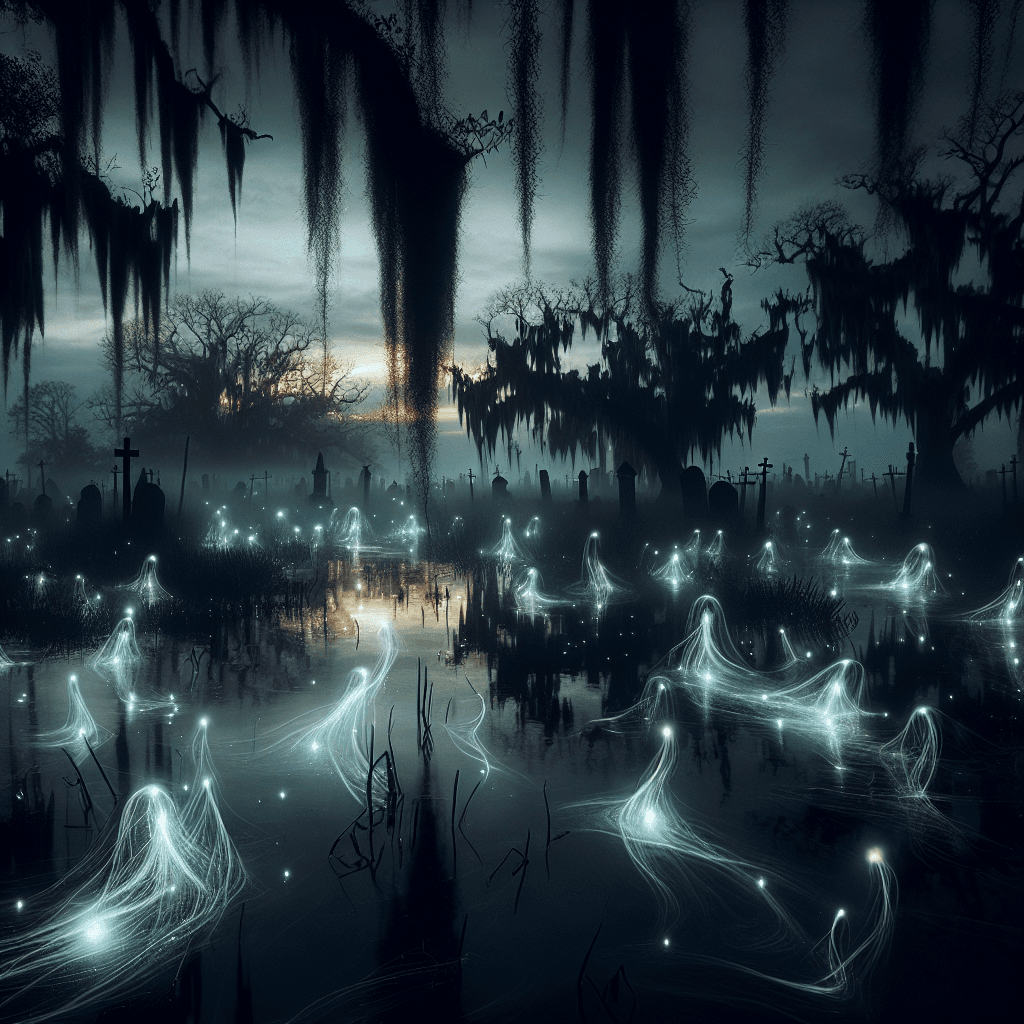
What creates the ghostly dancing lights sometimes seen over swamps and graveyards
Folklore calls them wandering spirits and corpse candles, but the eerie truth behind these phantom flames is a bizarre chemical reaction bubbling up from the earth itself.

Too Long; Didn't Read
TLDR: Those ghostly lights are flammable gases, like methane, released from decaying organic matter in swamps or graveyards. The gas ignites in the air, creating small, flickering flames that appear to dance.
Decoding the Mystery: What Creates the Ghostly Dancing Lights Seen Over Swamps and Graveyards?
Have you ever heard tales of a lone traveler at dusk, lost near a murky swamp, who suddenly spots a faint, flickering light in the distance? This ethereal glow seems to dance and bob just above the ground, beckoning them forward. For centuries, these apparitions, known by names like will-o'-the-wisp, jack-o'-lantern, and ignis fatuus (Latin for "foolish fire"), have fueled ghost stories and cautionary tales. They were seen as mischievous fairies, lost souls, or malevolent spirits luring the unwary to their doom. While these legends are captivating, science offers a far more grounded—yet equally fascinating—explanation for these ghostly lights. This post will delve into the natural phenomena that create these mysterious illuminations, separating scientific fact from supernatural folklore.
The Scientific Explanation: Unmasking the Ghost Lights
The most widely accepted scientific theory behind the will-o'-the-wisp is a natural chemical process known as chemiluminescence—the emission of light from a chemical reaction. It's not a ghost, but rather "swamp gas."
Here’s a step-by-step breakdown of how it works:
- Anaerobic Decomposition: Swamps, bogs, marshes, and even old graveyards are environments rich in decaying organic matter (like dead plants and animals) but poor in oxygen. This oxygen-deficient environment leads to anaerobic decomposition, a process where microbes break down organic material without oxygen.
- Gas Production: This process releases a cocktail of gases, most notably methane (CH4) and phosphine (PH3).
- The Spark of Ignition: The key ingredient is often an impurity found with phosphine called diphosphane (P2H4). Diphosphane has a unique and crucial property: it ignites spontaneously upon contact with oxygen in the air.
- A Flickering Flame: This spontaneous ignition of diphosphane provides the "spark" that then ignites the much more abundant methane gas. The result is a brief, flickering flame of cold fire that emits a faint, eerie light. Because these gases are lighter than air and are subject to breezes and air currents, the flame appears to float, dance, and drift mysteriously just above the ground.
This combination of decay, gas, and spontaneous combustion perfectly explains the appearance of fleeting, dancing lights in these specific, damp environments.
Are There Other Causes?
While the swamp gas theory is the leading explanation, other natural phenomena can contribute to reports of mysterious lights. It's likely that not every sighting has the same cause.
Bioluminescence
Sometimes, what people mistake for a single ghostly light is actually a cluster of living organisms.
- Foxfire: This term refers to the faint, greenish glow produced by certain species of bioluminescent fungi that thrive on decaying wood. A large patch of this fungus on a log in a dark swamp could easily be mistaken for a supernatural light.
- Fireflies: Large swarms of fireflies or other bioluminescent insects flashing in unison can create a dazzling and disorienting light show over a field or marsh.
Geological and Atmospheric Lights
In some cases, the source isn't biological at all. Geological activity can, on rare occasions, produce light. The phenomenon of piezoelectricity, where mechanical stress on certain minerals like quartz creates an electrical charge, could theoretically generate sparks. More commonly, atmospheric conditions can play tricks on the eyes. The lights from distant cars or houses can be refracted and distorted by layers of air at different temperatures, making them appear to shimmer and move in strange ways.
From Folklore to Fact
For millennia, humans have used stories to explain the world around them. The will-o'-the-wisp was a perfect subject for folklore—a mysterious, beautiful, yet dangerous phenomenon tied to desolate and feared locations. It served as a warning to stay on the path and avoid treacherous bogs after dark. Today, we understand that these ghostly lights are not spirits trying to lead us astray, but rather a beautiful display of natural chemistry and biology at work. The science behind the phenomenon demystifies the fear but doesn't diminish the wonder. The next time you hear a story about a ghostly light dancing over a misty marsh, you'll know the fascinating truth behind the legend.


