
What creates those mysterious floating ghost orbs in flash photos
Are those spooky, glowing orbs in your photos paranormal visitors, or a fascinating trick of science? The surprisingly simple answer is hiding in plain sight.

Too Long; Didn't Read
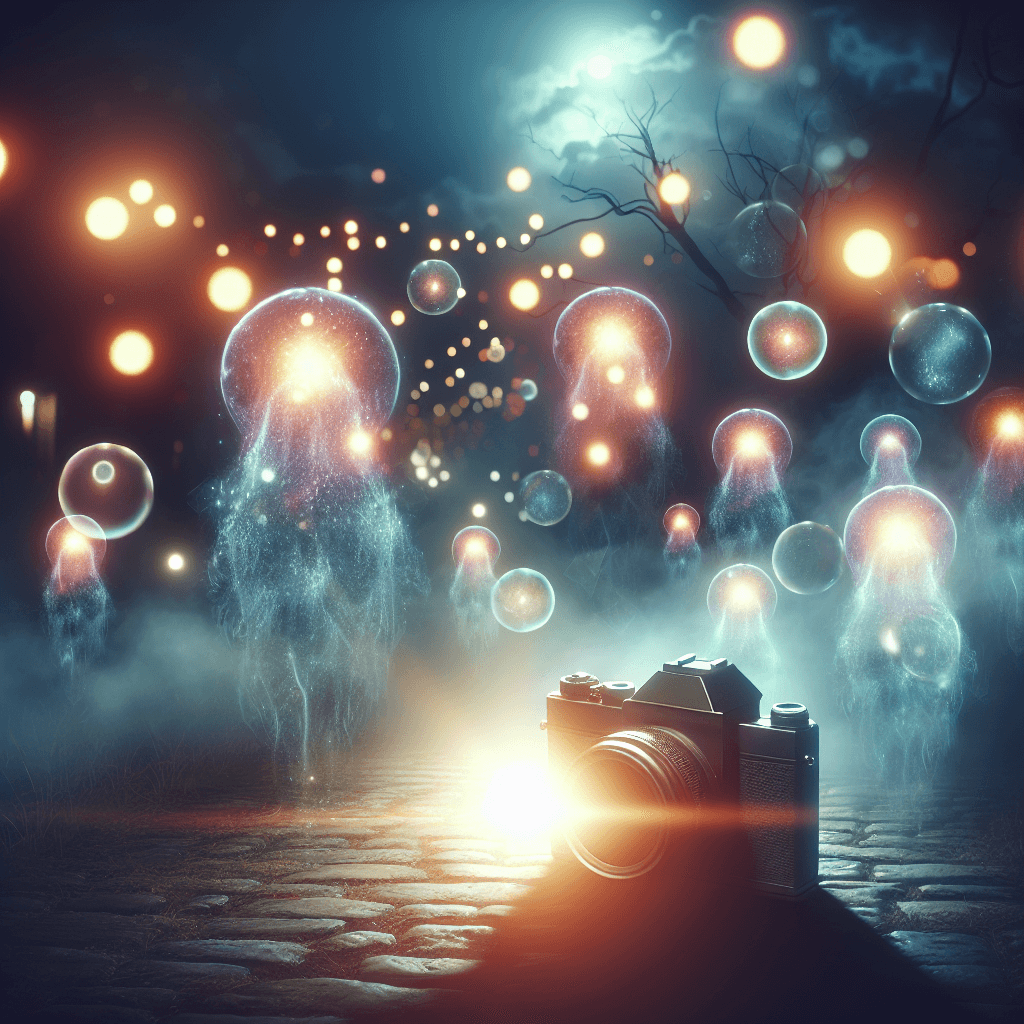
TLDR: Not ghosts, but your flash illuminating out-of-focus dust, pollen, or moisture particles close to the lens.
Debunked: What Creates Those Mysterious Floating Ghost Orbs in Flash Photos?
Have you ever snapped a photo at a party or in a dusty old house, only to later find strange, glowing circles floating in the image? For years, these "ghost orbs" have been a centerpiece of paranormal investigations, often presented as evidence of spiritual energy or ghostly presences. While the idea is tantalizing, the truth is far more scientific and rooted in the principles of photography. These mysterious apparitions are not spirits, but a well-documented optical phenomenon. This post will demystify these floating orbs by exploring the science behind what they are, why they appear, and how the design of your camera plays a crucial role in capturing them.
The Scientific Explanation: Introducing 'Backscatter'
The primary culprit behind ghost orbs is a photographic effect called backscatter, also known as near-camera reflection. In simple terms, backscatter occurs when the camera's flash reflects off tiny, airborne particles that are too close to the lens to be in focus.
Here’s how it works: When you use a flash, you are blasting a bright, brief burst of light forward. If particles like dust, pollen, or water droplets are floating in the air between your camera and the main subject, this light hits them. Because these particles are so close to the lens, they reflect a disproportionate amount of light directly back into the camera. Since they are well outside the camera's focal plane, the lens can't render them as sharp specks. Instead, it captures them as large, blurry, and often translucent circles of light—the very orbs that spark so much mystery.
The Usual Suspects: What Particles Cause Orbs?
The environment you're shooting in is the single biggest factor in whether orbs will appear. Any location with a high concentration of airborne particulates is a prime spot for creating backscatter. Some of the most common causes include:
- Dust: Old buildings, attics, and construction sites are notoriously dusty.
- Water Droplets: Mist, rain, fog, snow, or even high humidity can fill the air with tiny water particles that are perfect for creating orbs. This is why orb photos are common near waterfalls or on damp nights.
- Pollen and Plant Matter: Shooting outdoors in a garden or forest can introduce pollen and other small bits of organic matter into the air.
- Insects: Small insects flying close to the lens can also be illuminated by the flash and appear as orbs, sometimes with a slight streak if they were in motion.
- Fibers: Tiny fibers from clothing, carpets, or upholstery can also become airborne and cause the effect.
Why Are Orbs More Common Now? The Camera Connection
If orbs are just a trick of light, why do they seem so much more common in photos from the last couple of decades? The answer lies in the evolution of camera design, specifically the rise of compact digital cameras and smartphones.
On these devices, the built-in flash is located very close to the camera lens—often just a centimeter or two away. This creates a very sharp angle between the light source (the flash) and the image sensor (the lens). This proximity is the perfect recipe for backscatter. Light from the flash travels a short distance, hits a nearby particle, and reflects back into the lens at an almost identical angle.
In contrast, professional DSLR cameras often use external flash units that are mounted further away from the lens. This greater distance changes the angle of illumination and reflection, causing light from nearby particles to bounce away from the lens instead of into it, drastically reducing the chances of capturing orbs.
Conclusion
While it can be thrilling to think you’ve captured something otherworldly, those mysterious floating ghost orbs are almost always a result of simple physics and photography. The phenomenon of backscatter, where the camera's flash illuminates out-of-focus particles like dust or moisture in the air, provides a clear and logical explanation. The prevalence of these orbs in modern photography is a direct consequence of the compact design of our cameras and smartphones. So, the next time you spot a glowing orb in one of your pictures, don't call a paranormal investigator. Instead, you can appreciate it as a perfect, real-world demonstration of how light and lenses work together.


