
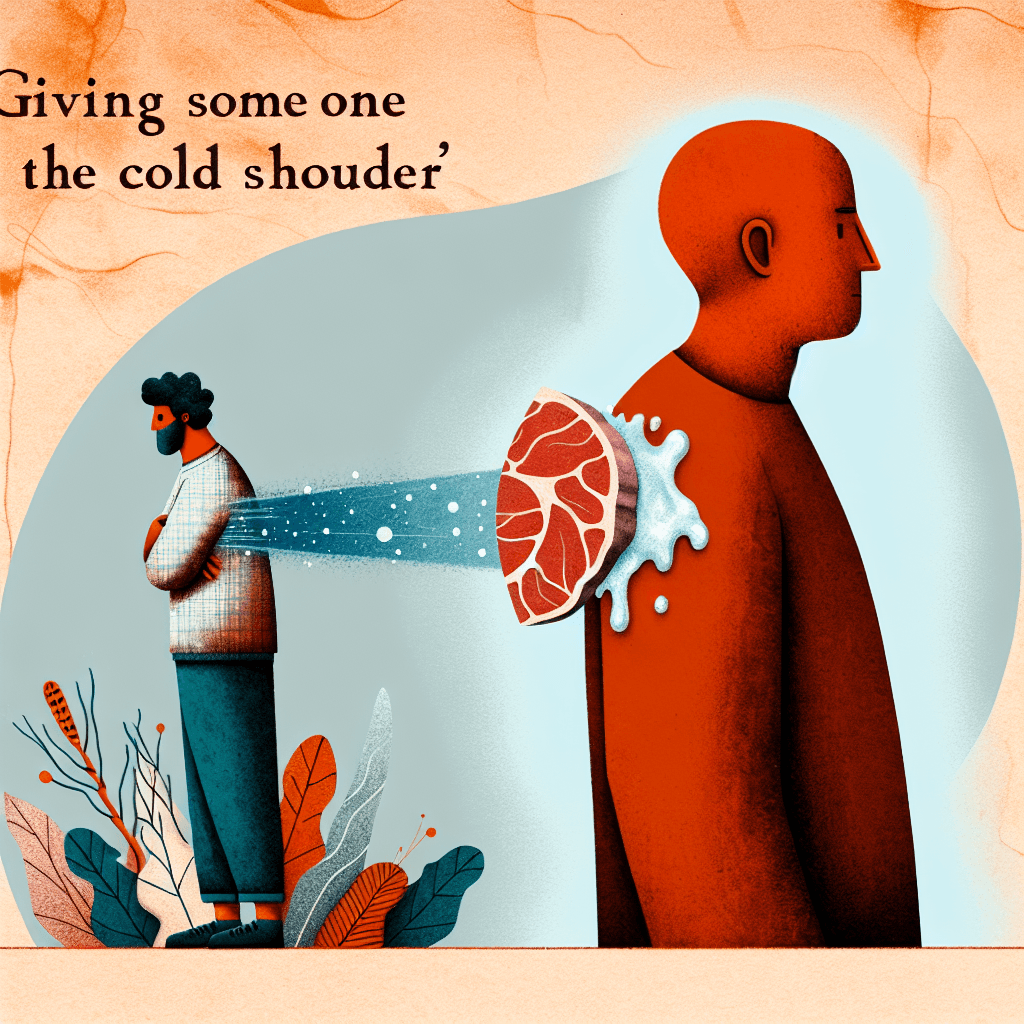
What does giving someone the cold shoulder have to do with meat
The origin of this common phrase isn't a metaphor at all—it’s a bizarre tale from a time when unwanted guests were literally served a cold shoulder of meat as a hint to leave.

Too Long; Didn't Read
TLDR: The phrase originates from the old custom of serving an unwelcome guest a cold shoulder of meat, instead of a hot meal, as a subtle hint that it was time for them to leave.
From Medieval Feasts to Modern Snubs: What Does Giving Someone the Cold Shoulder Have to Do with Meat?
Have you ever felt the distinct chill of being ignored? That deliberate, icy disregard known as "the cold shoulder"? We've all used the phrase, but have you ever stopped to wonder where it comes from? The answer is surprisingly literal and leads us back in time, not just to a feeling, but to an actual cut of meat. While the modern snub is purely psychological, its linguistic roots are firmly planted on a dinner plate. This post will carve into the fascinating history of this common idiom, revealing the direct and debated connection between giving someone the cold shoulder and a piece of meat.
A Dish Served Cold: The Hospitable (and Inhospitable) Custom
The most popular explanation for the phrase "giving the cold shoulder" transports us to the great halls of medieval England. In an era when hospitality was a cornerstone of social conduct, a visitor's welcome was often measured by the quality of the meal they were served.
According to this widespread theory, a welcomed and honored guest would be treated to the best the kitchen had to offer: a hot, freshly prepared feast, likely featuring the finest cuts from a roast. However, when a guest had overstayed their welcome or was simply not wanted, the host could send a subtle but powerful message. Instead of a warm meal, this less-favored visitor would be served a "cold shoulder of mutton"—a less desirable, pre-cooked, and cold piece of meat. It was a polite, non-confrontational way of saying, "You've had your fill, and it's time to leave." This act was the literal serving of a cold shoulder, a clear signal that the host's warmth had cooled.
From the Table to the Page: Sir Walter Scott's Influence
While the medieval origin story is vivid and compelling, its first documented appearance in writing comes much later, thanks to the legendary Scottish novelist Sir Walter Scott. Scott, a master of language and a giant of 19th-century literature, is credited with introducing the phrase to the English lexicon.
The first known use appears in his 1816 novel, The Antiquary:
"The Countess’s dislike didna gang farther at first than just showing o’ the cauld shouther."
He used it again, more explicitly, in his 1824 novel, St. Ronan's Well, writing about a character who would "give him the cold shoulder." Scott’s immense popularity meant that his turns of phrase often caught on with the public, and this one was no exception. He either coined the expression himself, inspired by the literal idea of a cheap cut of meat, or he was popularizing a local Scottish colloquialism that was already in use.
So, Was It Really a Medieval Snub?
This is where the history gets interesting. Despite the popularity of the medieval hospitality story, many etymologists and historians find little direct evidence of this custom actually existing before Scott’s time. There are no definitive medieval texts that describe serving a cold shoulder of mutton as a specific signal for dismissal.
This leads many experts to believe the medieval tale might be a "folk etymology"—a plausible and imaginative story created after the fact to explain an existing phrase. It's possible that Sir Walter Scott created the metaphor, and the story of the medieval custom was invented later to give it a richer historical context. The connection to meat is undeniable, but whether it was a formalized social ritual remains a subject of debate.
Conclusion
So, what does giving someone the cold shoulder have to do with meat? Everything. Whether it originated as a real medieval custom or a brilliant metaphor coined by Sir Walter Scott, the phrase is directly tied to the serving of a cold, unappetizing cut of meat as a sign of dismissal. The literal meaning—offering a piece of cold shoulder—perfectly captures the metaphorical feeling of receiving a chilly, unwelcoming reception. It’s a powerful reminder that the words we use every day are often steeped in a tangible history, connecting our modern emotions to the customs, foods, and social signals of the distant past. The next time you feel the sting of a cold shoulder, you'll know that its origins are as real and physical as the food on a plate.


