
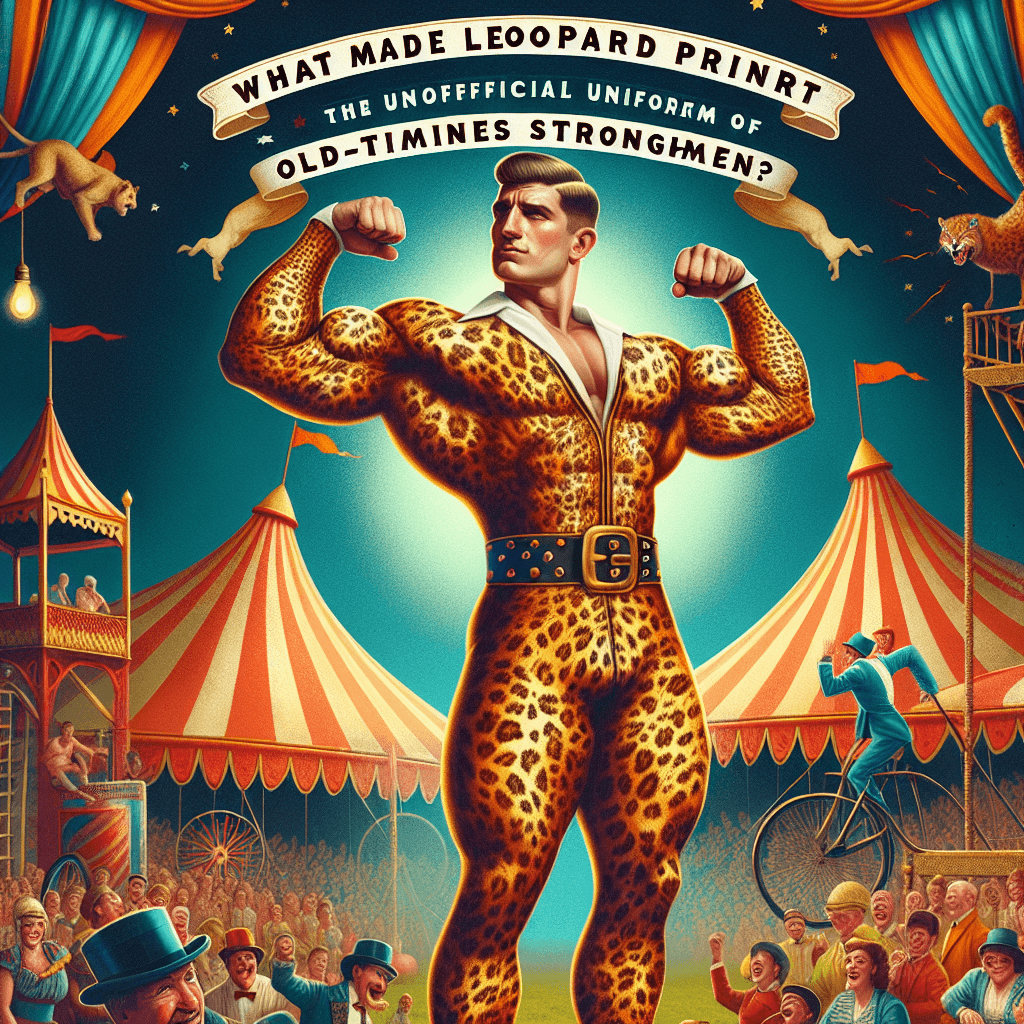
What made leopard print the unofficial uniform of old-timey circus strongmen
Before it graced runways, the leopard print was a strongman's trophy—a primal symbol declaring he possessed the power of the very beast he wore.

Too Long; Didn't Read
TLDR: Leopard print was a visual shortcut for superhuman strength. It associated strongmen with the power of a fearsome predator, evoked the exoticism of faraway lands central to the circus, and connected them to mythological heroes like Hercules who wore animal skins as a trophy of their might.
Title: From Mythical Beasts to the Big Top: What Made Leopard Print the Unofficial Uniform of Old-Timey Circus Strongmen?
Introduction
Close your eyes and picture a classic, old-timey circus strongman. You likely see a magnificent handlebar mustache, a comically large barbell, and a physique honed by years of effort. But what is he wearing? Chances are, your mind immediately conjured up a single-strap singlet made of leopard-print fabric. This seemingly specific fashion choice was no accident. For decades, this animal pattern was the quintessential look for the titans of the big top. This blog post will delve into the historical, symbolic, and practical reasons that cemented leopard print as the unofficial uniform of the circus strongman, revealing a story woven from ancient myths, colonial-era fascination, and pure, unadulterated showmanship.
The Historical Roots of the Strongman's Spots
The strongman's leopard-print attire is a powerful piece of visual storytelling, drawing on a rich tapestry of cultural symbols that instantly communicate power and masculinity to an audience. The choice was a masterful blend of mythological reverence, exotic allure, and stage-ready practicality.
Echoes of Ancient Heroes: Man vs. Beast
The most foundational influence for this look comes directly from classical mythology. The ultimate strongman of ancient lore is Hercules (or Heracles in Greek mythology), whose first of twelve labors was to slay the Nemean Lion—a ferocious beast whose hide was impervious to mortal weapons. After strangling the lion, Hercules wore its pelt as a cloak and symbol of his superhuman strength.
This image of a hero wearing the skin of a fearsome predator became a timeless symbol of might. By donning a leopard-print singlet, circus strongmen were tapping into this powerful archetype. Their costume told the audience, without a single word:
- "I am a conqueror."
- "I possess the strength of a wild beast."
- "I am a modern-day Hercules."
The spotted pattern of a leopard, one of nature’s most formidable apex predators, was a perfect stand-in for the mythical lion's hide, instantly connecting the performer to this legacy of heroic power.
The Allure of the "Untamed" and Exotic
The rise of the modern circus in the 19th and early 20th centuries coincided with the height of European colonialism. This era brought a widespread Western fascination with the "exotic" lands of Africa and Asia. Leopards, with their mysterious and powerful reputation, were central to this imagery.
By wearing leopard print, the strongman was not just strong; he was primal, untamed, and connected to the "savage" power of the natural world. This was a powerful marketing tool. It suggested that his strength wasn't just the result of training in a gym but was a raw, innate force. This trope was further popularized by characters like Tarzan, who was often depicted in a leopard-skin loincloth, reinforcing the connection between animal hides and peak human physicality in the wild.
The Practicality of Performance
Beyond the deep symbolism, leopard print was also an incredibly practical choice for a physically demanding stage act. The design of the costume served several key functions that made it ideal for show business.
Showcasing the Physique
First and foremost, the strongman's job was to display his muscles. A minimalist singlet or loincloth was the perfect garment for this, leaving the arms, chest, and legs exposed. The bold, high-contrast pattern of leopard print did more than just cover the performer; it actively enhanced their appearance. Under the harsh gaslights or early electric lights of the circus tent, the spots and rosettes helped to create shadows and lines that accentuated muscle definition, making the strongman's physique appear even more impressive from a distance.
Functionality and Durability
The life of a circus performer was grueling, and their costumes had to withstand incredible wear and tear.
- Concealment: The busy pattern was brilliant at hiding sweat stains, chalk dust, and minor rips or scuffs that were inevitable during a performance involving heavy lifting.
- Material: While early performers may have used actual hides, the printed fabric that became common was durable and offered a degree of flexibility needed for the act.
- Memorability: In a circus filled with dazzling acts, the distinctive leopard print gave the strongman a unique and instantly recognizable brand.
Conclusion
The strongman's leopard-print singlet was far more than a simple costume; it was a carefully constructed symbol. It was a visual shorthand for superhuman strength, drawing its power from the myths of Hercules, the colonial fascination with the untamed wild, and the sheer practical needs of performance. This iconic uniform allowed the strongman to embody the primal power of a beast while demonstrating the discipline of a hero. So, the next time you see that classic image, you'll know that the spots are not just for show—they are a deliberate link to a long and powerful history of what it means to be strong.


