
Why are older streetlights that specific sickly orange color
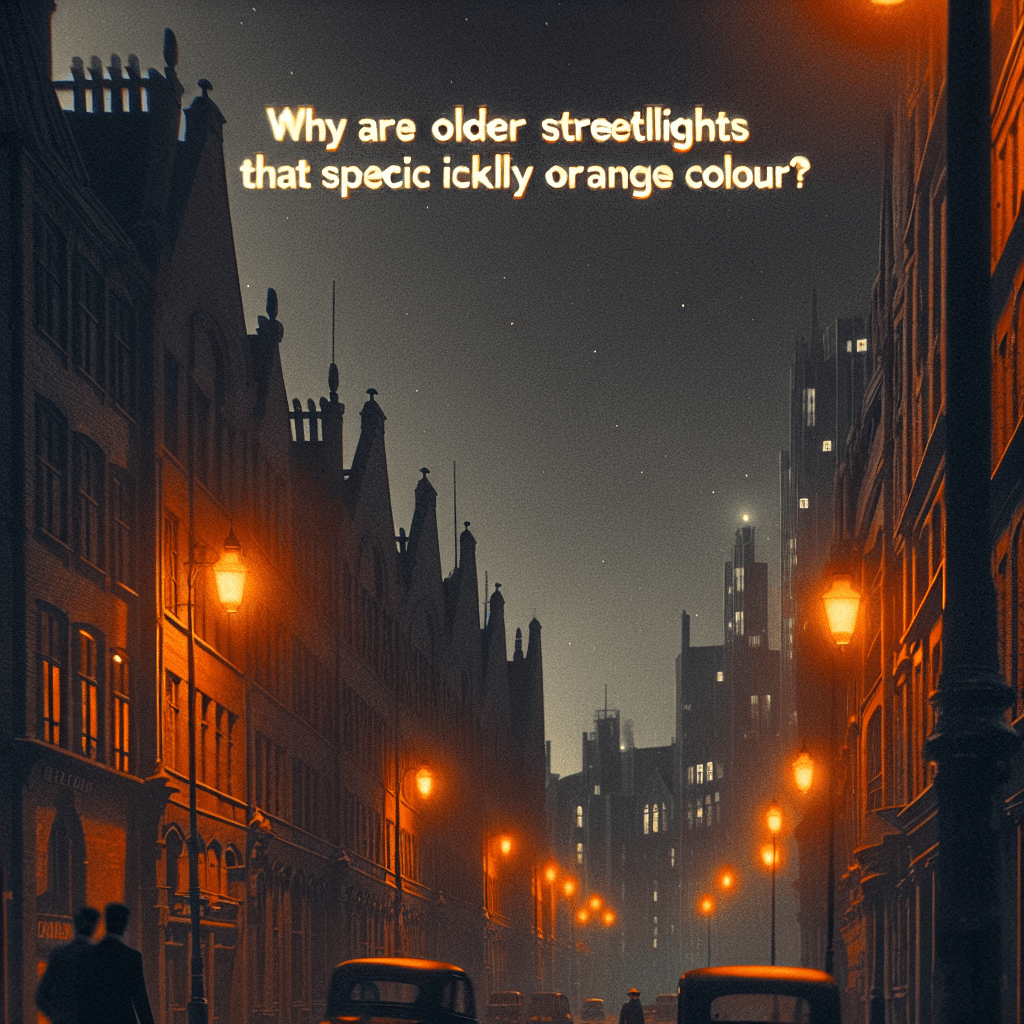
That eerie orange glow wasn't a creepy design choice, but a brilliant, cost-saving trick of chemistry that once lit up the entire world.

Too Long; Didn't Read
TLDR: Those old orange streetlights are low-pressure sodium lamps. They were extremely energy-efficient and cheap to run because they only produced a single, narrow wavelength of orange light. The downside is that this single color makes it impossible to see other colors correctly.
Solving a Nightly Mystery: Why Are Older Streetlights That Specific Sickly Orange Color?
Take a drive through an older neighborhood at night, or recall scenes from a movie set before the 2010s, and you’ll likely picture the world bathed in a distinct, almost eerie orange light. This ubiquitous "sodium-vapor glow" became the default color of the night for decades. But was this a stylistic choice, or is there a scientific reason for that specific, sickly orange hue? The truth is, that color wasn't chosen for its aesthetics; it was the direct byproduct of a technology prized for its incredible efficiency and economy. This blog post will uncover the science and history behind the iconic orange streetlight, explaining exactly why it dominated our cityscapes for so long.
It's All About the Sodium
The distinctive orange glow comes from a specific type of light bulb called a sodium-vapor lamp. For most of the 20th century, these lamps were the undisputed champions of municipal lighting for a few very practical reasons. They work by sending an electrical arc through vaporized sodium metal, which excites the sodium atoms and causes them to emit light.
There are two main types of these lamps, and their differences account for the slight variations in the orange color you might have noticed.
Low-Pressure Sodium (LPS): The Monochromatic Orange
The most intense, purely orange lights are Low-Pressure Sodium (LPS) lamps. These are the true originators of the "sickly" orange glow.
- How it works: In an LPS lamp, the sodium vapor is kept at a low pressure. When electricity passes through it, the sodium atoms emit light almost exclusively in a very narrow band of the visible spectrum: a monochromatic wavelength of 589 nanometers. This is the pure, intense yellow-orange color we associate with old streetlights.
- The downside: Because it produces only one color, LPS light has abysmal color rendering. Under an LPS lamp, a blue car, a red jacket, and a green recycling bin all appear as different shades of greyish-brown or black.
- The upside: LPS lamps are one of the most efficient lighting technologies ever created. They convert a huge percentage of electricity directly into visible light, making them incredibly cheap to operate.
High-Pressure Sodium (HPS): The Golden-White Compromise
As technology advanced, the High-Pressure Sodium (HPS) lamp was developed. This is the more common peachy, golden-orange light many of us are familiar with.
- How it works: HPS lamps operate with the sodium vapor at a much higher pressure and temperature. This causes the sodium atoms to emit light across a broader spectrum. While still heavily dominated by orange and yellow, this light also includes hints of red and green.
- The result: The light appears more golden or pinkish-orange compared to the pure orange of LPS. Critically, this broader spectrum allows for better color rendering. You could at least tell a red car from a blue one, even if the colors weren't perfect. While slightly less efficient than LPS lamps, HPS lamps offered a much longer operational lifespan and better color quality, making them the go-to choice for cities for over 40 years.
The Reign of Orange: Efficiency, Longevity, and Cost
So, why did cities overwhelmingly choose a light that made everything look so strange? The answer comes down to pure, practical economics. During the mid-to-late 20th century, especially following the energy crises of the 1970s, municipalities needed to light miles of streets as cheaply as possible.
Sodium-vapor lamps were the perfect solution for three key reasons:
- Unbeatable Energy Efficiency: They produced the most light (lumens) for the least amount of electricity (watts), drastically cutting municipal energy bills.
- Exceptional Lifespan: HPS lamps could last for up to 24,000 hours, far longer than older mercury-vapor or incandescent technologies. This meant less money spent on maintenance crews and replacement bulbs.
- Effective Visibility: The human eye is highly sensitive to the yellow-orange light produced by sodium lamps, making it excellent for detecting motion and contrast—the most important factors for driver and pedestrian safety at night.
The Twilight of the Orange Glow
Today, the orange glow is fading from our cities, being replaced by the crisp, white light of LEDs (Light-Emitting Diodes). LEDs have finally managed to surpass sodium-vapor lamps in every key metric: they are even more energy-efficient, have a longer lifespan, and offer near-perfect color rendering. They also allow for better light control, reducing the light pollution that spills into the night sky.
Conclusion
That sickly orange streetlight color was never a design flaw or an aesthetic choice. It was the unmistakable signature of sodium-vapor technology—a pragmatic, cost-effective solution that lit our world for generations. These lamps prioritized efficiency, longevity, and safety over the luxury of accurate color. As cities continue their transition to modern LED lighting, that classic orange glow is becoming a relic of urban history. So, the next time you spot one of these old orange lamps, you’ll know you’re not just seeing a light, but a glowing monument to a bygone era of technological innovation.


