
Why are ships and boats traditionally referred to as she instead of it
Ever wondered why a vessel of wood and steel is called 'she'? The answer is a captivating voyage into the history of language, a sailor's superstitions, and their deep respect for the powerful, life-giving entity that carries them across the sea.

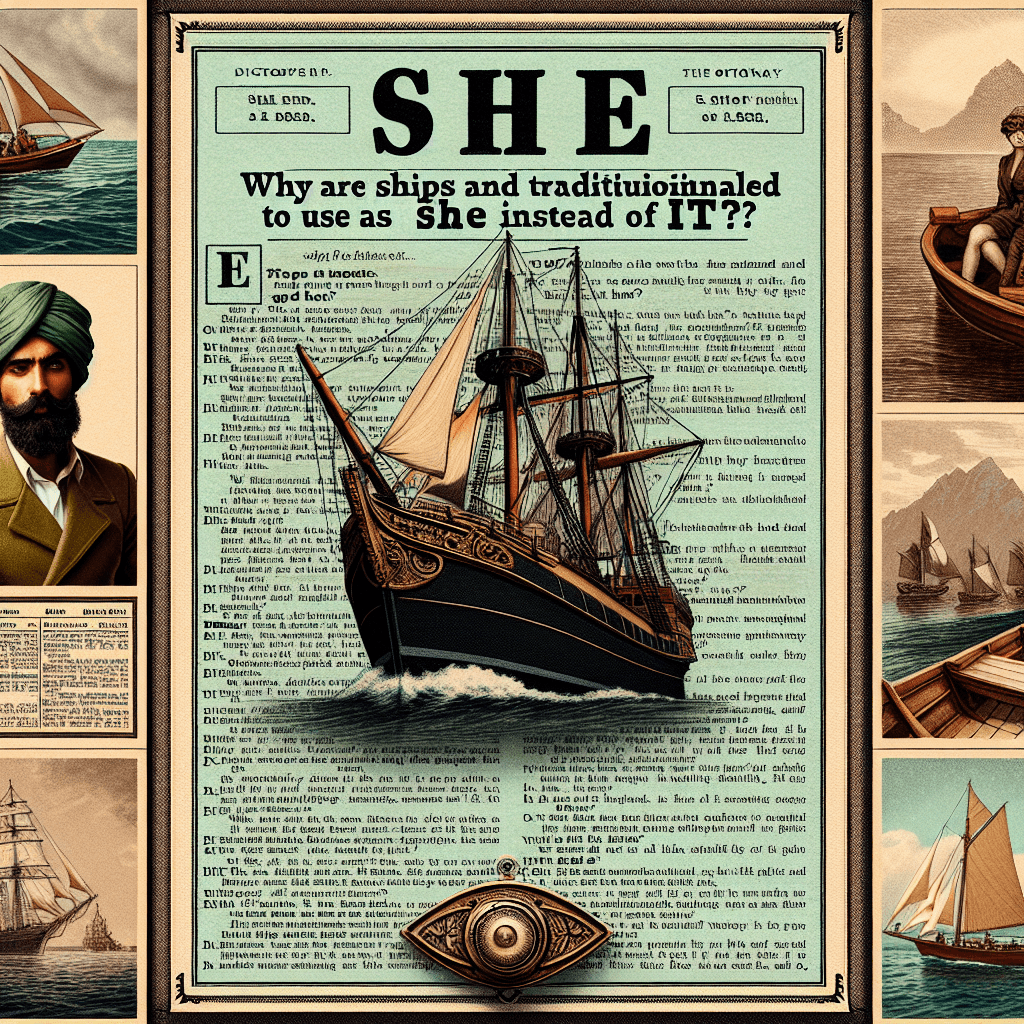
Too Long; Didn't Read
TLDR: It is a tradition rooted in old maritime history, stemming from languages that assign gender to objects, sailors naming ships after goddesses or female figures for protection, and the personification of the vessel as a protective, mother-like figure that carries and cares for its crew.
A Maritime Mystery Solved: Why Are Ships and Boats Traditionally Referred to as 'She' Instead of 'It'?
Have you ever listened to an old sea shanty or watched a documentary about a historic vessel and noticed something peculiar? A seasoned sailor will almost invariably refer to their ship not as an "it," but as a "she." This age-old maritime tradition of gendering vessels is so deeply ingrained in our culture that we often accept it without a second thought. But where did this practice come from? This isn't just a simple grammatical quirk; it's a fascinating tradition steeped in history, language, and the profound psychological bond between a mariner and their vessel. This post will explore the historical, linguistic, and cultural reasons why ships and boats are traditionally referred to as "she."
The Linguistic Anchor: Gendered Roots in Language
One of the most straightforward explanations lies in the roots of the English language itself. Many of the languages that heavily influenced early English, particularly Latin and the Romance languages (like French and Spanish), are grammatically gendered. In these languages, all nouns have a gender—masculine, feminine, or sometimes neuter.
The Latin word for "ship" is navis, which is a feminine noun. As maritime terminology from these languages filtered into English, it’s believed that the feminine association with ships came along with it. Early English shipbuilders and sailors, influenced by their European counterparts, likely adopted this gendering, and the tradition simply stuck.
Personification on the High Seas: A Sailor's Bond
Beyond linguistics, the more compelling reason is personification, born from the unique relationship between a sailor and their ship. For mariners on long, perilous voyages, a vessel was far more than a mere object. It was their home, their protector, and the entity upon which their very survival depended. This intense reliance fostered a deep, personal connection, making it natural to assign a human-like identity to the vessel. The choice of the feminine gender can be broken down into a few common archetypes.
The Mother and Protector
A ship was often seen as a motherly figure. She carries her crew safely within her hull, much like a mother carries a child. She protects them from the violent and unpredictable sea, a constant force of nature that sailors often personified as a wrathful male figure (like King Neptune). The ship provides shelter, safety, and a means of return to loved ones, embodying nurturing and protective qualities.
The Demanding Mistress
On the other hand, a ship could also be viewed as a beautiful but temperamental mistress or lover. This perspective highlights the high-maintenance nature of a vessel.
- She can be unpredictable: A ship has moods, creaks, and groans, and can behave differently depending on the wind and waves.
- She requires constant attention: A ship needs a "gentle hand on the tiller," frequent upkeep, and a "fresh coat of paint" to look her best and perform well.
- She can be costly: Maintaining a ship has always been an expensive endeavor, demanding both financial investment and hard labor.
This complex, sometimes frustrating, but ultimately cherished relationship mirrors historical romantic archetypes, further cementing the "she" pronoun.
A Nod to Goddesses and Figureheads
Finally, there is a strong connection to the divine and the symbolic. Historically, sailors were a superstitious lot, and for good reason. The sea was a dangerous and mysterious place. To ensure safe passage and good fortune, vessels were often named after goddesses, queens, or other revered female figures. This practice was believed to imbue the ship with the protective spirit of its namesake.
This belief was physically manifested in the figureheads that adorned the prows of many sailing ships. These carved figures were most often women, serving as the vessel's guiding spirit, watching over the crew and leading them safely through treacherous waters. It’s only natural to refer to a ship with a female spirit and a female form as "she."
The Shifting Tides: Modern Usage
While the tradition remains strong in casual and poetic language, official maritime communication is changing. Many modern institutions, including the highly influential shipping insurer Lloyd's of London, now officially refer to vessels with the neuter pronoun "it" in their style guides to promote clarity and gender neutrality. However, despite this official shift, the affectionate use of "she" persists among sailors, boat owners, and enthusiasts worldwide.
Conclusion
The tradition of calling a ship "she" is not based on a single reason but is a rich tapestry woven from linguistic history, the deep psychological need for personification in the face of danger, and a dose of ancient superstition. It reflects the respect, affection, and profound dependence sailors have always had on their vessels. While official language may be evolving toward a more neutral "it," the romantic and deeply human impulse to call a beloved ship "she" will likely sail on for generations to come, a testament to one of the most enduring relationships between humans and the magnificent machines they create.


