
Why are some playing card royals shown in profile while others face forward
From the one-eyed jacks to the "suicide king," the direction a royal faces is no accident—it's a silent clue to a forgotten history of power, rebellion, and tradition hidden in every deck.

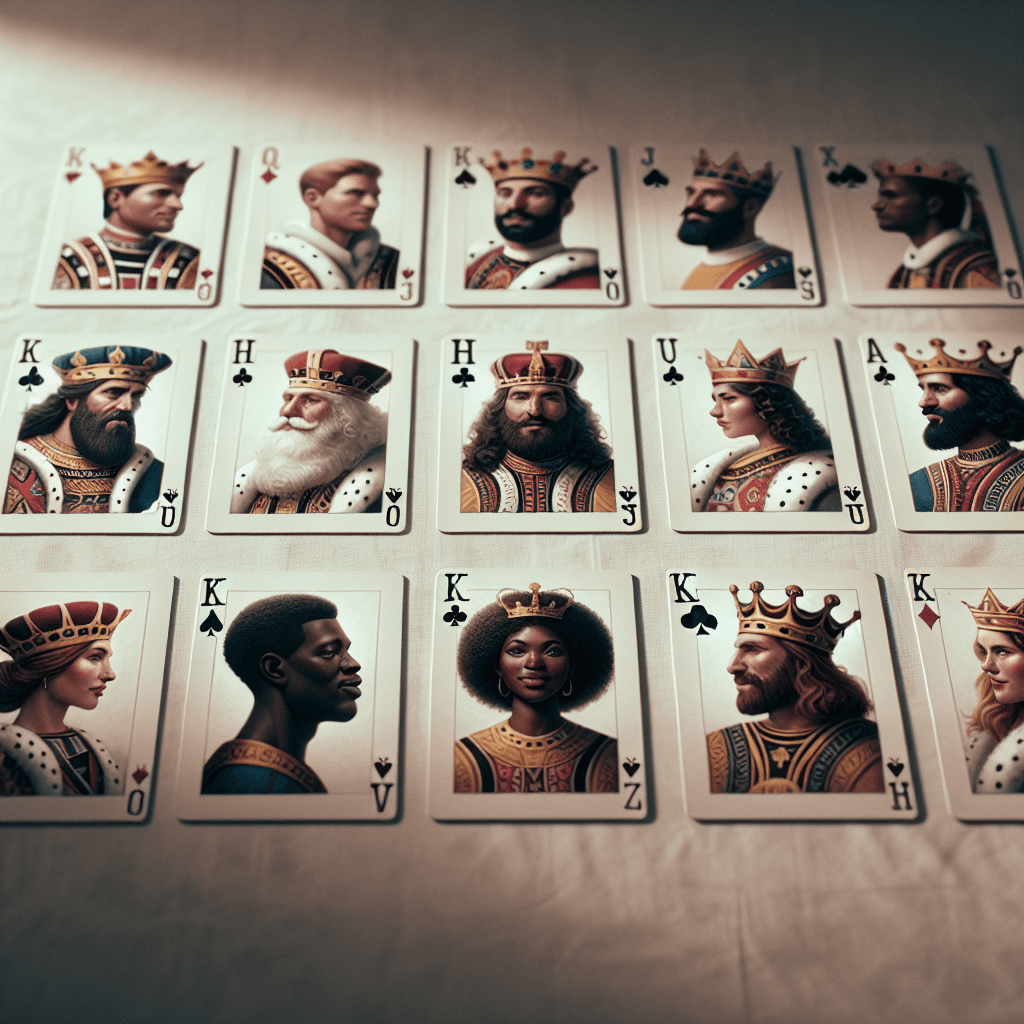
Too Long; Didn't Read
TLDR: It is not for a symbolic reason but a historical one. Modern card designs are simplified, double-headed copies of centuries-old French patterns. The royals shown in profile, often called one-eyed, were simply one of the original poses that became standardized and easier to reproduce with early printing methods.
One-Eyed Jacks & Staring Queens: Why Are Some Playing Card Royals Shown in Profile While Others Face Forward?
Have you ever fanned out a hand of cards and noticed something odd about the royal court? The King of Diamonds gazes stoically to the side, while the King of Hearts seems to look right at you. The Jacks of Spades and Hearts are famously "one-eyed," shown in crisp profile, but their counterparts in Clubs and Diamonds present a fuller view of their faces. This isn't a random design choice or a manufacturing error; it's a fascinating quirk of history, a story told through centuries of art, printing, and tradition. This post will delve into the historical evolution of playing card design to uncover why some royals face us head-on while others give us the side-eye.
From Hand-Painted to Mass-Produced
The story begins long before the modern 52-card deck became a household staple. Early European playing cards of the 14th and 15th centuries were hand-painted luxury items, meaning designs varied dramatically from one artist to another. With the advent of woodblock printing, producing cards became cheaper and more accessible, but this new technology required simpler, more stylized images that could be easily carved and reproduced.
Over time, regional patterns emerged, with specific cities becoming known for their unique card designs. The direct ancestor of the Anglo-American deck we use today is the "Paris Pattern," which became dominant in France in the 16th century and was later adopted and adapted by English card makers. The poses of our modern royals are direct descendants of these centuries-old French designs.
The Mystery of the One-Eyed Royals
The most frequently discussed examples of this phenomenon are the so-called "one-eyed royals." These are the three court cards shown in pure profile:
- The Jack of Spades
- The Jack of Hearts
- The King of Diamonds
The simple truth behind their one-eyed appearance is less about hidden symbolism and more about the practicalities of reproduction. For artists creating woodblock prints, a profile was often easier to draw, carve, and print clearly than a more complex three-quarter or full-frontal view.
As these designs were copied by different workshops over hundreds of years, the drawings were gradually simplified, and sometimes distorted, like a game of historical telephone. The profile views were retained because they were distinct and easy to replicate. This tradition became cemented in the mid-19th century with the introduction of double-headed court cards. To avoid players accidentally revealing the strength of their hand by turning a card right-side up, printers simply mirrored the existing designs, locking the classic profile and forward-facing poses into place forever.
The Full-Face Court: Why Others Stare Back
So, if profiles were easier, why aren't all the royals one-eyed? The answer lies in the inconsistent, evolutionary nature of the deck's design. The standard deck is not a single, cohesively designed set but rather an amalgamation of different historical drawings that were standardized over time.
The nine other court cards (all four Queens, the Kings of Hearts, Spades, and Clubs, and the Jacks of Clubs and Diamonds) are shown in a fuller, three-quarter, or forward-facing view. These likely originated from different source artworks or were drawn by different artisans who preferred a different perspective.
These subtle differences give each card a unique character that has been preserved for centuries:
- The King of Hearts is the only king without a mustache.
- The King of Diamonds is the only king holding an axe instead of a sword.
- The Queen of Spades is the only queen facing right.
These aren't intentional clues in a grand puzzle but rather artifacts of a long, imperfect process of artistic reproduction. The different angles are simply relics of the specific drawings that happened to survive and become the standard.
Conclusion
The reason for the varied gazes among playing card royals is not a secret code but a direct reflection of their long and fascinating journey through history. What began as hand-painted art evolved through the practical limitations of woodblock printing, becoming simplified and stylized with each new generation of card makers. The "one-eyed" royals are a testament to the ease of reproducing a profile, while the forward-facing cards are remnants of different artistic traditions. So, the next time you hold a Jack of Spades or a King of Hearts, take a moment to appreciate the centuries of history you're holding—a small masterpiece of design evolution hiding in plain sight.


