
Why are some roads intentionally painted with confusing wavy lines
They look like a bizarre painting mistake, but those wavy lines are actually a clever optical illusion designed to trick your brain and save your life.

Too Long; Didn't Read
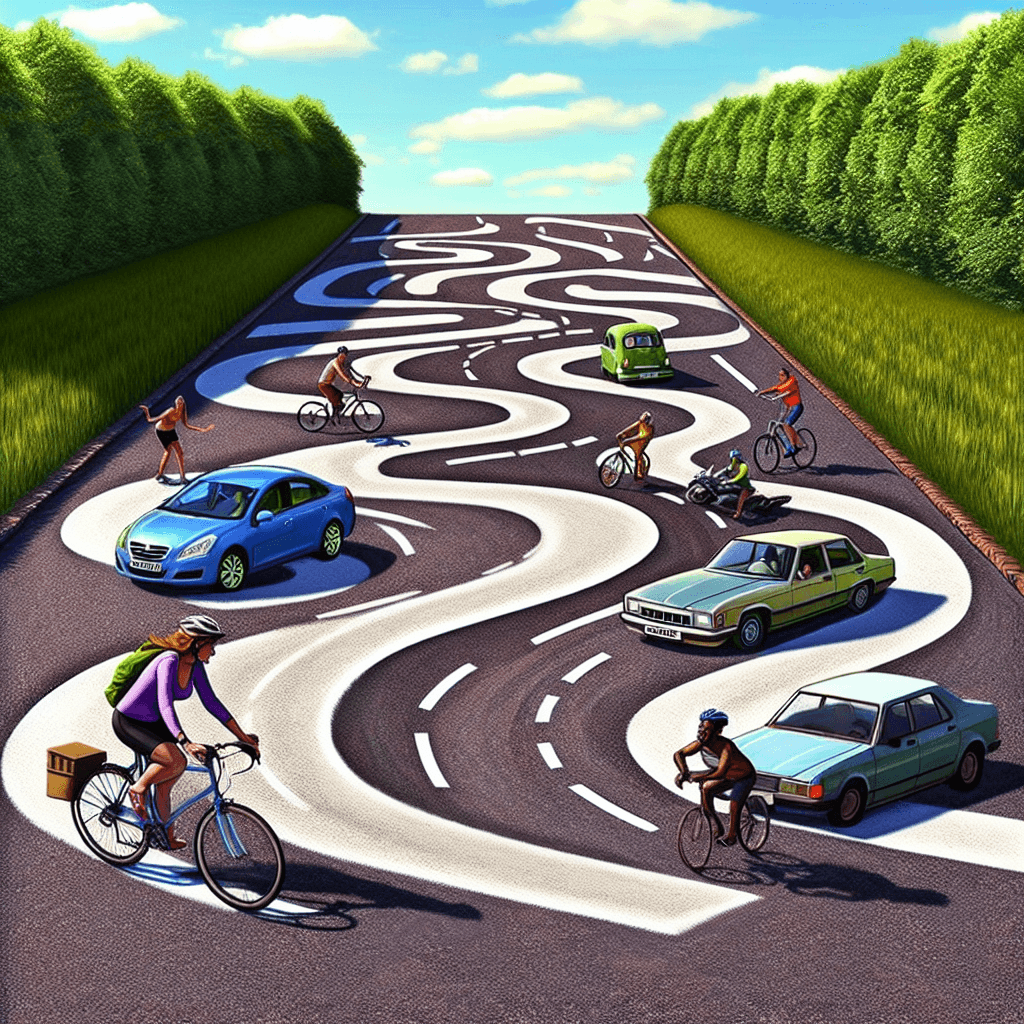
The confusing wavy lines are a traffic calming measure. They create an optical illusion that makes you instinctively slow down by making the road seem narrower and forcing you to pay more attention, acting like a psychological speed bump.
Decoding the Squiggles: Why Are Some Roads Intentionally Painted with Confusing Wavy Lines?
Have you ever been driving, perhaps approaching a crosswalk or a school zone, when the straight, predictable lines on the road suddenly transform into a series of confusing zig-zags? Your first thought might be that the road crew had a very bad day. However, these seemingly erratic markings are anything but a mistake. They are a clever and deliberate piece of traffic engineering designed with a single, critical purpose in mind: to save lives. This blog post will unravel the mystery behind these wavy road markings, exploring the psychological science that makes them so effective and why you're seeing them more often.
Unraveling the Zig-Zag: A Deliberate Design for Safety
These distinctive markings are officially known as zig-zag lines. While they might look like a modern art installation, their function is purely practical. You will most commonly find them on the approach to pedestrian crossings (often called zebra crossings), roundabouts, and school zones.
Their use was pioneered and is most widespread in the United Kingdom, where they have been a standard feature of road safety for decades. The UK Highway Code is very clear: vehicles are not permitted to park or overtake within the area of the zig-zag lines. This rule ensures that pedestrians have a clear, unobstructed view of oncoming traffic and that drivers can see anyone waiting to cross the road. But their primary function goes beyond just parking enforcement; it's about actively changing driver behavior before they even reach the hazard.
The Science of the Swerve: How Wavy Lines Trick Your Brain
The genius of the zig-zag line lies in its ability to manipulate a driver’s perception and command their attention. Unlike a standard sign, which can easily be missed or ignored, these lines create a powerful visual effect that is difficult to disregard. Here’s how they work:
- The Lane-Narrowing Illusion: The primary psychological trick is an optical illusion. The wavy pattern on both sides of the lane makes the road ahead appear narrower than it actually is. This subconscious cue triggers a natural defensive driving response: drivers instinctively slow down to navigate the seemingly tighter space.
- Breaking the Monotony: Long, straight roads can lull drivers into a state of "highway hypnosis" or complacency. The sudden introduction of an unusual, dynamic pattern jolts the driver out of this autopilot mode. This break in the visual routine heightens their alertness and forces them to actively scan their environment, making them far more likely to spot a child waiting to cross or a slowing vehicle ahead.
- An Unmistakable Warning: The zig-zag pattern serves as an amplified, non-verbal warning signal. It communicates a clear message: "Caution, a potential hazard is imminent." It’s a much stronger and more immediate signal than a simple sign, preparing the driver to reduce speed and be ready to stop.
Do They Work? The Data on Wavy Lines
This isn't just a clever theory; decades of data confirm the effectiveness of zig-zag lines. Research from transport authorities, including the UK’s renowned Transport Research Laboratory (TRL), has consistently shown that these markings have a significant impact on road safety.
When implemented correctly, studies have demonstrated that zig-zag lines lead to:
- Measurable Speed Reduction: On average, drivers reduce their speed by 2-3 mph on approaches to crossings marked with zig-zag lines. While this may not sound like much, a small decrease in speed drastically increases a pedestrian's chance of survival in the event of a collision.
- Fewer Accidents: The combination of lower speeds and heightened driver awareness has led to a quantifiable reduction in accidents, particularly those involving pedestrians at designated crossings.
- Increased Driver Yielding: Drivers approaching a crossing with these markings are more likely to notice and yield to pedestrians waiting to cross, improving overall safety and confidence for those on foot.
Because of this proven success, the concept is being adopted and trialed in various forms in cities around the world as a low-cost, high-impact tool in the "Vision Zero" movement, which aims to eliminate all traffic fatalities.
Conclusion
So, the next time you encounter those "confusing" wavy lines on the road, you can appreciate them for what they are: a sophisticated and life-saving design. They are a perfect example of how simple, psychology-based engineering can make our roads significantly safer for everyone. By creating an optical illusion and serving as an unmissable visual cue, these zig-zags prove that sometimes, the most effective way to control a vehicle’s speed is to gently trick the brain of the person behind the wheel. They are a silent, painted guardian, working around the clock to demand attention and protect the most vulnerable road users.


