
Why are there often small, colorful flecks mixed into recycled paper products
Ever noticed those tiny, confetti-like specks in your recycled notebook? They aren't a design choice—they're the fascinating ghosts of the paper's former life, each telling a secret story about the recycling process.

Too Long; Didn't Read
TLDR: The colorful flecks are tiny bits of contaminants like plastic, ink, and staples that are too small and costly to be completely filtered out during the paper recycling process.
The Colorful Truth: Why Are There Often Small, Colorful Flecks Mixed into Recycled Paper Products?
Have you ever looked closely at a recycled greeting card, a cardboard box, or a sheet of notebook paper and noticed the tiny, colorful specks embedded within? These flecks aren't a design choice or a printing error. They are the subtle, colorful story of the paper's past life. While many of us embrace recycled products as a cornerstone of sustainability, the origin of these characteristic specks often remains a mystery. This post will delve into the paper recycling process to explain exactly what these flecks are, why they appear, and what they tell us about the journey from our recycling bin back to the store shelf.
Unmasking the Specks: The Culprits Behind the Color
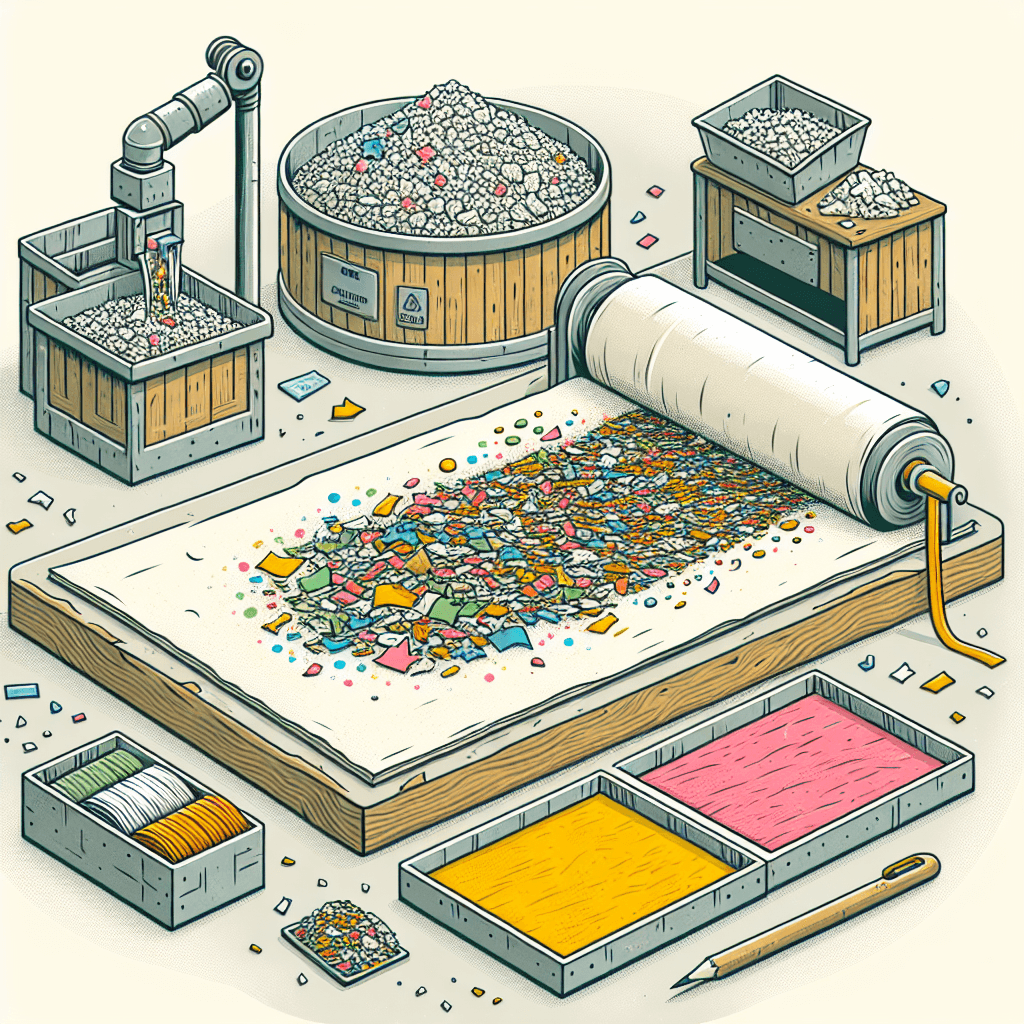
Those small, colorful flecks are, in essence, tiny bits of "contamination" that have survived the rigorous recycling process. When we toss paper products into the recycling bin, we’re sending a wide variety of materials to be reprocessed. The flecks are the resilient remnants of this diverse mix that couldn't be fully filtered out or broken down.
The most common sources of these specks include:
- Stubborn Inks: While the de-inking process is highly effective, some inks—especially those used in glossy magazines, heavy-duty printing, or certain types of packaging—are more difficult to remove. Tiny, dried particles of these inks can remain in the paper pulp.
- Colored Paper Fibers: Scraps of brightly colored construction paper, sticky notes, or vibrant flyers can get mixed into the recycling stream. During the pulping process, most of these break down, but microscopic colored fibers can persist and reappear as flecks.
- Adhesives and Glues: The glues used in bookbindings, envelope seals, and labels are a major contributor. These materials don't dissolve in the same way paper fibers do, often clumping into tiny, resilient balls that get caught in the final product.
- Coatings and Plastics: Small fragments from glossy magazine coatings, windowed envelopes, or plastic-laminated papers can slip through the screening process.
A Journey Through the Pulper: Why Some Bits Slip Through
To understand why these flecks remain, it helps to know a bit about how paper is recycled. The process is a marvel of industrial engineering but, like any system, it isn't perfect.
First, collected paper is taken to a mill where it is sorted and then mixed with water and chemicals in a massive vat called a pulper. This machine works like a giant kitchen blender, churning the paper into a thick, oatmeal-like slurry called pulp. This mechanical action breaks down the paper into its individual fibers.
Next, the pulp goes through a series of cleaning and screening stages. It’s passed through screens with holes of varying sizes to filter out larger contaminants like staples, paper clips, and large plastic pieces. The de-inking process follows, where air is often bubbled through the slurry to make the ink particles float to the surface so they can be skimmed off.
However, this system is designed to remove contaminants above a certain size. Microscopic particles of ink, plastic, or glue are often too small to be screened out effectively. Achieving a 100% pure, speck-free pulp would require more water, more energy, and more chemicals, driving up the cost and environmental impact of recycling. Therefore, mills strike a balance, resulting in a clean, functional paper that still bears the faint marks of its previous life.
A Badge of Honor: The Aesthetics of Recycled Paper
For decades, the presence of flecks was sometimes viewed as a sign of a lower-quality product. Bright, uniform, virgin paper was the standard. Today, however, that perception has dramatically shifted. For many environmentally conscious consumers and brands, these flecks have become a badge of honor—a visible, tangible indicator that the product is made from recycled content.
This visual cue signals a commitment to sustainability and participation in the circular economy. In fact, the aesthetic has become so popular that some manufacturers of virgin paper products have started intentionally adding flecks to mimic the "recycled look." The quantity and visibility of these specks can also tell you something about the paper itself. Brown recycled cardboard, for instance, undergoes less processing and often contains more visible impurities than high-grade, bright-white recycled office paper.
Conclusion
The next time you see those small, colorful flecks in a paper product, you'll know they aren't a flaw. They are the fingerprints of the recycling journey—the last traces of a magazine, a colored envelope, or a cereal box that has been given a second chance. These specks represent a practical compromise in an imperfect but vital industrial process. They are a beautiful reminder that sustainability isn't about achieving pristine perfection, but about embracing the cycle of renewal, imperfections and all.


