
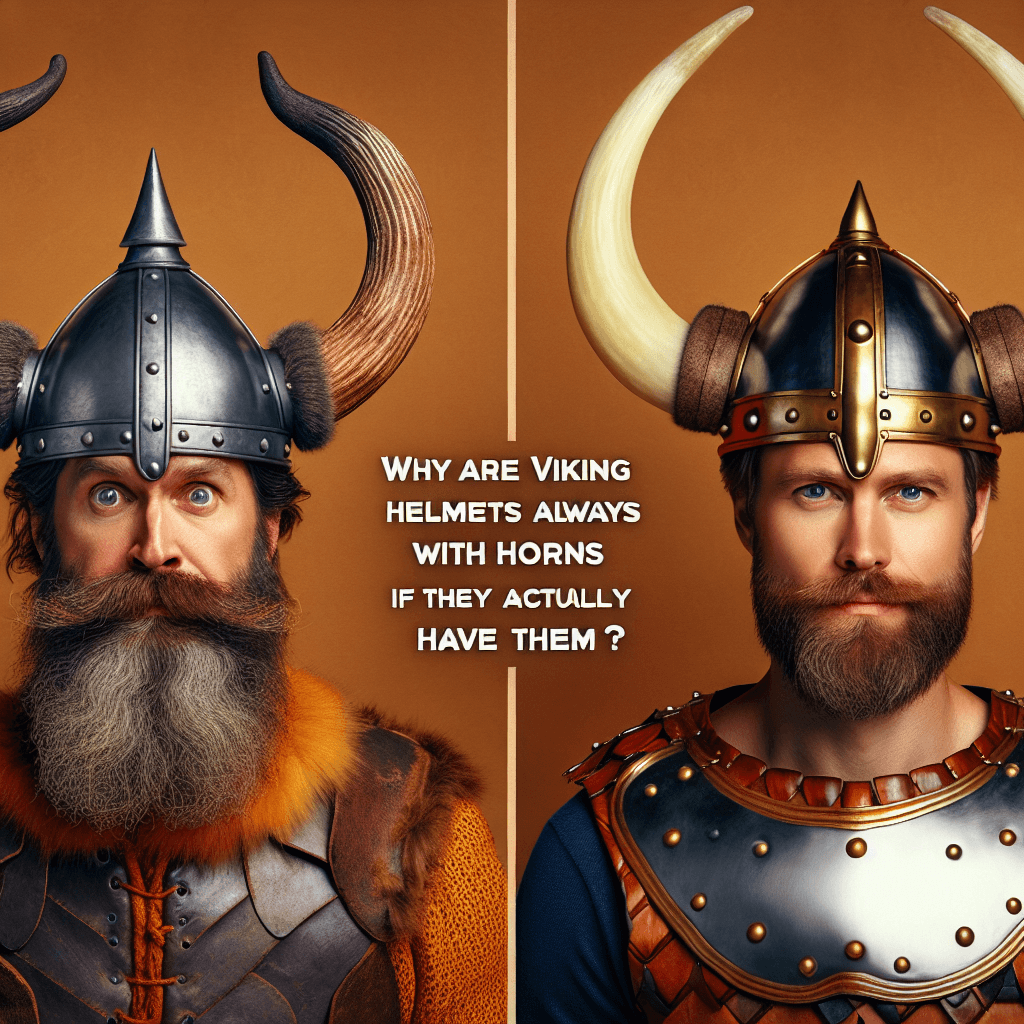
Why are Viking helmets always shown with horns if they never actually had them
Forget everything you think you know about Viking warriors; their most iconic feature was actually born on a 19th-century opera stage, not a Scandinavian battlefield.

Too Long; Didn't Read
TLDR: Vikings never wore horned helmets. The look was invented by a costume designer for a 19th-century Wagner opera to make the characters look more dramatic and savage on stage, and the inaccurate image just stuck in pop culture.
Debunking the Myth: Why Are Viking Helmets Always Shown with Horns If They Never Actually Had Them?
Close your eyes and picture a Viking. What comes to mind? For most of us, it’s a towering, bearded warrior, perhaps wielding a fearsome axe, and almost certainly sporting a helmet with a menacing pair of horns. This image is everywhere—from cartoons and movie characters to the logos of sports teams. It's a powerful and instantly recognizable symbol. There’s just one problem: it's completely wrong. Real, historical Vikings never wore horned helmets into battle. So, if this iconic piece of headwear is pure fiction, where did it come from, and why has it become so deeply ingrained in our collective imagination? This post will dig up the archaeological truth and uncover the surprising theatrical origins of history's most famous, and falsest, headgear.
The Sobering Reality: What the Evidence Shows
When we strip away the myth and look at the hard evidence, a very different picture of the Viking warrior emerges. Archaeologists have worked for decades to piece together the reality of the Viking Age (roughly 793-1066 AD), and helmet discoveries are incredibly rare. To date, only one complete Viking-era helmet has ever been found.
Discovered in 1943 at a burial site in Gjermundbu, Norway, this helmet is a masterpiece of function over form.
- It’s made of iron, constructed from a simple bowl-shaped cap with metal strips riveted together.
- It features a "spectacle" guard that protected the eyes and nose.
- It is distinctly horn-free.
This design is practical and effective for combat. Horns, on the other hand, would be a massive liability in a real fight. They would offer a perfect handhold for an enemy to wrench your head back or a convenient target for a weapon to catch on, potentially snapping your neck. The Gjermundbu helmet, and other helmet fragments from the era, prove that Viking headwear was designed for one purpose: survival.
Forging a Myth: The 19th Century Opera Stage
If horns weren't on the heads of Vikings in the 9th century, how did they get there in the 19th? The answer lies not in a Scandinavian fjord, but on a German opera stage. The popularization of the horned helmet can be traced directly to the 1876 production of Richard Wagner's epic opera cycle, Der Ring des Nibelungen (The Ring of the Nibelung).
The costume designer for the opera, Carl Emil Doepler, took creative liberties when outfitting the Norse-inspired characters. Drawing inspiration from ancient Greek and Roman descriptions of "barbarians" and looking at Bronze Age artifacts (which predated the Vikings by over 1,500 years), he designed dramatic, intimidating helmets crowned with wings and horns. These older, ceremonial helmets were never intended for battle, but they looked spectacular under the stage lights.
The opera was a monumental success, and its powerful, romanticized imagery captured the public’s imagination. Artists and illustrators of the era, such as the Swedish painter Gustaf Malmström, began incorporating the horned helmets into their depictions of Vikings, and the myth was born.
From the Stage to Pop Culture
Once established, the horned helmet proved too compelling to disappear. It was a simple, visual shorthand that immediately screamed "Viking!" to audiences. This new stereotype was solidified through paintings, books, and early films. In the 20th century, it became a staple of popular culture.
- Characters like Hägar the Horrible in comics.
- The mascot for the NFL's Minnesota Vikings.
- Countless Halloween costumes and fantasy portrayals.
The horned helmet is visually striking and evokes a sense of wild, untamed ferocity that aligns with the romanticized, rather than historical, view of Vikings. It has stuck around simply because it’s a more exciting and recognizable image than the simple, practical bowl helmet the real Vikings wore.
Conclusion
The story of the horned helmet is a perfect example of how easily myth can overshadow historical fact. While the archaeological record shows that Viking warriors wore practical, horn-free helmets like the one found at Gjermundbu, it was the dramatic flair of a 19th-century opera that created the enduring image we know today. The horned helmet is a fantastic piece of costume design and a powerful cultural symbol, but it belongs firmly in the realm of fiction. So, the next time you see a Viking with horns, you can appreciate it for the dramatic invention it is, while knowing the far more practical and authentic truth of the Norse warriors.


