
Why can a single tree be made to grow forty different types of fruit
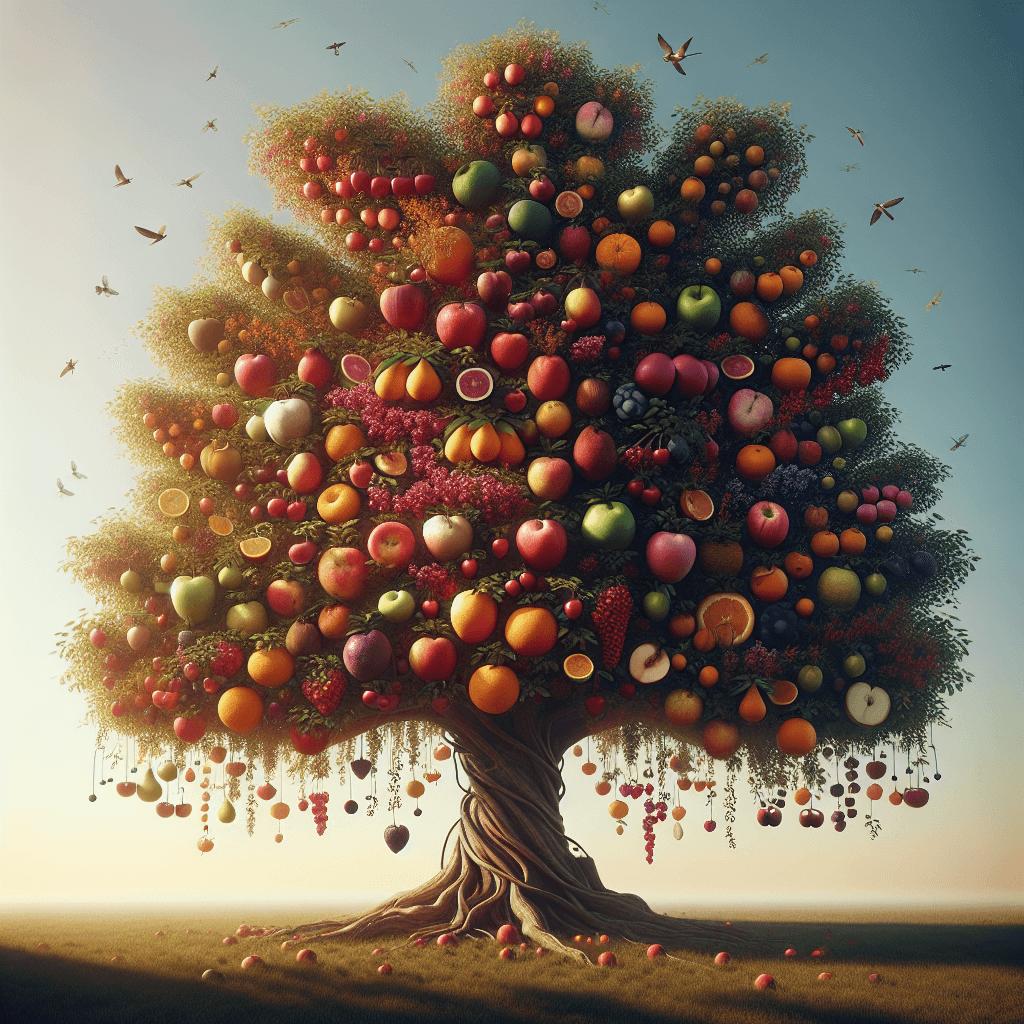
Uncover the centuries-old horticultural secret that transforms a single tree into a living orchard, capable of producing a rainbow of 40 different fruits.

Too Long; Didn't Read
TLDR: Through a process called grafting, branches from different but related fruit trees, like peaches, plums, and apricots, are attached to a single host tree. Each branch continues to grow its original type of fruit, creating one tree with a diverse harvest.
Beyond Nature's Blueprint: Why Can a Single Tree Be Made to Grow Forty Different Types of Fruit?
Imagine walking through an orchard and stumbling upon a single tree that looks ordinary in the winter, but in the spring, it erupts in a breathtaking tapestry of pink, white, and crimson blossoms. As summer arrives, that same tree begins to bear a stunning variety of fruit: peaches ripen on one branch, while plums, apricots, nectarines, and even almonds mature on others. This isn't a scene from a fantasy novel; it's a real-life horticultural marvel. The "Tree of 40 Fruit," created by artist and professor Sam Van Aken, is a living testament to this incredible possibility. But how is this botanical magic actually achieved? This post will delve into the science and artistry behind how one tree can produce such a diverse harvest, exploring the ancient technique that makes it all possible.
The Secret Isn't Magic, It's Grafting
The ability to grow multiple fruit types on a single tree hinges on a centuries-old horticultural technique known as grafting. At its core, grafting is the process of joining the tissues of two or more plants so they continue their growth together as a single organism.
Think of it as a type of plant surgery. The process involves two key parts:
- The Rootstock: This is the base and root system of the established tree. It provides stability and draws water and nutrients from the soil.
- The Scion: This is a cutting or a bud from the desired fruit variety that will be attached to the rootstock. The scion will eventually grow into a branch that produces its specific type of fruit.
To perform a graft, a horticulturist makes a precise cut on both the rootstock and the scion. The crucial step is to align the cambium layers of both pieces. The cambium is a thin layer of living tissue just beneath the bark responsible for healing and growth. When these layers are held tightly together, they fuse, creating a new, unified vascular system that allows water and nutrients to flow from the roots to the new branch.
It's All in the Family: The Importance of Compatibility
While grafting is a powerful technique, it doesn’t work on just any two plants. You can't, for example, graft an orange branch onto a pine tree. The success of a graft depends entirely on botanical compatibility. For two plants to fuse successfully, they must be closely related, typically belonging to the same plant genus.
The Tree of 40 Fruit exclusively uses stone fruits. These are fruits characterized by a hard pit or "stone" at their center. All of the following fruits are part of the same genus, Prunus:
- Peaches
- Plums
- Apricots
- Nectarines
- Cherries
- Almonds
Because they share a common genetic blueprint, their cellular structures and vascular systems are similar enough to recognize each other and successfully merge. Their shared heritage allows the rootstock to accept the scion as part of itself. Attempting to graft a branch from an apple tree (genus Malus) onto a Prunus tree would result in rejection, as their biological systems are too different to connect.
How is a "Tree of 40 Fruit" Created?
Creating such a complex tree is a patient and meticulous process that unfolds over several years. Artist Sam Van Aken begins with a single, healthy rootstock tree, typically a plum due to its hardiness. Once the tree is a few years old, he begins adding new varieties using a technique called chip budding. This involves slicing a small "chip" containing a bud from a donor tree and inserting it into a matching incision on a branch of the rootstock tree. The bud is then taped into place to heal.
If the graft takes, the following spring that bud will grow into a new branch, genetically identical to its parent tree. Over the course of 5-8 years, this process is repeated with different heirloom and antique varieties of stone fruit, carefully planning the structure of the tree so each branch has enough space and light to thrive.
More Than Just a Novelty: The Purpose and Benefits
While visually stunning, the Tree of 40 Fruit is more than just an art project. It serves several important practical purposes:
- Conservation: Many of the grafted varieties are rare, heirloom, or antique types of fruit that are no longer commercially grown. The tree acts as a living genetic bank, preserving this agricultural biodiversity.
- Space Efficiency: For home gardeners or urban farmers with limited space, a multi-grafted tree offers the ability to grow a wide variety of fruits without needing a full orchard.
- Extended Harvest: Since different varieties of fruit ripen at different times, the tree can provide a continuous harvest from July through October, rather than an overwhelming glut of one type of fruit all at once.
The Tree of 40 Fruit is a powerful symbol of how human ingenuity can work in harmony with nature. It’s a blend of art, scientific understanding, and agricultural history that challenges our perception of the natural world. This living sculpture reminds us that with knowledge and patience, one tree can indeed become its own unique and bountiful orchard. The next time you see a fruit tree, remember the incredible potential hidden just beneath its bark—a potential waiting to be unlocked by the art of grafting.


