
Why can we still read words if only the first and last letters are correct
Tihs snetnece is a mses, but your brain can read it instantly—discover the incredible neural shortcut that makes this mind-bending trick possible.

Too Long; Didn't Read
TLDR: Your brain reads words as whole shapes, not letter by letter. It uses the first and last letters as anchors and the sentence's context to instantly guess the jumbled middle.
Aoccdrnig to Rscheearch: The Science Behind Why We Can Still Read Words if Only the First and Last Letters Are Correct?
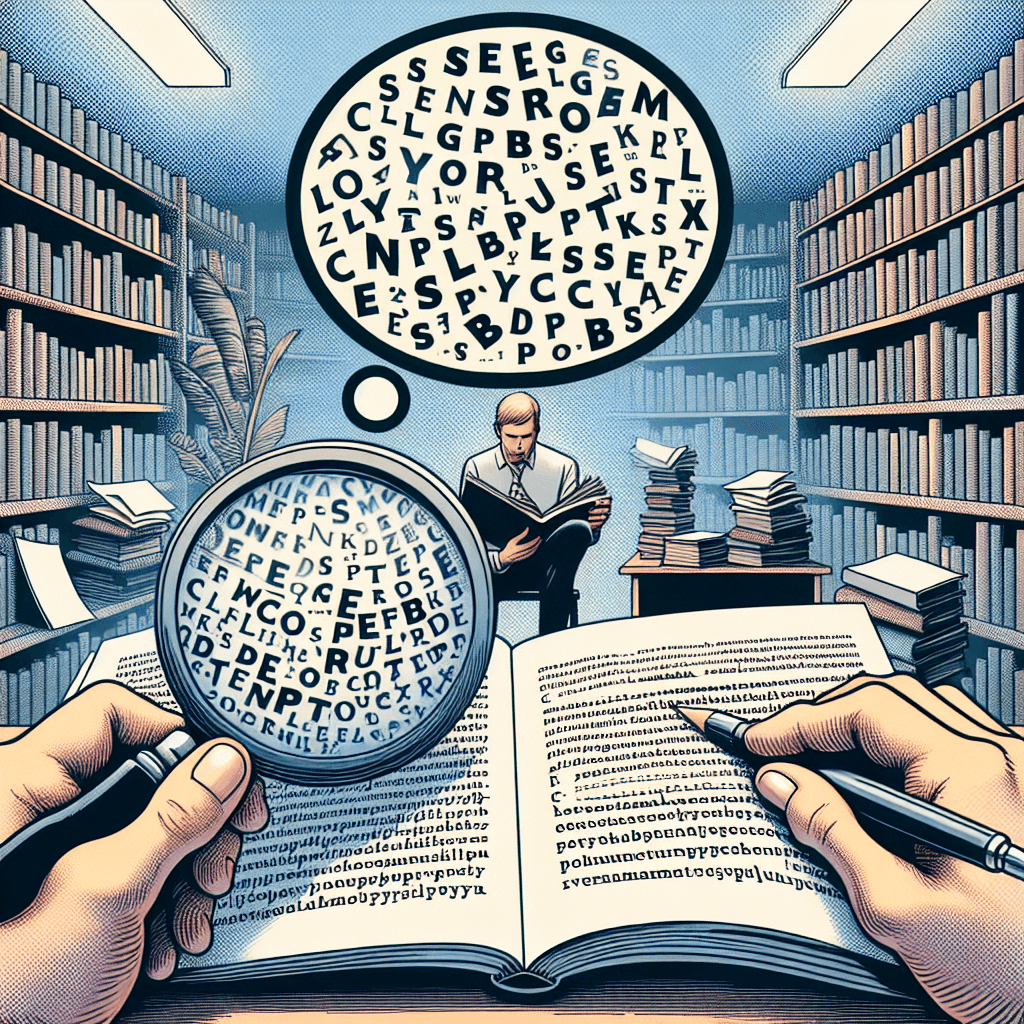
You’ve likely seen it before—a paragraph of text that looks like a jumbled mess, yet you can read it almost perfectly. The viral meme often begins, "Aoccdrnig to rscheearch at Cmabrigde Uinervtisy, it deosn't mttaer in waht oredr the ltteers in a wrod are, the olny iprmoetnt tihng is taht the frist and lsat ltteer be in the rghit pclae." This mind-bending phenomenon isn’t just a fun party trick; it’s a fascinating window into the incredible efficiency of the human brain. It reveals that our minds don’t process information like a computer, reading letter by letter. Instead, we take cognitive shortcuts to derive meaning with remarkable speed. This post will unscramble the science behind this ability, exploring why your brain is a master codebreaker.
Debunking the Cambridge Myth
First, let's clear up a common misconception. While the meme famously credits Cambridge University, there is no single, specific study from Cambridge that established this principle. The text itself was created to demonstrate a long-understood concept in cognitive psychology. The original research that highlighted the importance of first and last letter positions dates back to a 1976 Ph.D. thesis by Graham Rawlinson at the University of Nottingham.
Rawlinson's work on "The Significance of Letter Position in Word Recognition" found that as long as the exterior letters were in place, readers could comprehend the word surprisingly well. The Cambridge meme is simply an effective and viral illustration of his and subsequent researchers' findings on how our brains process written language.
Top-Down Processing: Your Brain on Autopilot
The primary reason we can read jumbled text is due to a cognitive process known as top-down processing. Instead of painstakingly analyzing every single letter in order (a "bottom-up" approach), your brain takes a more holistic view. It uses existing knowledge, context, and expectations to make an educated guess.
Think of it like recognizing a friend from across the street. You don't need to see every detail of their face to know who they are. You recognize their overall shape, their hair, and the way they walk. Your brain combines these high-level cues to make a quick identification.
Reading works similarly. When you see "elpehant", your brain doesn't get stuck on the jumbled middle. It recognizes the "e" at the beginning, the "t" at the end, the word's length, and the familiar collection of letters (l, p, h, a, n). It then rapidly scans its mental dictionary for a word that fits that pattern and makes sense in the sentence's context. The most likely candidate is "elephant," and your brain confidently moves on.
The Power of Anchors and Word Shape
The first and last letters are crucial because they act as cognitive anchor points. They drastically narrow down the list of potential words your brain has to search through. The jumbled letters in the middle provide further clues, but the fixed frame created by the outer letters does most of the heavy lifting.
This process is also supported by our ability to recognize the overall shape of a word, a concept known as the Bouma shape. We become familiar with the general outline that words create, with their ascenders (like in 'h' or 'd') and descenders (like in 'p' or 'y'). While the jumbled letters distort this shape, the fixed first and last letters, combined with the word's length, preserve enough of the original pattern for our brains to work with.
The Limits of Jumbled Reading
This cognitive trick isn't foolproof. Our ability to read scrambled words breaks down under certain conditions:
- Short Words: Transposing letters in short words is much more disruptive. "Cat" is very different from "cta," and your brain has fewer internal letters to use as clues.
- Complex or Unfamiliar Words: If you don't already have a word like "psycholinguistics" stored in your mental lexicon, your brain can't use top-down processing to guess it from a jumbled version like "psycitsilgnouics."
- Significant Transpositions: The effect works best when the jumbled letters remain close to their original positions.
"Pobrlem"is easier to decipher than"pelobrm"because the letters haven't moved as far. - Ambiguity: If the jumbled letters can form another valid word, it can cause confusion. For example, unscrambling "salt" from "slat" requires more cognitive effort because both are real words.
Conclusion
The ability to read jumbled text is a powerful testament to the brain's remarkable capacity for pattern recognition and prediction. It prioritizes meaning and efficiency over a perfect, sequential analysis of information. Far from being a simple trick, this phenomenon shows that our brains are not passive decoders but active interpreters, constantly using context and experience to make sense of a complex world. So, the next time you see one of those scrambled paragraphs, take a moment to appreciate the sophisticated cognitive engine working behind your eyes, turning chaos into coherence in the blink of an eye.


