
Why can you see your breath in the cold but not your farts
The steamy science that makes your breath visible on a cold day—while your farts are left to wander the world as invisible, gassy ghosts—is simpler than you think.

Too Long; Didn't Read
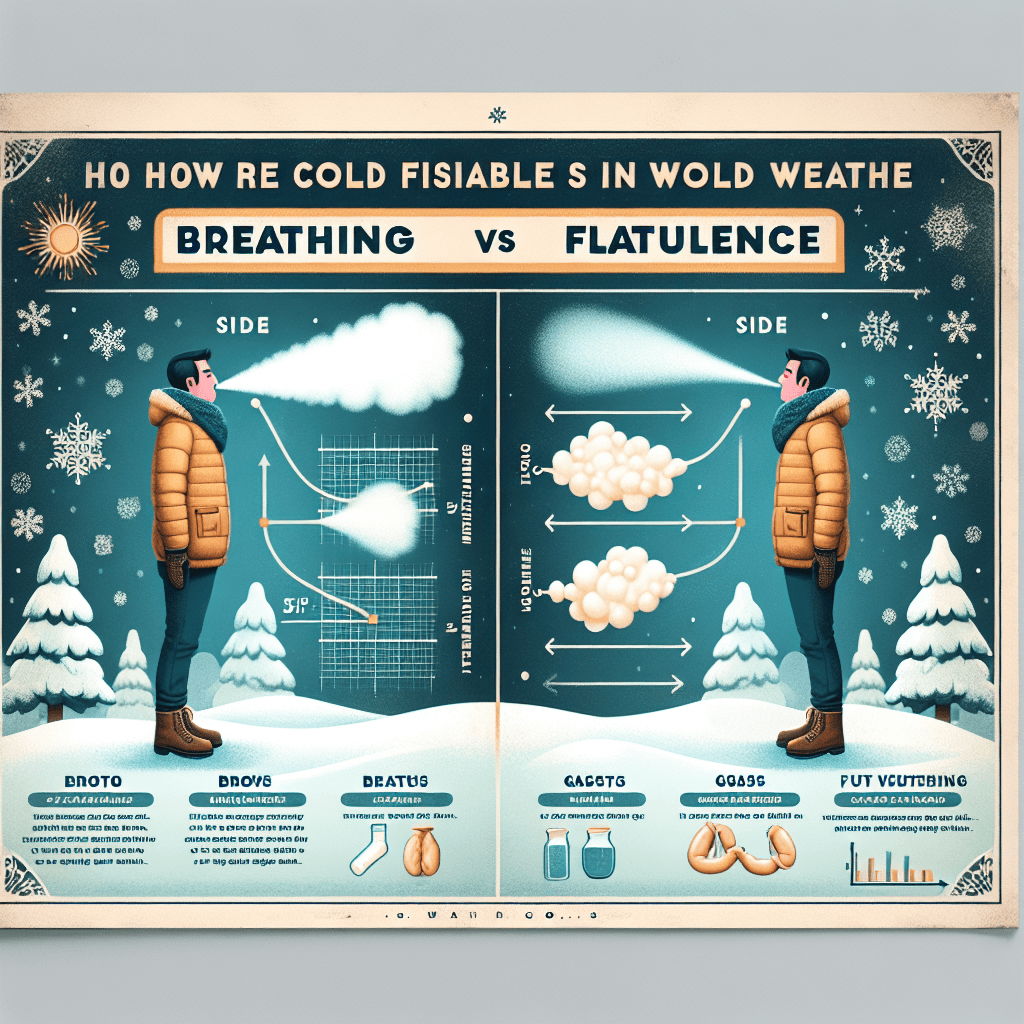
Your breath is warm and full of water vapor, which condenses into a visible cloud in cold air. Farts are mostly dry gases like methane with not enough water vapor to become visible.
Cold Day Conundrum: Why Can You See Your Breath in the Cold But Not Your Farts?
We’ve all experienced it. You step outside on a frosty morning, exhale, and a plume of white vapor billows from your mouth like a tiny dragon’s breath. It’s a classic sign of winter. This familiar sight often leads to a less-discussed but equally curious question that many of us have pondered: if your warm breath becomes visible in the cold, why doesn't the same happen to a warm fart? While it might sound like a playground joke, the answer is a fascinating lesson in basic physics and biology. This post will delve into the science of condensation and gas composition to unravel why one warm emission creates a cloud while the other remains an invisible mystery.
What's Really Happening When You See Your Breath?
The cloud you see when you breathe out in the cold isn't smoke or the carbon dioxide from your lungs becoming visible. It's a miniature cloud formed through a process called condensation.
Your lungs are warm and incredibly moist. The air you exhale is heated to your body temperature (around 98.6°F or 37°C) and is nearly 100% saturated with water vapor—invisible gaseous water. When this warm, moisture-packed air leaves your mouth and hits the cold, drier outside air, it cools down rapidly.
Cold air cannot hold as much water vapor as warm air. As your breath cools, it quickly passes its "dew point," the temperature at which the water vapor is forced to condense into a liquid. This causes the countless invisible water vapor molecules to cluster together, forming microscopic droplets of liquid water or tiny ice crystals. When light bounces off these minuscule droplets, they become visible to our eyes as a fleeting white cloud. It’s the exact same principle that forms fog or the steam rising from a hot cup of tea.
The Gassy Truth: What's in a Fart?
To understand why flatulence behaves differently, we need to look at its composition. Unlike your breath, a fart is not primarily made of water vapor. The gas passed during flatulence is mostly a cocktail of odorless, non-condensable gases absorbed from the air and produced by gut bacteria.
The typical composition of a fart includes:
- Nitrogen (20-90%): The most abundant gas in the air we breathe.
- Hydrogen (0-50%): Produced by microbial fermentation in the gut.
- Carbon Dioxide (10-30%): A product of both respiration and gut microbes.
- Methane (0-10%): Produced by specific methane-producing microbes in some individuals.
- Oxygen (0-10%): Undigested air that is swallowed.
The infamous smell comes from trace amounts of sulfur-containing compounds like hydrogen sulfide, but these make up less than 1% of the total volume. The key takeaway here is the near-total absence of water vapor.
Breath vs. Fart: The Key Differences
When you compare the two, the reason for the visible difference becomes crystal clear. It all comes down to one critical ingredient: water.
- Water Content: This is the most important factor. Your breath is saturated with water vapor, providing the raw material for a visible cloud. Farts are composed almost entirely of dry gases that have extremely low condensation points, far colder than any winter day on Earth. There simply isn’t enough water vapor in a fart to create a visible cloud.
- Composition: Breath contains a high concentration of condensable water vapor mixed with non-condensable gases. Flatulence is almost exclusively made of non-condensable gases. Methane, nitrogen, and hydrogen remain invisible gases at atmospheric pressure, no matter how cold it gets.
- Temperature: While both your breath and farts are expelled at body temperature, the warmth is only relevant for your breath because it facilitates the high moisture load. Without the water, the temperature of the gas is irrelevant to its visibility.
In short, seeing your breath is a physical phase change of water from gas to liquid. Since a fart lacks the necessary water, no such phase change can occur.
Conclusion
The next time you’re outside on a frigid day and see your breath clouding in front of you, you'll know you’re witnessing a simple, elegant display of physics. The phenomenon isn't about temperature alone, but the unique combination of warmth and high moisture content in your breath meeting the cold air. The reason farts remain invisible is due to their chemical makeup—they are a dry mixture of gases with virtually no water vapor to condense. So, this common curiosity highlights a fundamental scientific principle: for a cloud to form, whether in the sky or from your mouth, you need water.


