Why does walking through a doorway cause you to suddenly forget why you entered a room
Ever stepped into a room and instantly forgotten why you’re there? Discover the fascinating science behind the "Doorway Effect" and why your brain treats every threshold like a total memory reset.

Too Long; Didn't Read
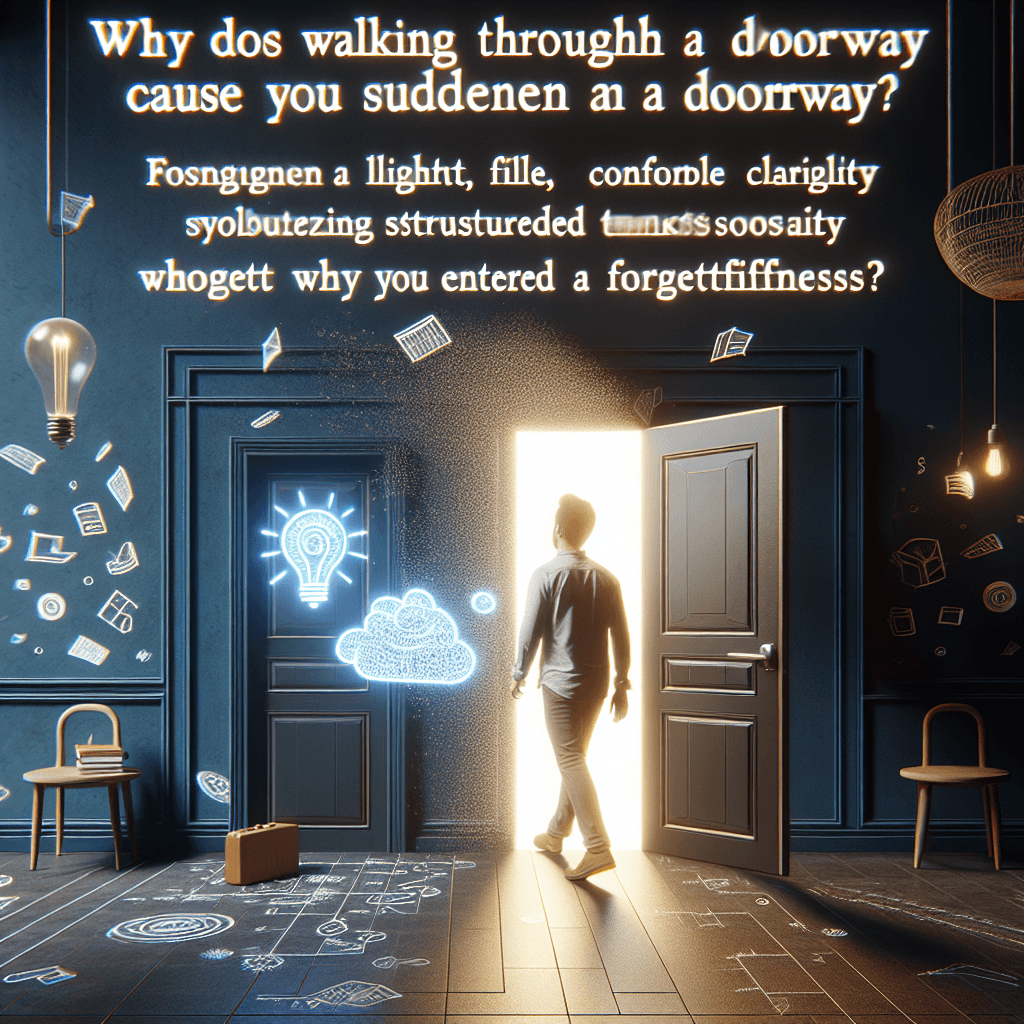
This phenomenon is known as the Doorway Effect. It occurs because your brain perceives a physical threshold as an event boundary, signaling the mind to archive current thoughts and clear working memory to prepare for a new environment. Moving into a different room essentially resets your mental slate, causing you to lose track of your original intention.
The Doorway Effect: Why Does Walking Through a Doorway Cause You to Suddenly Forget Why You Entered a Room?
Have you ever marched purposefully into the kitchen to grab a glass of water, only to find yourself staring blankly at the refrigerator, completely unable to remember what you needed? This disorienting experience is so common that it has earned a formal name in the scientific community: the "Doorway Effect." Far from being a sign of a failing memory or a lack of focus, this phenomenon is actually a fascinating glimpse into how the human brain organizes information and navigates the physical world. Understanding why walking through a doorway cause you to suddenly forget why you entered a room requires looking at the intersection of environmental psychology and cognitive science. This blog post explores the "Event Segmentation Theory" and the neurological reasons our brains occasionally hit the "reset" button during simple transitions.
Understanding the Doorway Effect
The Doorway Effect, known technically as the "location updating effect," occurs when the brain’s transition between two different environments causes a lapse in short-term memory. For years, people assumed this was merely a distraction—perhaps the sight of the new room diverted the person’s attention. However, researchers have discovered that the physical act of passing through a portal serves as a psychological boundary.
According to a series of influential studies conducted at the University of Notre Dame by psychologist Gabriel Radvansky, our brains treat doorways as "event boundaries." In these experiments, participants were asked to perform simple tasks involving moving objects between rooms, both in virtual environments and real-world settings. The researchers consistently found that participants were significantly more likely to forget their current task after walking through a doorway compared to walking the same distance within a single large room.
The Science of Event Segmentation
To understand why this happens, we must look at Event Segmentation Theory. This theory suggests that the human brain does not perceive life as a continuous, unbroken stream of information. Instead, it breaks our experiences down into discrete segments or "events" to make them easier to process.
How Event Models Work
When you are in a specific environment, your brain creates an "event model." This model contains all the relevant information for your current context—what you are doing, what you need, and what is around you.
- The Transition: When you walk through a doorway, the brain perceives a change in the environment.
- The Purge: Because the brain has limited "working memory" capacity, it often flushes out the information from the previous event model to make room for the incoming data of the new environment.
- The Result: The "walking through a doorway" action signals to the brain that the previous episode is over, and the goal you held in your mind may be archived or discarded as no longer relevant to the new context.
Working Memory and Cognitive Load
The phenomenon is also tied to the limitations of our working memory. Unlike long-term memory, which stores facts and experiences indefinitely, working memory is a "temporary workspace" used for immediate tasks. According to research from Bond University, the Doorway Effect is most pronounced when the brain is already under a high "cognitive load."
If you are preoccupied with a complex thought while walking to another room, your working memory is already stretched thin. When the brain encounters the "event boundary" of a doorway, it prioritizes the new environmental stimuli over the fragile goal you were trying to maintain. Interestingly, studies have shown that if the two rooms are very similar in appearance and function, the effect is slightly diminished, as the brain does not perceive as sharp a boundary.
How to Combat the Memory Lapse
While the Doorway Effect is a natural byproduct of a healthy, functioning brain, it can be frustrating. To minimize its impact, experts suggest the following strategies:
- Verbal Reinforcement: Say your goal out loud as you move ("I am going to get the scissors").
- Physical Cues: Carry an object related to the task (like holding the envelope you need to mail).
- Focus on the Transition: Consciously acknowledge the act of walking through the door to keep your working memory active.
Conclusion
In summary, the reason why walking through a doorway cause you to suddenly forget why you entered a room is not due to a memory deficit, but rather a sophisticated filing system used by the brain. By utilizing event boundaries, our minds stay organized and ready to process new surroundings. While the Doorway Effect can be a minor inconvenience, it serves as a powerful reminder of how deeply our physical environment influences our cognitive processes. The next time you find yourself standing in a room wondering why you’re there, simply remember that your brain is just trying to clear its desk for a new task. To learn more about the quirks of human cognition, consider exploring further research into environmental psychology and the fascinating ways our surroundings shape our thoughts.