Why did medieval armies sometimes catapult beehives over castle walls
When stone walls were too strong, medieval armies unleashed a far more terrifying weapon: thousands of angry bees. Discover why this ancient form of biological warfare was so brutally effective.

Too Long; Didn't Read
TLDR: Medieval armies catapulted beehives into castles as a cheap form of biological warfare. The angry swarms would panic, sting, and distract defenders, creating chaos and weakening the castle's defense during an assault.
The Buzz of War: Why Did Medieval Armies Sometimes Catapult Beehives Over Castle Walls?
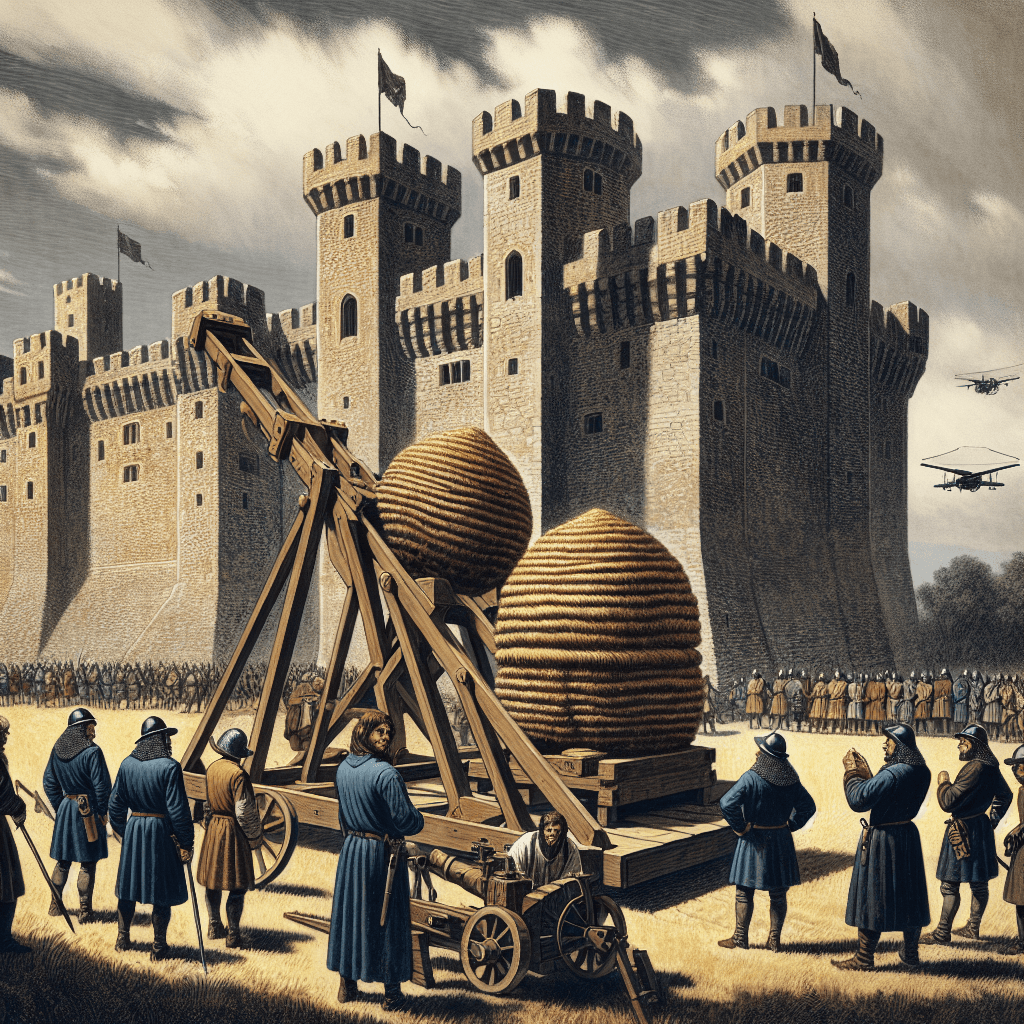
When you picture a medieval siege, your mind probably conjures images of giant trebuchets launching massive stones, flaming arrows streaking through the sky, and soldiers clashing at the gate. But what about a different kind of ammunition—something small, alive, and buzzing with fury? It may sound like something from a fantasy novel, but historical accounts confirm that attacking armies sometimes employed a strange and terrifying form of biological warfare: catapulting beehives. This post will delve into the strategic and psychological reasons behind this stinging tactic, exploring why a swarm of angry bees could be as effective as a boulder in the brutal calculus of siege warfare.
A Weapon of Chaos and Disruption
The primary purpose of launching a beehive wasn't to kill defenders outright, although multiple stings could certainly be fatal to an allergic individual. The true strategic value of these "bee bombs" was in creating widespread chaos and panic. Imagine the scene: a clay pot or wicker skep filled with thousands of bees arcs over the castle wall and shatters in a crowded courtyard or along a narrow parapet.
Suddenly, defenders who were focused on repelling attackers are now dealing with a new, insidious enemy. An angry, disoriented swarm will attack anything that moves, and their stings cause immediate, searing pain. This tactic served several key purposes:
- Area Denial: It made entire sections of the castle wall or courtyard untenable. Soldiers would be forced to abandon their posts, leaving critical defensive positions unmanned.
- Breaking Formations: A coordinated defense requires discipline and formation. A cloud of stinging insects instantly shatters that cohesion, turning organized soldiers into a panicked mob.
- Disrupting Operations: It was nearly impossible for archers to aim accurately or for soldiers to operate siege equipment like boiling oil cauldrons while being swarmed. The immediate priority for every soldier in the target area would shift from fighting the enemy to simply escaping the pain.
Psychological Warfare: The Fear of the Swarm
Beyond the physical disruption, the psychological impact of using bees as a weapon cannot be overstated. The fear of being swarmed by stinging insects is a primal one. Unlike a rock that lands with a single, finite impact, a shattered beehive unleashes a threat that moves, multiplies, and lingers.
The sound alone—the furious, escalating buzz of thousands of insects—would be enough to sow terror and break morale. For defenders already under the immense stress of a prolonged siege, this added layer of horror could be the breaking point. Attackers understood that winning a siege was as much about breaking the enemy's will to fight as it was about breaking their walls. A weapon that caused panic and made defenders feel unsafe anywhere within their fortifications was an incredibly effective psychological tool.
A Tactic as Old as War Itself
While we often associate it with medieval castles, the use of insects in warfare is an ancient practice. Roman writer Pliny the Elder documented the use of "bee bombs" against enemies hiding in tunnels. There are also accounts of their use during the Third Crusade, where King Richard the Lionheart’s forces reportedly launched hives at enemy ships to disorient their crews.
The logistics were relatively simple. Attackers would locate wild hives or seize them from local farms. The hives, often housed in earthenware pots or wicker baskets called skeps, would be sealed and carefully loaded onto a catapult or trebuchet. Defenders used them too, often with even greater effect. One of the most common applications was for castle defenders to simply drop or roll hives down onto attackers attempting to scale the walls with ladders. Trapped at the base of the wall with nowhere to run, the attackers were easy targets for both the bees and the archers above.
Conclusion: An Ingenious and Brutal Strategy
Catapulting beehives over castle walls stands as a testament to the brutal ingenuity of medieval warfare. It demonstrates how armies used every resource at their disposal—even the natural world—to gain an advantage. More than just a bizarre footnote in military history, this tactic was a sophisticated combination of physical disruption and psychological terror. By turning a force of nature into a weapon, commanders could break formations, deny ground, and shatter the morale of their enemies. It serves as a potent reminder that in the desperate struggles of a siege, the most effective weapon isn't always the biggest, but sometimes, the one that stings the most.