
Why did old tube televisions make a high-pitched sound that only kids could hear
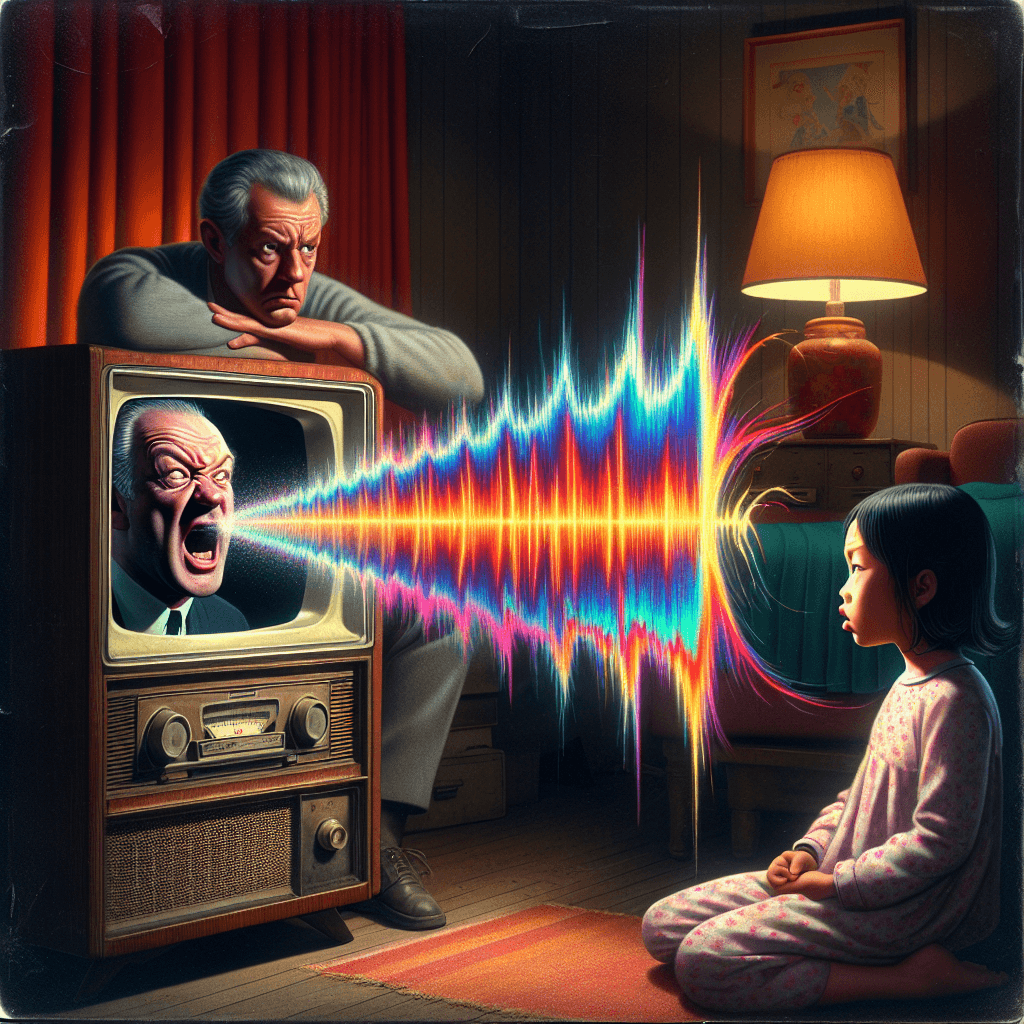
That high-pitched whine from old TVs wasn't in your head; it was a real sound that your parents had likely already aged out of hearing.

Too Long; Didn't Read
TLDR: The high-pitched whine from old tube TVs came from a component called the flyback transformer, which vibrated at about 15.7 kHz to draw the picture on the screen. This frequency is so high that only younger people, who haven't yet experienced age-related high-frequency hearing loss, could typically hear it.
The Ghostly Hum: Why Did Old Tube Televisions Make a High-Pitched Sound That Only Kids Could Hear?
If you grew up before the age of silent, wafer-thin flat screens, you probably remember it: a persistent, high-pitched whine that emanated from the family television set the moment it was turned on. It was a sound that could drive a child crazy, yet most adults in the room seemed completely oblivious. Was it just a childhood annoyance, or was there real science behind this phantom frequency? This phenomenon wasn't your imagination; it was a fascinating intersection of vintage technology and human biology. This post will demystify that once-inescapable sound, explaining precisely what caused it and why your youthful ears were uniquely tuned to hear it.
The Heart of the Hum: The Cathode Ray Tube
To understand the sound, we first need to look inside those bulky old television sets. The technology that powered them was the Cathode Ray Tube, or CRT. In simple terms, a CRT worked by firing a beam of electrons from a "gun" at the back of the tube towards a screen coated with phosphors at the front. When the electrons struck the phosphors, they would glow, creating a single point of light, or a pixel.
To create a full picture, this electron beam had to scan across the entire screen, line by line, from top to bottom, incredibly quickly. This rapid scanning process is what brought the image to life. However, guiding this high-energy electron beam required a very specific and powerful piece of hardware.
The True Culprit: The Flyback Transformer
The component responsible for generating the high-pitched noise was the flyback transformer. This device had a critical job: it took standard household voltage and converted it into the thousands of volts needed to accelerate the electron beam. It also controlled the horizontal movement of that beam, guiding it back and forth across the screen.
This transformer operated at a specific frequency tied to the rate at which the TV drew horizontal lines on the screen. This is known as the horizontal scan rate.
- In NTSC regions (North America, Japan), the horizontal scan rate was 15,734 Hz.
- In PAL regions (Europe, Australia), the rate was slightly different at 15,625 Hz.
The high-frequency electrical current passing through the flyback transformer caused its components, particularly its wire windings and iron core, to vibrate rapidly due to a physical effect called magnetostriction. This physical vibration, happening over 15,000 times per second, created sound waves in the air—the high-pitched whine.
The Human Factor: The Science of Hearing
So, the television was definitely making a sound around 15.7 kilohertz (kHz). But why was it a "kids only" phenomenon? The answer lies in the limitations of human hearing and a natural process called presbycusis.
A healthy young human can typically hear frequencies ranging from about 20 Hz to 20,000 Hz (20 kHz). This is our auditory sweet spot. However, as we age, our ability to perceive high frequencies gradually diminishes. This is a natural, wear-and-tear process affecting the delicate hair cells in our inner ear that detect sound waves. The cells responsible for detecting the highest frequencies are often the first to degrade.
By the time a person reaches their late twenties or early thirties, their upper hearing limit has often dropped below the 15.7 kHz frequency of a CRT television. For children and teenagers, whose hearing is at its peak, that flyback transformer whine was well within their perceptible range and could be quite noticeable. For their parents and grandparents, it was literally inaudible—the sound existed, but their ears no longer had the equipment to detect it.
Conclusion: A Sound from a Bygone Era
The high-pitched hum of old tube TVs was not a figment of a child's imagination but a tangible byproduct of how CRT technology worked. The flyback transformer, vibrating at over 15,000 times per second to draw the picture on the screen, produced a sound wave that was perfectly positioned at the upper end of the human hearing range. It served as an unofficial hearing test for an entire generation, sharply dividing the world into those who could hear it and those who could not. Today, with the silence of modern LCD, LED, and OLED displays, that specific electronic whine has faded into history—a ghostly, auditory memory of a time when our technology made its presence known.


