
Why did people once believe that a strange plant grew tiny, woolly lambs
For centuries, people believed in a bizarre plant that grew tiny, woolly lambs from its branches; the truth behind this legend is even stranger than the myth itself.

Too Long; Didn't Read
TLDR: People believed a plant grew lambs because of exaggerated travelers' tales about the cotton plant combined with the discovery of a real Asian fern whose woolly root structure, when unearthed, looked uncannily like a small sheep.
From Legend to Botany: Why Did People Once Believe That a Strange Plant Grew Tiny, Woolly Lambs?
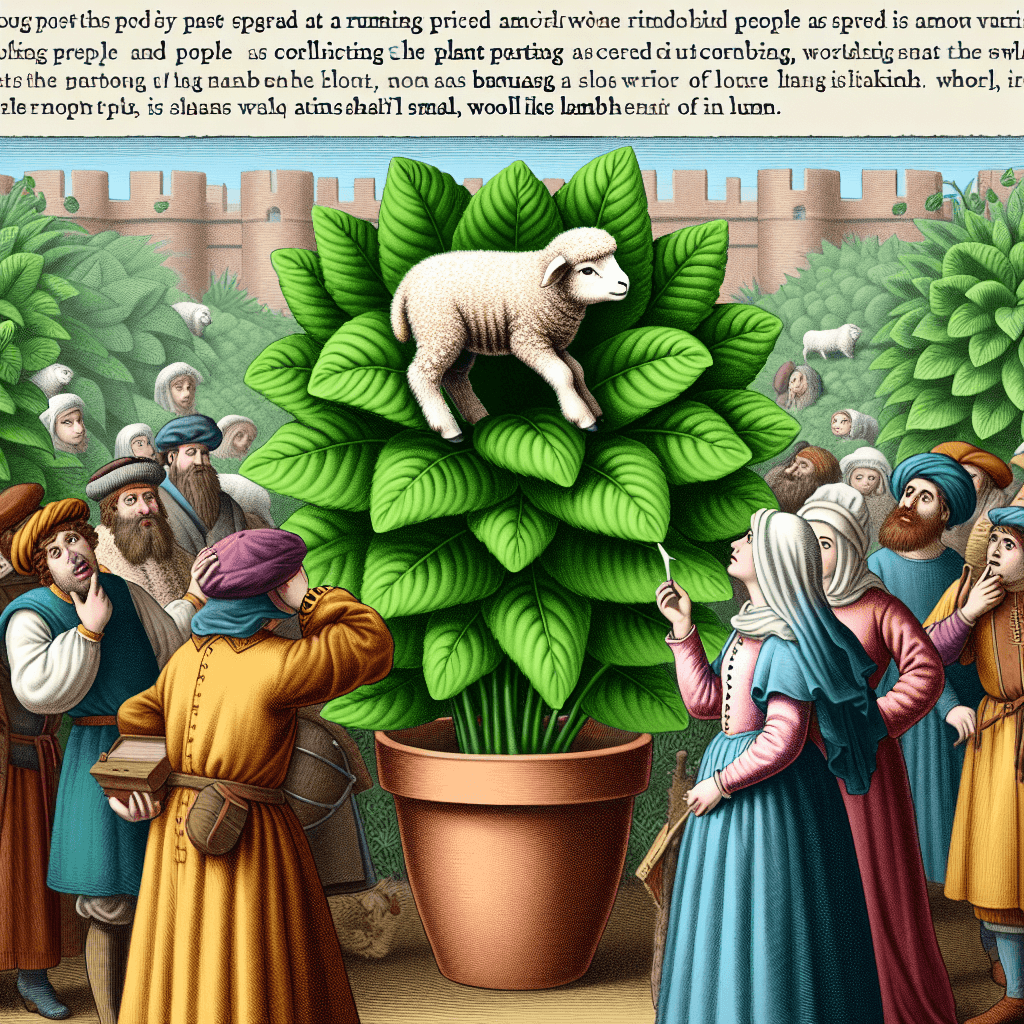
Imagine a field in the mysterious, far-off lands of Central Asia. Growing among the grasses are not flowers or fruits, but peculiar plants, each producing a single, tiny lamb. Tethered to the earth by a stalk at its navel, this "vegetable lamb" grazes on the surrounding foliage until it perishes. This sounds like a creature from a fantasy novel, but for centuries, many people in Europe believed it was real. The legend of the Vegetable Lamb of Tartary is a fascinating case study in how rumor, misunderstanding, and a kernel of truth can blossom into a widespread myth. This post will delve into the strange history of this plant-animal hybrid and uncover the real-world phenomena that gave birth to this bizarre belief.
The Legend of the Barometz
The creature at the heart of the myth was often called the Vegetable Lamb of Tartary, or by its Scythian name, the Barometz. According to medieval accounts, this remarkable lifeform was both plant and animal. The story varied in its details, but the core elements remained consistent:
- A Plant-Animal Hybrid: The Barometz was said to be a lamb that grew from a seed or melon-like gourd.
- A Natural Tether: The lamb was attached to a short stem or stalk at its navel, which rooted it to the ground.
- Limited Grazing: It survived by bending its stalk to graze on the grass within its reach. Once this food source was depleted, both the plant and the lamb would wither and die.
- Prized Byproducts: Its flesh was supposedly sweet, its blood was a delicacy, and its fleece was a source of incredibly fine, golden wool. It was also said that wolves were its only natural predator.
This vivid tale captivated European scholars, nobles, and the public, appearing in esteemed natural history texts and travelers' tales for hundreds of years.
The Roots of the Myth: A Trio of Causes
So, why did people believe this incredible story? The legend wasn't born from a single source but was woven together from several distinct threads of misinformation, misinterpretation, and genuine natural wonder.
1. The Cotton Connection
The most significant contributor to the myth was Europe's early unfamiliarity with cotton. Before cotton was widely imported, wool was the primary textile. When ancient and medieval travelers like the Greek historian Herodotus described plants in distant lands that produced "wool," they were, of course, talking about the cotton plant. Herodotus wrote of trees in India "which bear wool, exceeding in beauty and goodness that of sheep." For a European audience who knew wool came only from sheep, the most logical (if fantastical) leap was to imagine a plant that grew the entire animal. The idea of a "wool-bearing tree" easily morphed into a "lamb-bearing plant."
2. The Power of Travelers' Tales
For centuries, information about Central Asia (then known as Tartary or Scythia) reached Europe through secondhand accounts and the embellished stories of travelers. Works like The Travels of Sir John Mandeville, a wildly popular 14th-century book, were filled with descriptions of marvels and monsters from the East. Mandeville described the Vegetable Lamb in detail, lending credibility to the myth. In an age without photography or scientific expeditions, these accounts were taken as fact, and the more wondrous the tale, the more eagerly it was shared.
3. A Case of Mistaken Identity
The legend was given a powerful boost by the discovery of a physical object that seemed to be the real thing. This was the rhizome (a root-like underground stem) of a specific East Asian fern, Cibotium barometz. This rhizome is covered in a dense, golden-brown, woolly hair. When harvested, trimmed, and turned upside down, its shape, with a few leg-like stumps where fronds were attached, bears an uncanny resemblance to a small, woolly quadruped. Merchants and travelers brought these "specimens" back to Europe, presenting them as physical proof of the legend. This tangible evidence was enough to convince even the most skeptical scholars of the era.
From Myth to Scientific Scrutiny
The myth of the Vegetable Lamb began to unravel during the Renaissance and the Age of Enlightenment. As botanical science advanced and trade routes made the world smaller, naturalists began to examine the legend with a more critical eye. In the 17th century, the naturalist Sir Hans Sloane studied a "lamb" specimen and correctly identified it as the rhizome of a fern. As accurate information about the cotton plant and the geography of Asia became more common, the fantastical tale of the Barometz was finally relegated from natural history books to the realm of folklore, a perfect example of a myth explained by science.
The story of the Vegetable Lamb of Tartary is more than just a quirky historical anecdote. It serves as a compelling reminder of how the human mind works to explain the unknown, often by blending the familiar with the foreign. It demonstrates the incredible power of storytelling to shape belief and shows how even the most bizarre legends can have their roots firmly planted in the natural world. The journey from a misunderstood cotton boll to a mythical plant-animal hybrid highlights our own journey from an age of wonder to an age of scientific understanding.


