
Why did people once keep live frogs in buckets of milk to prevent the liquid from spoiling
Long before refrigerators existed, the secret to fresh milk wasn’t cold storage—it was a live, slimy frog. Discover the bizarre scientific reason why this ancient preservation hack actually worked and how it’s still fascinating researchers today.

Too Long; Didn't Read
Before modern refrigeration, people placed live frogs in milk buckets because frog skin secretes natural antimicrobial peptides. These substances kill the bacteria responsible for souring the liquid, acting as a primitive preservative to keep the milk fresh longer.
From Folklore to Pharmacy: Why Did People Once Keep Live Frogs in Buckets of Milk to Prevent the Liquid from Spoiling?
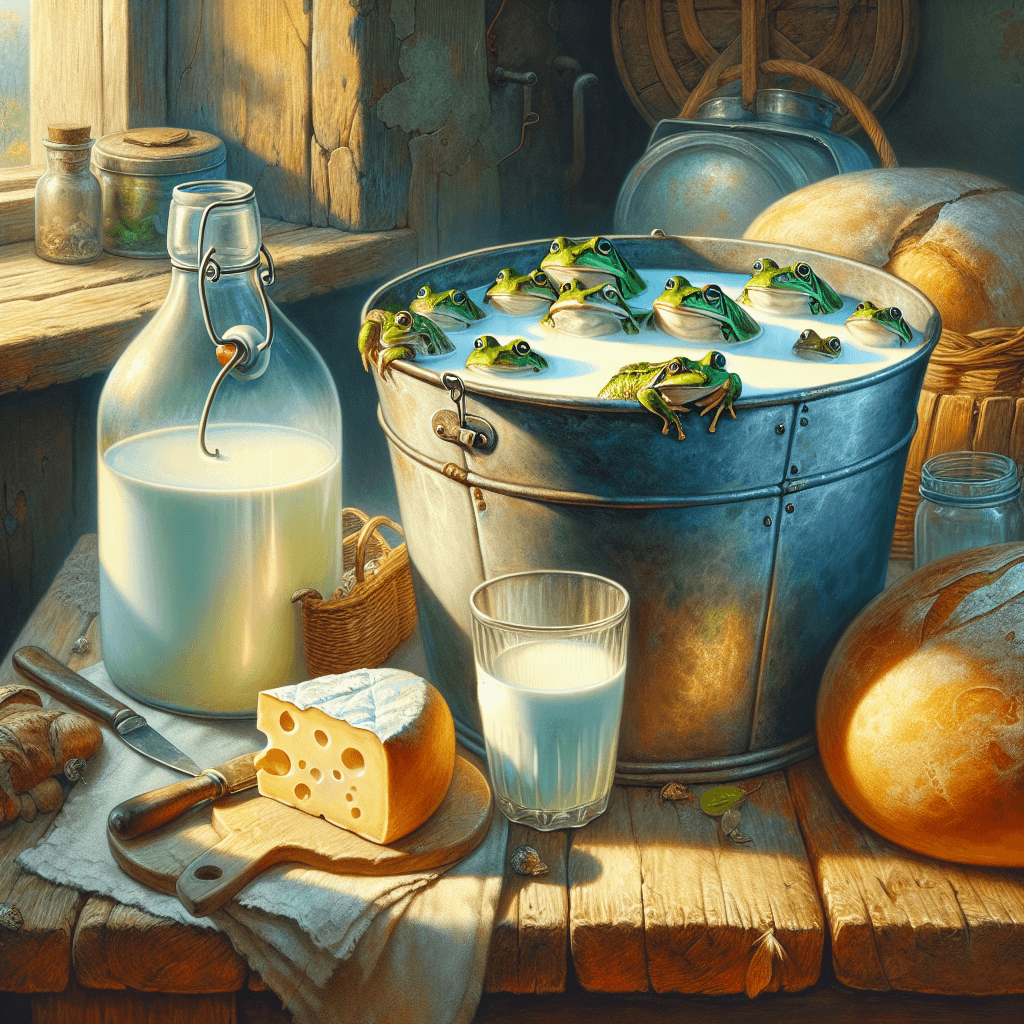
Imagine stepping into a rural Russian or Finnish kitchen in the 19th century and spotting a live, brown frog swimming lazily in a bucket of fresh milk. While this might look like a kitchen mishap or a bizarre superstition to the modern eye, it was actually a sophisticated, time-tested method of food preservation. Before the advent of electric refrigeration and pasteurization, keeping dairy fresh was a significant challenge, especially during the warm summer months. For generations, rural populations relied on this "amphibian fridge" to keep their milk from turning sour. But why did people once keep live frogs in buckets of milk to prevent the liquid from spoiling? As it turns out, this practice was not based on myth, but on a remarkable biological defense mechanism that modern science is only recently beginning to fully understand.
The Historical Necessity of the "Milk Frog"
In the centuries before the refrigerator became a household staple, milk was one of the most difficult staples to preserve. Raw milk is a rich environment for bacteria; at room temperature, naturally occurring bacteria like Lactobacillus quickly convert the milk's lactose into lactic acid, causing it to curdle and sour.
In Russia and various parts of Scandinavia, folk wisdom dictated that dropping a live common frog—specifically the Russian Brown frog (Rana temporaria)—into the milk pail would extend its shelf life by several days. While travelers from Western Europe often viewed this as a peculiar or unhygienic peasant superstition, the locals knew from experience that the milk stayed sweet much longer with a frog as a houseguest.
The Science of Slime: Antimicrobial Peptides
The mystery of why this practice worked remained unsolved until the 21st century. Researchers were curious: was it the cold temperature of the frog’s body, or something more complex? According to a landmark study led by chemist A.T. Lebedev at Moscow State University in 2012, the answer lies in the frog’s skin.
Frogs live in damp, bacteria-rich environments where they are constantly bombarded by pathogens. Because their skin is porous and serves as a respiratory organ, it is incredibly vulnerable to infection. To survive, frogs have evolved a powerful chemical arsenal. Their skin secretes substances known as Antimicrobial Peptides (AMPs). These are small proteins that act as a first line of defense against bacteria, fungi, and viruses.
How These Peptides Prevent Spoilage
When a frog is placed in a bucket of milk, the stress of the new environment (or simply its natural skin secretions) releases these peptides into the liquid. These compounds work through several mechanisms:
- Membrane Disruption: The peptides attach to the cell membranes of bacteria, creating holes that cause the bacteria to burst and die.
- Inhibition of Bacterial Growth: By neutralizing spoilage-causing bacteria like Staphylococcus and Salmonella, the peptides prevent the rapid fermentation that leads to souring.
- Broad-Spectrum Protection: The Moscow State University study identified 76 different antimicrobial substances on the skin of the Russian Brown frog, many of which are as effective as modern prescription antibiotics.
Traditional Knowledge Meets Modern Medicine
The practice of putting frogs in milk is an extraordinary example of "ethno-medicine" or traditional ecological knowledge. While the rural farmers of the past could not have explained the molecular structure of a brevinin peptide, they observed the results of biological warfare occurring at a microscopic level.
Today, this ancient practice is providing a roadmap for the future of medicine. As the global medical community faces the rising threat of antibiotic-resistant "superbugs," researchers are looking back at the frog in the milk bucket. Because these frog-derived peptides kill bacteria in a way that is different from traditional antibiotics, they are being studied as potential new treatments for infections that current drugs can no longer touch.
Conclusion
The question of why did people once keep live frogs in buckets of milk to prevent the liquid from spoiling takes us on a journey from old-world kitchens to high-tech laboratories. What appeared to be a strange folk tradition was, in fact, an early application of biotechnology. By utilizing the natural evolutionary defenses of amphibians, our ancestors found a way to bridge the gap between harvest and consumption in a world without electricity.
While we certainly don't recommend returning to the practice of keeping amphibians in your dairy today—thanks to the efficiency of modern pasteurization and cooling—the story serves as a powerful reminder that nature often provides the most elegant solutions to human problems. It highlights the importance of preserving traditional knowledge, as it may hold the key to the next generation of life-saving medical breakthroughs.


