
Why did some remote villages have special corpse roads just for carrying the dead
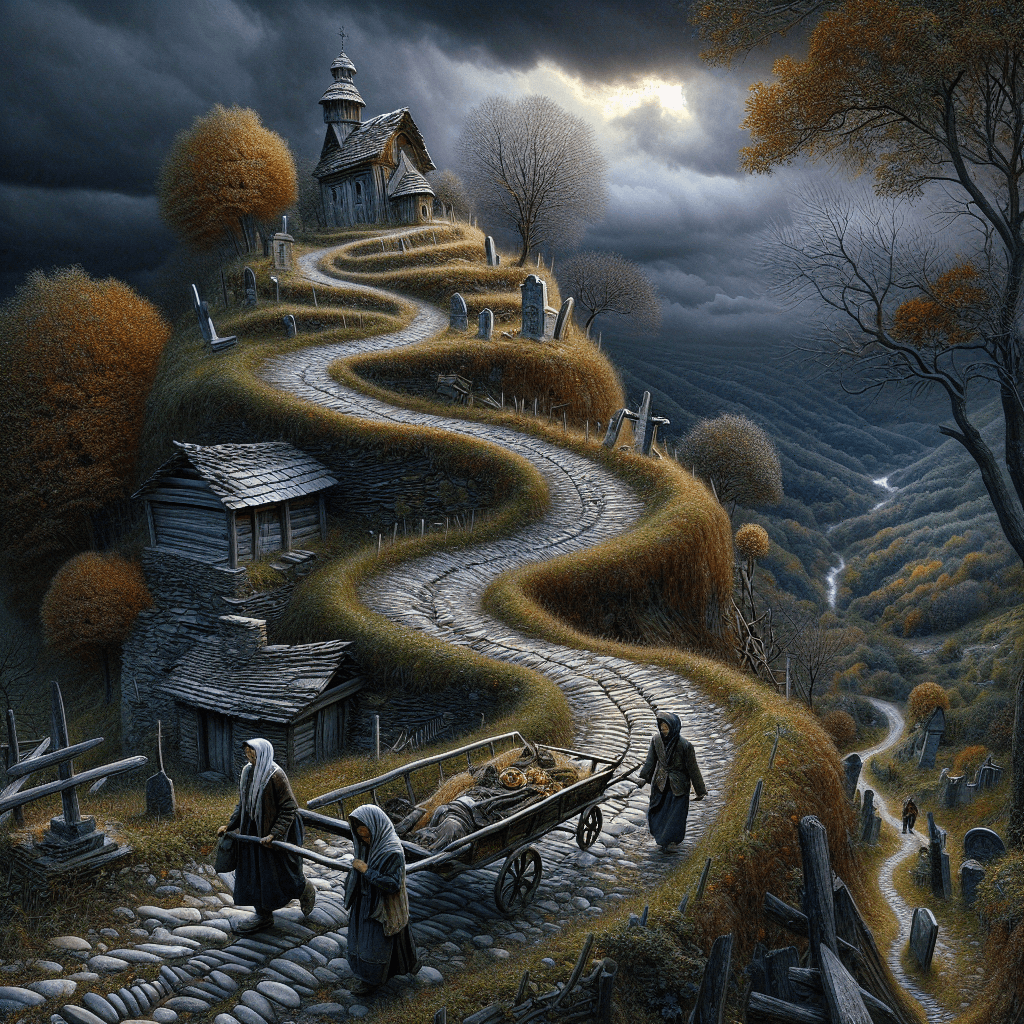
In the heart of the wilderness, these special roads were built not for the living, but for the dead—and for the terrifying belief that a soul must be confused, lest it remember the path home.

Too Long; Didn't Read
Remote villages often lacked their own graveyards and had to carry their dead long distances. Corpse roads were created as practical, direct routes for coffin bearers, but also out of superstition to prevent the deceased's spirit from finding its way back home and to keep the paths of the living and the dead separate.
Spirits, Superstition, and Steep Hills: Why Did Some Remote Villages Have Special Corpse Roads Just for Carrying the Dead?
Imagine a somber procession, pallbearers straining under the weight of a simple wooden coffin, trekking for miles across desolate moors and steep fells. They aren’t following the main track but a barely-there path, one used for a single, sacred purpose. This was the reality for many remote communities who relied on special "corpse roads" to transport their dead to their final resting place. These ancient routes, etched into the landscape, are more than just old footpaths; they are a fascinating intersection of practical necessity and profound spiritual belief. This post will explore the compelling reasons, both earthly and otherworldly, why these unique paths were once a vital part of life and death.
What Was a Corpse Road?
A corpse road—also known as a lych way, coffin line, or spirit path—was a designated route used to carry the deceased from an isolated settlement to a parish church with consecrated ground for burial. Before the 19th century, many outlying villages and hamlets, particularly in rugged areas like the Pennines, Lake District, and remote parts of Wales and Scotland, were "chapelries" without their own burial rights. This meant that every funeral required a long, arduous journey on foot, sometimes covering over ten miles of treacherous terrain. These paths became established rights-of-way, ensuring the dead could always reach holy ground.
The Practical Reasons: A Grueling Final Journey
While folklore provides the most intriguing explanations for corpse roads, their existence was first and foremost born of practical challenges.
- Difficult Geography: These routes were often the most direct, if not the easiest, way to get from point A to point B. They cut across private farmland, boggy moors, and steep hillsides where no cart or wagon could travel. The path had to be navigable for a group of people carrying a heavy, awkward load.
- Legal Rights-of-Way: Corpse roads were ancient and legally protected routes. A landowner could not block a funeral procession from passing through their fields. This established right prevented disputes and guaranteed that a community’s final duty to its dead could always be fulfilled, regardless of who owned the land.
- Resting Places: The journey was physically demanding. Along many corpse roads, you can still find large, flat-topped "coffin stones" or "coffin rests." These were strategically placed to allow the pallbearers to set down their heavy burden for a moment of respite without disrespectfully placing the coffin directly on the ground.
The Supernatural Beliefs: Keeping the Dead at Rest
The practicalities of corpse roads are intertwined with a rich tapestry of superstition and folklore. For our ancestors, death was a porous boundary, and great care was taken to ensure the spirit of the deceased did not return to haunt the living. The corpse road was a key part of this spiritual containment.
Here are some of the core beliefs that shaped these paths:
- Confusing the Spirit: A primary fear was that the deceased's spirit, or "fetch," would try to find its way back home. Corpse roads were designed to prevent this. Many routes deliberately crossed running water, as it was a widespread belief that ghosts and spirits could not cross a stream or river. This created a supernatural barrier between the world of the living and the resting place of the dead.
- Containing the Journey: The path itself was considered a spiritual conduit. It was believed that if a corpse was carried along any other route, its spirit would be "loosed" upon the land, free to wander and cause mischief. Sticking to the designated corpse road ensured the spirit was guided directly to the graveyard and nowhere else.
- Avoiding the Living: These routes often purposefully skirted other farms and dwellings. Bringing a corpse past someone’s home was considered extremely bad luck and risked troubling the inhabitants with the spirit of the deceased. The corpse road kept the procession, and its supernatural baggage, safely away from other households.
Conclusion: Paths That Tell a Story
Corpse roads are a powerful reminder of a time when life was harder and the line between the physical and spiritual worlds was much thinner. They represent a blend of rugged pragmatism—the need to navigate a challenging landscape—and deep-seated beliefs about the nature of the soul and the afterlife. These paths weren't just about getting a body to a graveyard; they were a crucial ritual designed to honor the deceased, protect the living, and maintain the sacred order of the community. Today, many of these ancient routes have become popular walking trails, but as you tread them, it’s worth remembering their somber and sacred purpose—a final, dutiful journey between a village and its hallowed ground.


