
Why did the first shopping carts fail because men thought they were too much like baby carriages
Before it became a supermarket staple, the shopping cart was a spectacular failure—all because men were too embarrassed to be seen pushing something that looked like a baby carriage.

Too Long; Didn't Read
TLDR: The first shopping carts flopped because men, the primary shoppers at the time, thought they resembled baby carriages and considered pushing them to be unmanly.
Pushing Back: Why Did the First Shopping Carts Fail Because Men Thought They Were Too Much Like Baby Carriages?
Imagine navigating a modern grocery store without a shopping cart. You’d be limited to what you could carry in a small, cumbersome handbasket. It seems unthinkable, yet when this revolutionary invention first appeared, it was a spectacular flop. The reason? It wasn’t a design flaw or a mechanical issue; it was a crisis of masculinity. This post delves into the fascinating story of why the first shopping carts failed, exploring how rigid 1930s gender roles and a simple resemblance to a baby carriage nearly relegated one of history's most useful inventions to the scrap heap.
The Problem and a Folding Chair Solution
In the mid-1930s, Sylvan Goldman, the owner of the Humpty Dumpty supermarket chain in Oklahoma, noticed a problem. His customers would stop shopping once their hand-held wire baskets became too heavy. A full basket meant a finished shopper, which meant lost potential sales.
Inspiration struck in 1936. While watching a woman struggle to balance her basket and her purse, Goldman glanced at a wooden folding chair in his office. He had an idea: what if you put a basket on a wheeled, folding frame? Working with a mechanic named Fred Young, he developed the first "folding basket carrier." Patented in 1937, it was a simple metal frame on wheels that could hold two wire baskets, one on top and one on the bottom. To Goldman, it was a perfect solution designed to help customers shop longer and buy more. He was sure it would be an instant success.
He was wrong.
"I've Pushed My Last Baby Buggy"
When Goldman introduced the carts into his stores, they were met with overwhelming rejection from both men and women.
The Male Resistance
The primary and most significant pushback came from men. In the 1930s, societal gender roles were strictly defined. While grocery shopping was often a woman's chore, men frequently accompanied their wives or did the shopping themselves. For these men, the act of pushing Goldman's new contraption felt deeply emasculating.
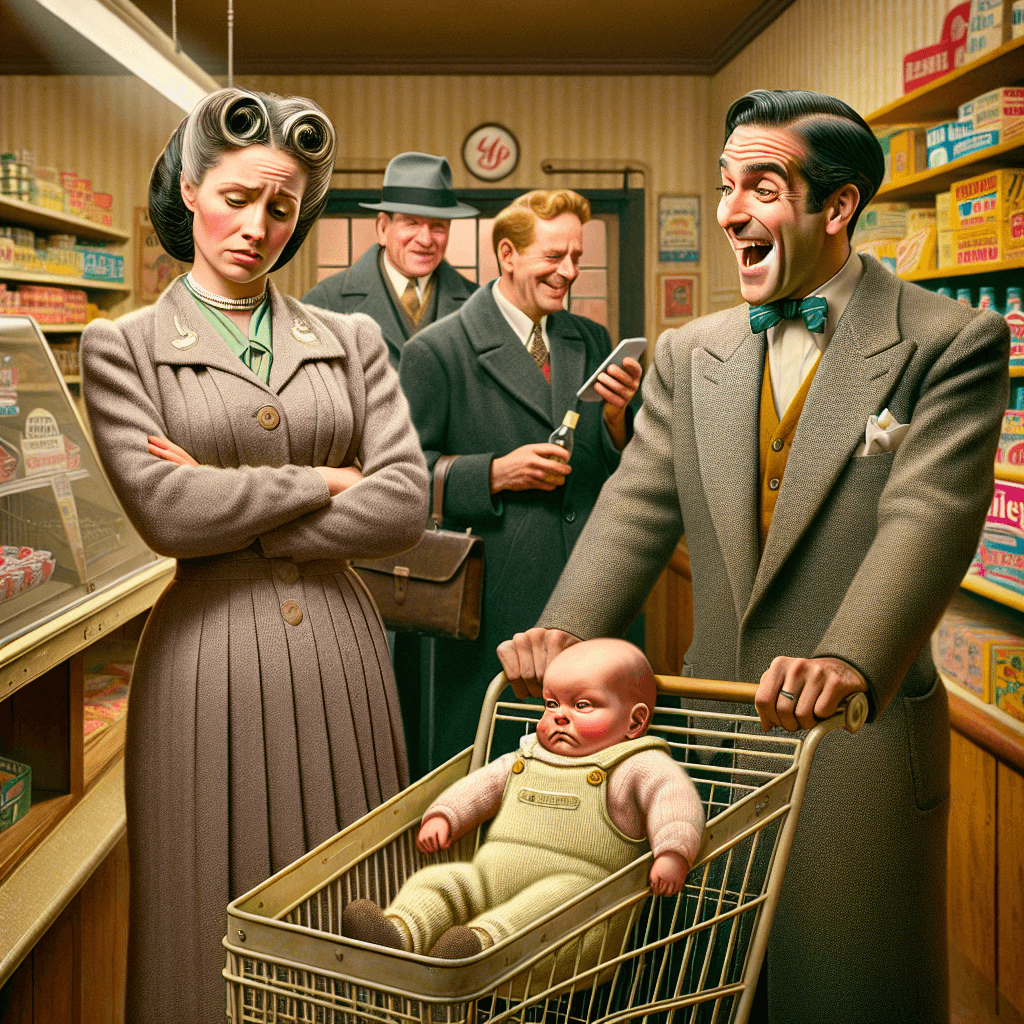
The reason was simple and powerful: it looked and felt too much like pushing a baby carriage, or a "baby buggy." At the time, childcare and pushing strollers were seen exclusively as "women's work." Men recoiled at the idea of performing an action so closely associated with female domesticity in public. The common sentiment, as reported by historians, was a firm, "I've pushed my last baby buggy." They saw the cart not as a tool of convenience, but as an affront to their masculinity.
The Female Perspective
Surprisingly, women were also hesitant. Having carried their own baskets for years, many felt the new invention implied they were weak. The cart seemed unnecessary and unfamiliar. It was a solution to a problem they didn't perceive themselves as having, and they stuck to the familiar routine of carrying a single basket. The carts sat in the corner of the store, unused and collecting dust.
How Clever Marketing Saved the Cart
A less determined inventor might have given up, but Sylvan Goldman was also a brilliant marketer. Realizing the problem wasn't the product but the perception, he devised a clever plan to overcome the cultural resistance.
- Hiring "Shills": Goldman hired male and female models of all ages to pose as shoppers. These "shills" would push the carts through the aisles, demonstrating how easy they were to use and filling them with groceries. This social proof helped normalize the activity, showing real people (especially other men) using the carts without a second thought.
- Employing Greeters: He stationed friendly greeters at the store entrance. Their job was to offer a cart to every customer and politely explain its benefits: "Look, everyone is using them. You can buy so much more!" This direct, personal approach helped break down the initial hesitation.
The strategy worked. Seeing others confidently using the carts eroded the social stigma. Slowly but surely, customers began to embrace the convenience. The shopping cart was saved from failure, and by the early 1940s, Goldman's invention was becoming a retail standard.
Conclusion
The initial failure of the shopping cart is a powerful reminder that a product's success depends on more than just its utility. It must also fit within the cultural and social context of its time. Sylvan Goldman’s invention was mechanically sound, but it clashed with the deeply ingrained gender norms of the 1930s. The story of men rejecting a wheeled basket because it resembled a baby carriage highlights how perceptions of masculinity and femininity can influence consumer behavior in unexpected ways. It took a campaign of brilliant psychological marketing to transform the cart from an object of ridicule into the indispensable tool of modern commerce we know today.


