
Why did the US military try to develop a chemical weapon that made enemy soldiers irresistibly attracted to each other
It sounds like a plot from a spy comedy, but declassified documents reveal the Pentagon’s serious proposal for a chemical weapon designed to make enemy soldiers irresistibly and uncontrollably attracted to one another.

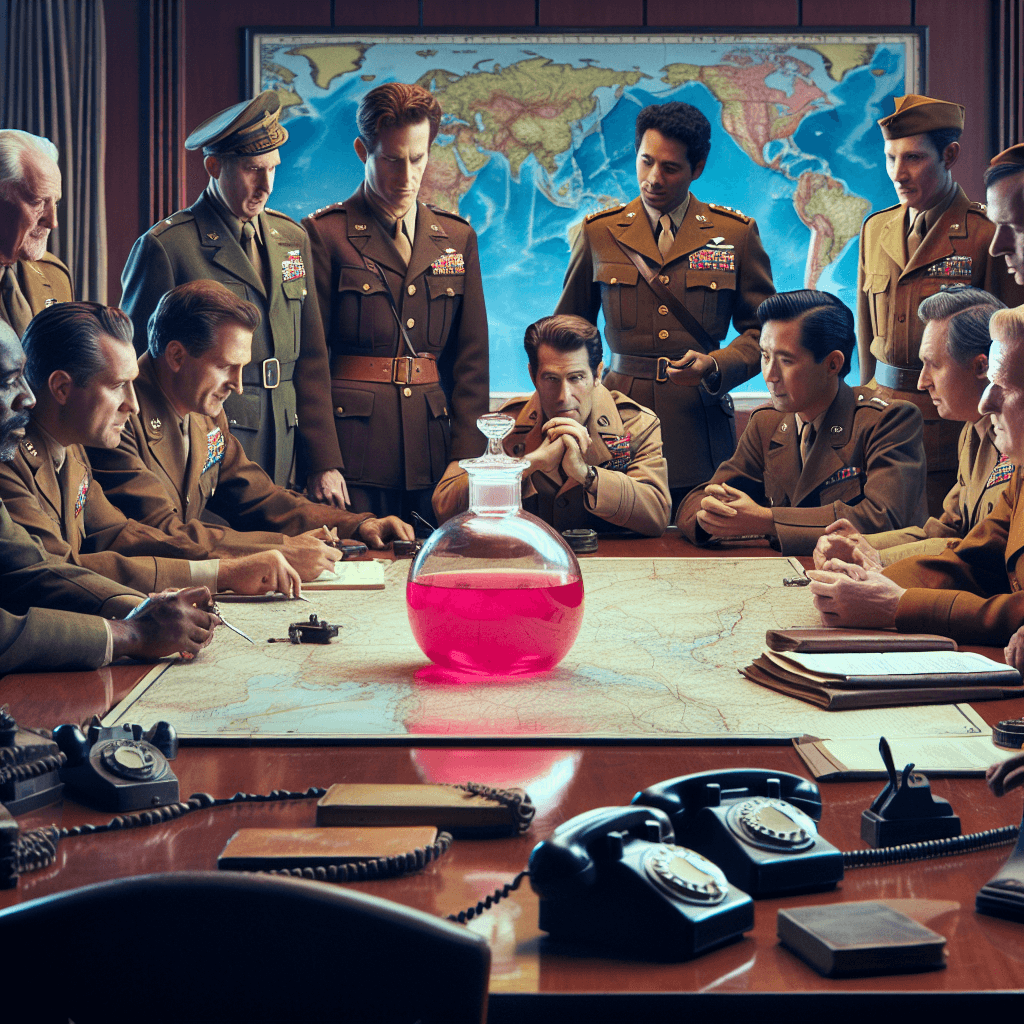
Too Long; Didn't Read
In the 1990s, the US Air Force proposed a non-lethal chemical weapon to make enemy soldiers sexually attracted to each other. The goal was to destroy morale and unit discipline without causing fatalities. The scientifically dubious idea was part of a broader brainstorming effort for non-lethal weapons and was never developed.
The 'Gay Bomb': Why Did the US Military Try to Develop a Chemical Weapon That Made Enemy Soldiers Irresistibly Attracted to Each other?
Of all the weapons of war conceived throughout history—from sharpened sticks to nuclear warheads—few are as bizarre as the one proposed by a U.S. Air Force laboratory in 1994. It wasn't designed to kill, maim, or destroy infrastructure. Instead, its goal was to undermine enemy morale by making soldiers "irresistibly attracted to each other." This weapon, colloquially known as the "gay bomb," sounds like something from a satirical film, yet it was a real, if briefly considered, proposal. This post explores the strange history of this non-lethal chemical weapon, delving into why the military explored such an unconventional idea, the science behind it (or lack thereof), and why it ultimately became a peculiar footnote in military history.
A New Era of Warfare: The Push for Non-Lethal Options
To understand the origin of the "gay bomb," we must look at the strategic context of the early 1990s. With the Cold War over, the nature of military conflict was changing. There was a growing interest in "non-lethal" weapons that could disable an adversary without causing fatalities. The goal was to achieve military objectives with less bloodshed, minimizing civilian casualties and the political fallout from deadly force.
This push led military researchers to explore a wide range of incapacitating agents. The Air Force's Wright Laboratory in Dayton, Ohio, was at the forefront of this research. In a 1994 proposal, they outlined several potential "harassing, annoying, and 'bad guy' identifying chemicals." This document was a brainstorming effort, floating a host of out-of-the-box ideas, including:
- A chemical that would cause severe and lasting bad breath (halitosis).
- A substance to make skin overly sensitive to sunlight.
- A chemical that would attract swarms of angry bees or wasps to enemy positions.
It was within this highly speculative document that the most infamous idea appeared: a chemical weapon that would cause widespread "homosexual behavior" among enemy troops.
The Proposal: Undermining Discipline with Aphrodisiacs
The three-page proposal theorized that a strong aphrodisiac could be dispersed over enemy forces, causing them to become sexually attracted to one another. The document explicitly stated that creating "homosexual behavior" was a key objective. The military logic, however flawed, was that such a development would cause a catastrophic breakdown in unit morale and discipline. In the rigidly structured and often socially conservative environment of a military unit, the proponents believed this would render an enemy force completely ineffective.
The document requested a six-year, $7.5 million grant to develop these various chemical agents. It was a serious proposal from a major military research institution, highlighting the extent to which a "no-idea-is-a-bad-idea" approach was being applied to the search for non-lethal weapons.
Was It Even Possible? The Scientific Hurdles
The core concept of the "gay bomb" was built on a foundation of scientific fantasy. The proposal was based on the idea that human sexual attraction could be instantly and universally manipulated with an airborne chemical, likely a pheromone. While pheromones play a significant role in the mating behaviors of insects and some mammals, their effect on humans is far more complex and subtle—and certainly not powerful enough to override an individual's sexual orientation.
There is no known chemical that can be weaponized to induce homosexual behavior. The project rested on profound misconceptions about human sexuality, psychology, and biology. It treated sexual orientation as a simple switch that could be flipped by an external stimulus, a view unsupported by science.
Declassification, Derision, and an Ig Nobel Prize
For years, the proposal remained buried in classified archives. It was only brought to public attention in 2005 after a Freedom of Information Act request by the Sunshine Project, an arms control watchdog group. The revelation was met with a mixture of disbelief and ridicule.
The Pentagon quickly distanced itself from the idea, with a spokesperson stating that the proposal was rejected almost immediately and was never pursued for funding or development. The concept became a late-night talk show punchline and a symbol of military research gone awry.
In 2007, the Wright Laboratory was awarded the Ig Nobel Peace Prize for its efforts. This satirical award, presented annually at Harvard University, "honors achievements that first make people laugh, and then make them think." The "gay bomb" had unequivocally achieved both.
Conclusion
The story of why the US military tried to develop a chemical weapon that made enemy soldiers irresistibly attracted to each other is a fascinating look into the world of military innovation. Born from a genuine desire to create less deadly forms of warfare, the "gay bomb" proposal was a product of speculative brainstorming that collided with scientific and social reality. While it never left the drawing board, its legacy serves as a powerful reminder of the ethical and practical boundaries of weapons development. It remains a bizarre but illuminating case study of how, in the quest for a strategic advantage, even the most outlandish ideas can be considered.


