
Why did the world's first traffic light explode
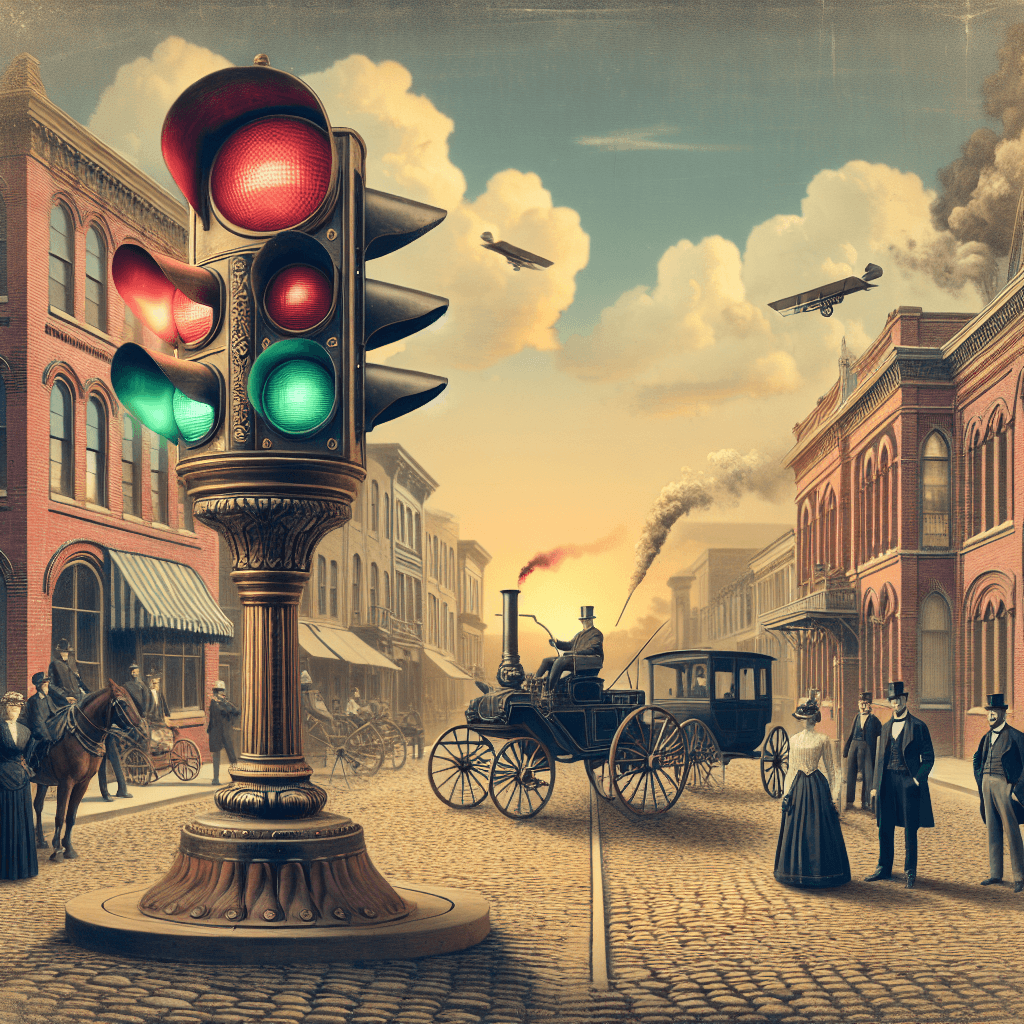
Installed to bring order to chaotic Victorian streets, the world's first traffic light had one fatal flaw—it was powered by gas, and it ended its career by violently exploding in its operator's face.

Too Long; Didn't Read
TLDR: The world's first traffic light, installed in London in 1868, was powered by gas. A leak in one of the gas lines caused it to explode, injuring its police operator.
Title: A Fiery Debut: Why Did the World's First Traffic Light Explode?
Introduction
Every day, millions of us navigate our cities guided by the simple, silent commands of the traffic light. The familiar red, yellow, and green are pillars of urban order, so ingrained in our lives that we barely give them a second thought. But what if that lifesaving device had a dangerously explosive past? The world’s very first traffic light, a marvel of Victorian ingenuity, met a spectacular and fiery end just weeks after its debut. This wasn't a minor malfunction; it was a violent explosion that injured its operator and abruptly halted the progress of traffic control for decades. This post will explore the fascinating story of this ill-fated invention, delving into the technology and the specific flaw that led to its disastrous failure.
Main Content
The Dawn of Traffic Control: A Victorian Innovation
To understand why the first traffic light was created, one must picture the streets of 1860s London. The city was a chaotic whirlwind of horse-drawn carriages, carts, and thousands of pedestrians, all competing for space. The intersection at Bridge Street and Great George Street, near the Houses of Parliament, was particularly treacherous. The constant gridlock and frequent accidents prompted a railway signal engineer named John Peake Knight to propose a solution.
Knight adapted the technology he knew best: the railway signalling system. His invention, installed in December 1868, was not electric. Instead, it was an imposing, gas-powered semaphore signal. It featured:
- Daytime Operation: Two large arms that could be raised or lowered by a police officer using a lever at the base. "Stop" was indicated by the arms being extended horizontally, while a 45-degree angle meant "Proceed with Caution."
- Nighttime Operation: For visibility after dark, the top of the signal was fitted with gas-lit lamps that shone red for "Stop" and green for "Caution."
A police constable was stationed at its base to operate the device manually, bringing a semblance of order to the hazardous crossing for the first time.
A Brilliant Idea with a Fatal Flaw
For a few weeks, the signal was a resounding success. It improved the flow of traffic and increased pedestrian safety, earning praise for its ingenuity. However, its design contained a fundamental and ultimately fatal flaw: its reliance on gas. In the mid-19th century, electricity was not yet a viable power source for public infrastructure. Gas lighting was the standard, illuminating homes and streets across London. To power the signal's lamps, a gas main was run underneath the pavement and up through the hollow iron post to the lanterns at the top. While innovative, this combination of flammable gas and manual operation proved to be a volatile mix.
The Inevitable Explosion: What Went Wrong?
On the cold evening of January 2, 1869, disaster struck. After less than a month in operation, the traffic signal violently exploded. The cause was traced back to a small leak in one of the gas lines feeding the lamps. The leaking gas seeped into the mechanism and, upon making contact with the open flame of the lanterns, ignited. The blast was powerful enough to shatter the glass lenses and severely injure the police officer on duty.
The incident was a public relations nightmare. The device intended to improve public safety had proven to be a dangerous hazard itself. The project was immediately abandoned, and the mangled signal was removed. The explosive failure so thoroughly discredited the idea of automated traffic control that another traffic signal wouldn't be installed in London for over 40 years. The world would have to wait for the advent of safer, electric-powered systems in the United States before the concept was successfully revisited.
Conclusion
The story of the world's first traffic light is a powerful reminder that innovation is often a process of trial and error. John Peake Knight's gas-lit semaphore was a brilliant solution to a very real problem, but it was ultimately let down by the limitations of the technology available at the time. Its dramatic failure—caused by a simple gas leak—set back the progress of traffic management significantly. However, this explosive debut was not a complete loss. It served as a crucial, albeit dangerous, first step, highlighting the need for safer technology and paving the way for the reliable, electric-powered traffic systems that now form the backbone of modern urban life.


