
Why did wealthy 18th-century landowners hire professional hermits to live in tiny shacks on their estates
Before garden gnomes, the 18th-century elite preferred their lawn ornaments to be living, breathing humans. Step inside the bizarre world of "ornamental hermits" and the strange status symbol that required strangers to live in shacks just to satisfy a landowner's eccentric tastes.

Too Long; Didn't Read
In the 18th century, wealthy landowners hired ornamental hermits to live in garden shacks as living decorations. These professional recluses symbolized wisdom, melancholy, and a connection to nature, serving as status symbols that enhanced the atmospheric and picturesque aesthetic of a grand estate.
The Living Garden Ornament: Why Did Wealthy 18th-Century Landowners Hire Professional Hermits to Live in Tiny Shacks on Their Estates?
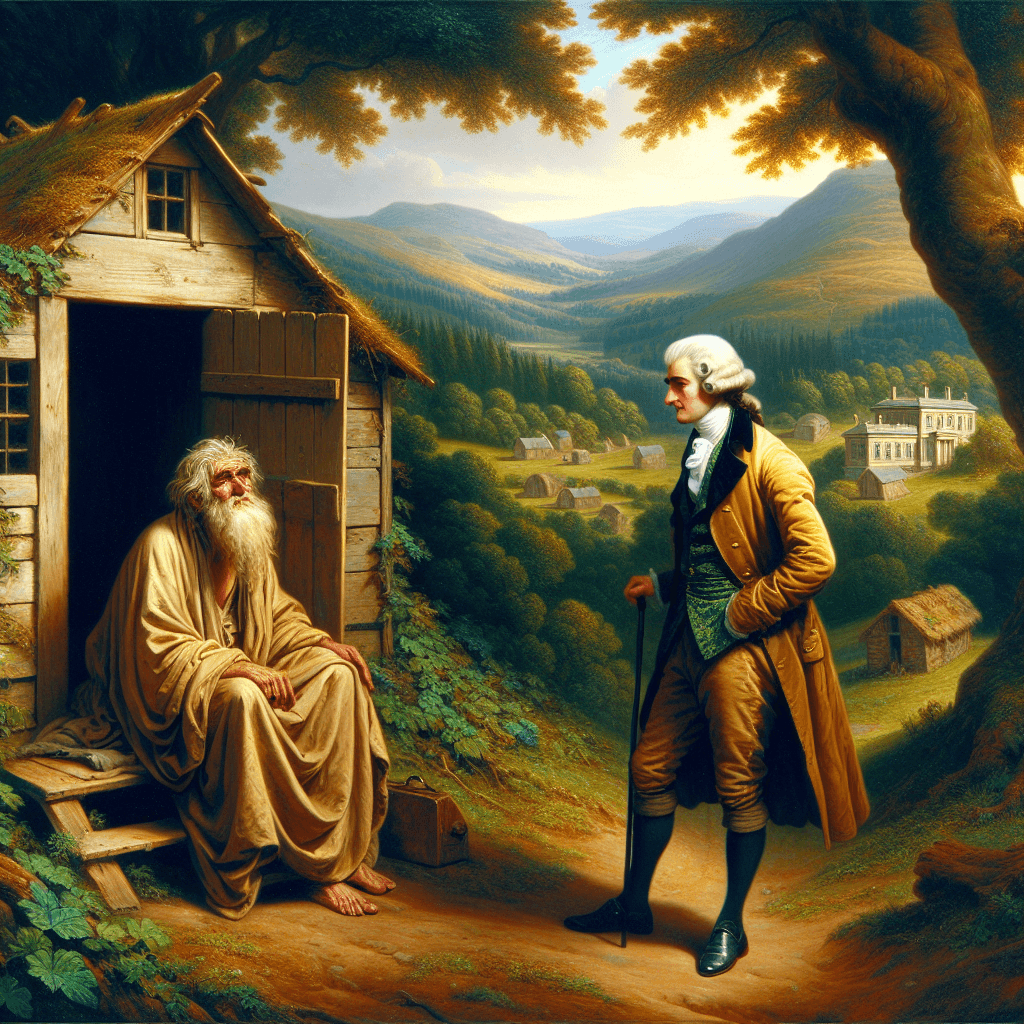
Imagine strolling through the meticulously manicured grounds of an 18th-century English estate. Amidst the rolling hills and artificial lakes, you stumble upon a rustic, moss-covered shack. Inside sits a man with unkempt hair, overgrown fingernails, and a heavy wool robe, staring contemplatively at a skull. This man was not a trespasser; he was a highly sought-after professional. During the Georgian era, the "ornamental hermit" became one of the most bizarre yet prestigious additions to a country estate. But why did wealthy 18th-century landowners hire professional hermits to live in tiny shacks on their estates? This practice was more than just a quirky whim; it was a carefully curated symbol of status, a reflection of contemporary philosophy, and a physical manifestation of the era’s obsession with "melancholy" and the picturesque.
The Aesthetic of the Picturesque and Romanticism
To understand the professional hermit, one must understand the 18th-century shift in landscape design. Influential designers like William Kent and Lancelot "Capability" Brown moved away from the rigid, geometric French gardens of the past toward the "English Landscape Garden." This new style aimed to mimic a stylized version of nature, featuring "wild" woods, grottoes, and artificial ruins.
The goal was to create a "picturesque" scene—a landscape that looked like a painting. However, a wild landscape needed a focal point to evoke emotion. Landowners built "follies," which were decorative buildings intended to look like ancient ruins or humble dwellings. A hermitage (a tiny shack or cave) served as the perfect architectural anchor, but it lacked life. By hiring a professional hermit, the landowner provided a living soul to inhabit the scene, transforming a static garden into a theatrical performance of solitude and wisdom.
The Cult of Melancholy and Philosophical Status
During the 1700s, there was a fashionable intellectual movement often referred to as the "cult of melancholy." Unlike the modern clinical definition of depression, 18th-century melancholy was seen as a sign of a refined, sensitive, and deeply philosophical soul. It suggested that the individual was preoccupied with profound thoughts on mortality and the vanity of human existence.
- Wisdom by Association: By hosting a hermit, a landowner signaled to his guests that he valued spiritual reflection over material wealth.
- A "Memento Mori": The hermit acted as a living memento mori (a reminder that you will die). His presence prompted guests to contemplate the fleeting nature of life while sipping tea on a nearby terrace.
- The Hermit as a Sage: According to historian Gordon Campbell in The Hermit in the Garden, these individuals were expected to represent the "noble savage" or the "ancient sage," providing a sense of historical and spiritual depth to the estate.
The Hermit’s Contract: Rules and Expectations
Hiring a hermit was a formal business arrangement, often involving strict legal contracts. These documents outlined exactly how the hermit was expected to behave to maintain the "illusion" of a holy recluse. While experiences varied, a typical contract might include the following stipulations:
- Grooming Standards: Hermits were often forbidden from cutting their hair, beards, or fingernails for the duration of their stay.
- Attire: They were required to wear specific costumes, usually a "Druidic" or "monastic" robe made of coarse camlet.
- Silence and Solitude: Many were barred from speaking to the estate’s servants or guests. They were expected to remain within the vicinity of their shack, often with a Bible, a pair of spectacles, and a hourglass as their only props.
- Duration and Payment: Contracts could last up to seven years. If the hermit completed the term, they were often promised a significant lump sum of money—enough to live comfortably for the rest of their lives.
However, the reality was often difficult. Historical records from the Painshill Park estate in Surrey describe a hermit who was fired after only three weeks when he was discovered at a local pub.
From Living Hermits to Garden Gnomes
The trend eventually faded as the 19th century approached. The practice was expensive and often failed due to the difficulty of finding men willing to live in damp, isolated conditions for years. As the "novelty" wore off, landowners began replacing live hermits with life-sized mannequins or even automated "robots" that could nod or move.
Eventually, these living ornaments evolved into the much smaller, ceramic versions we recognize today: the garden gnome. While today’s gnomes are whimsical and colorful, they are the direct descendants of the somber, robed men hired to bring a sense of "enlightened sadness" to the estates of the Georgian elite.
Conclusion
The phenomenon of the ornamental hermit offers a fascinating glimpse into the 18th-century psyche. Why did wealthy 18th-century landowners hire professional hermits to live in tiny shacks on their estates? It was an attempt to buy prestige through the performance of philosophy. By turning a human being into a garden ornament, the elite of the time sought to ground their immense wealth in an aesthetic of spiritual humility and romanticized solitude. Today, the practice stands as a reminder of a time when the boundaries between landscape, theater, and philosophy were strangely blurred, leaving us with a historical legacy that is as intriguing as it is bizarre.


