
Why do baby platypuses drink milk that seeps directly out of their mother's skin
Instead of nursing, baby platypuses lap up milk that literally seeps from their mother's skin like sweat. This bizarre feeding method is an ancient evolutionary quirk that holds a secret about the dawn of all mammals.

Too Long; Didn't Read
TLDR: Platypuses are ancient, egg-laying mammals that evolved to produce milk before they evolved nipples. The milk essentially sweats out of pores on the mother's skin for the babies to lap up.
Nature's Weirdest Nursery: Why Do Baby Platypuses Drink Milk That Seeps From Their Mother's Skin?
When you picture a mammal feeding its young, you likely imagine a familiar scene of nursing. Yet, in the winding rivers of eastern Australia, one of the world's most peculiar animals rewrites the rules. The platypus, a creature that already seems cobbled together from different species, has a nursing method that is just as unique as its appearance. Instead of suckling from teats, baby platypuses—adorably known as puggles—lap up milk that literally seeps or "sweats" from their mother's skin. This isn't just an odd quirk; it's a direct link to the deep, evolutionary past of all mammals. This post will explore the fascinating biological and evolutionary reasons behind this extraordinary feeding strategy.
A Glimpse into an Ancient Lineage: Meet the Monotremes
To understand why a platypus sweats milk, we first need to understand where it sits on the mammalian family tree. Platypuses belong to an ancient and exclusive group of mammals called monotremes, with their only living relatives being the four species of echidna.
What makes monotremes so special? They are the only mammals on Earth that lay eggs. They represent the earliest branch to split off from the rest of the mammalian lineage, diverging well over 160 million years ago. This means they retain primitive traits that other mammals, like marsupials and placentals (including us), have long since lost or evolved beyond. One of these ancient traits is their method of lactation.
The Missing Piece: The Evolution of Milk Before Nipples
The core reason platypus puggles drink milk from their mother's skin is simple: mother platypuses don't have nipples.
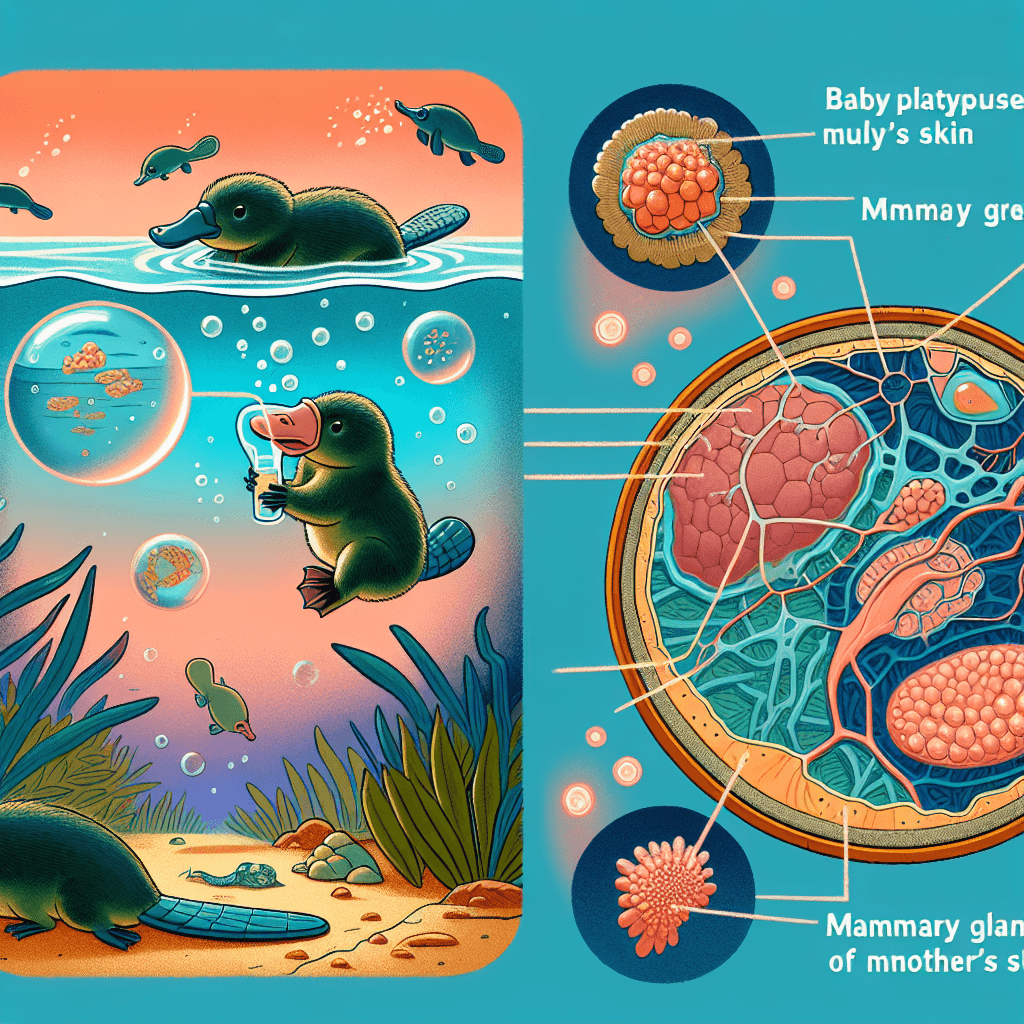
While they do possess mammary glands—the very definition of a mammal—these glands are structured differently from those of other mammals. Instead of converging into a single point of delivery (a teat or nipple), their mammary glands are more like modified sweat glands spread across a patch of skin on the mother's abdomen.
Evolutionarily, this makes perfect sense. Monotremes branched off the family tree before nipples evolved. They developed the ability to produce milk, a hugely successful innovation, but never developed the sophisticated delivery system that came later. Nipples provided a more efficient, hygienic, and direct way for young to feed, a trait that became standard for all other mammals. The platypus, therefore, offers a living snapshot of what lactation might have looked like in its earliest stages.
How It Works: A Messy but Effective Meal
When it's time to feed, the process is uniquely adapted to their burrow-dwelling lifestyle.
- The mother platypus lies on her back, allowing the milk to be secreted from pores in her skin.
- The milk collects in special grooves on her abdomen, wetting the fur in what are often called "milk patches."
- The blind, hairless puggles then press their snouts against these patches, lapping and slurping up the nutrient-rich milk directly from their mother's fur.
This method might seem messy and inefficient compared to suckling, but it has worked perfectly for the platypus for millions of years, allowing them to successfully raise their young in the safety of their underground burrows.
Nature's Antibiotic: A Surprising Benefit
Feeding from an exposed patch of skin rather than a sterile nipple presents a significant challenge: the risk of bacterial infection. In response, evolution provided a remarkable solution. Scientific research, including studies from Australia's CSIRO, has revealed that platypus milk contains a unique protein with powerful antibacterial properties. This protein, nicknamed "Shirley Temple" for its curly structure, effectively protects the puggles from harmful microbes they might ingest from their mother's skin and fur. This potent, built-in antibiotic ensures that their unconventional meal is a safe one.
Conclusion
The reason baby platypuses drink milk that seeps from their mother's skin is a direct reflection of their ancient evolutionary history. As monotremes, they represent a bygone era of mammalian development, a time when the groundbreaking ability to produce milk existed before the invention of the nipple. This unique system, supported by highly antibacterial milk, showcases nature's incredible ability to find effective, if unusual, solutions to the challenges of survival. The next time you see a picture of a platypus, remember that you're not just looking at a quirky animal, but a living fossil that carries the story of early mammalian life on its very skin.


